Table of Contents
- What Separates High End Bedding From Standard Sets
- Best Linen Sheets Australia Buyers Should Know
- Certifications That Prove Sustainable Sourcing
- How to Care for Luxury Bed Linen So It Lasts
- Cost Per Use: The Real Math Behind Luxury Bedding
- How Sleep Science Connects Fabric to Sleep Quality
- Choosing Bedding for Specific Sleep Conditions
- Frequently Asked Questions
Last Updated: September 16, 2026
What Separates High End Bedding From Standard Sets
High end bedding is defined by raw fibre quality, weave density, and how the textile performs night after night, at Casa Sereno, that means fibre length, weave construction, and moisture and heat handling.
Thread Count, GSM and the Numbers That Actually Matter
Thread count is the number of horizontal and vertical threads woven into one square inch. It is useful up to a point, but also the most manipulated number in textiles: some manufacturers count multi-ply yarns as separate threads, inflating the figure without improving the fabric.
Specification |
What It Measures |
Practical Sweet Spot |
Why It Matters |
|---|---|---|---|
Thread count |
Threads per square inch |
200-400 genuine count |
Affects smoothness and breathability |
GSM |
Fabric weight in g/m² |
Varies by season and use |
Determines warmth and drape |
Fibre length |
Staple length of the yarn |
Long-staple or extra-long-staple |
Reduces pilling and shedding |
Weave type |
Percale or sateen construction |
Percale for cool, sateen for smooth |
Changes feel and airflow |
Best Linen Sheets Australia Buyers Should Know
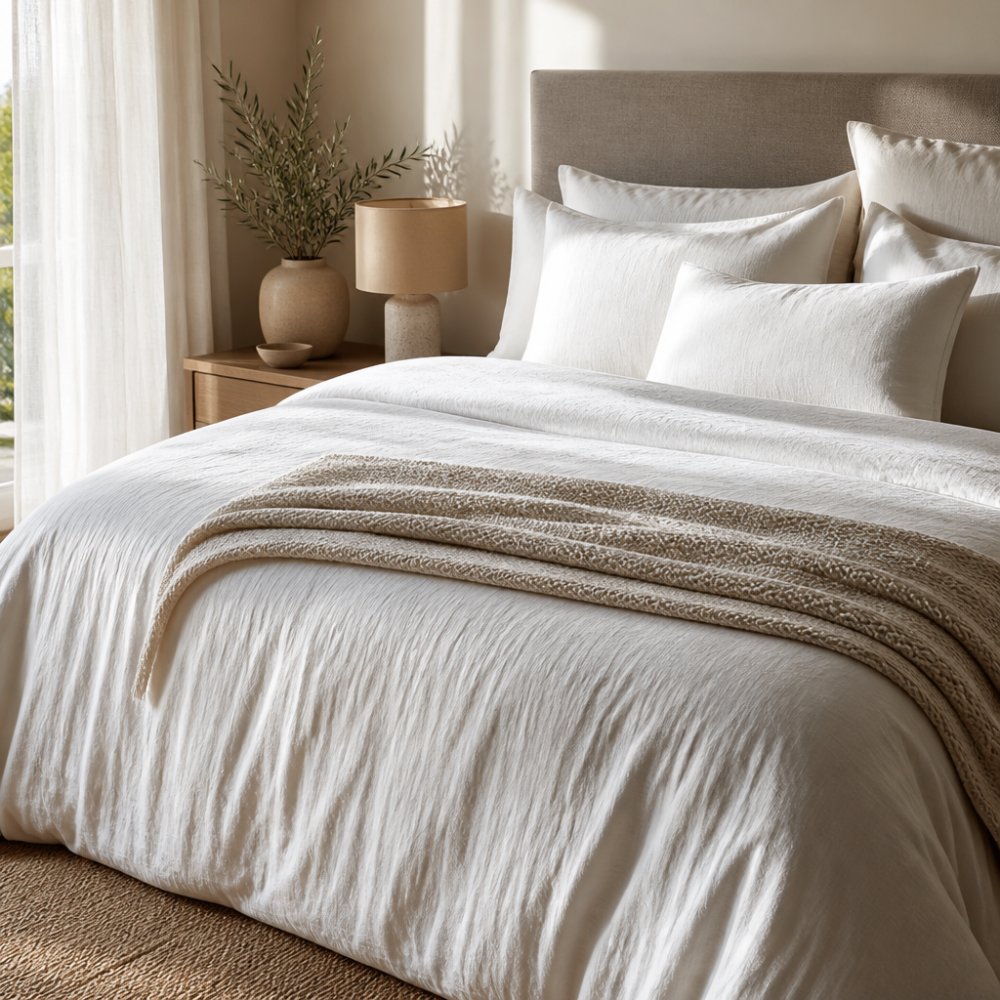
The best linen sheets for most buyers are made from European flax, stonewashed to soften the fibre before first use, with a visible, slightly irregular texture that signals real flax rather than cotton imitation.
Why Flax Linen Outperforms in Warmer Climates
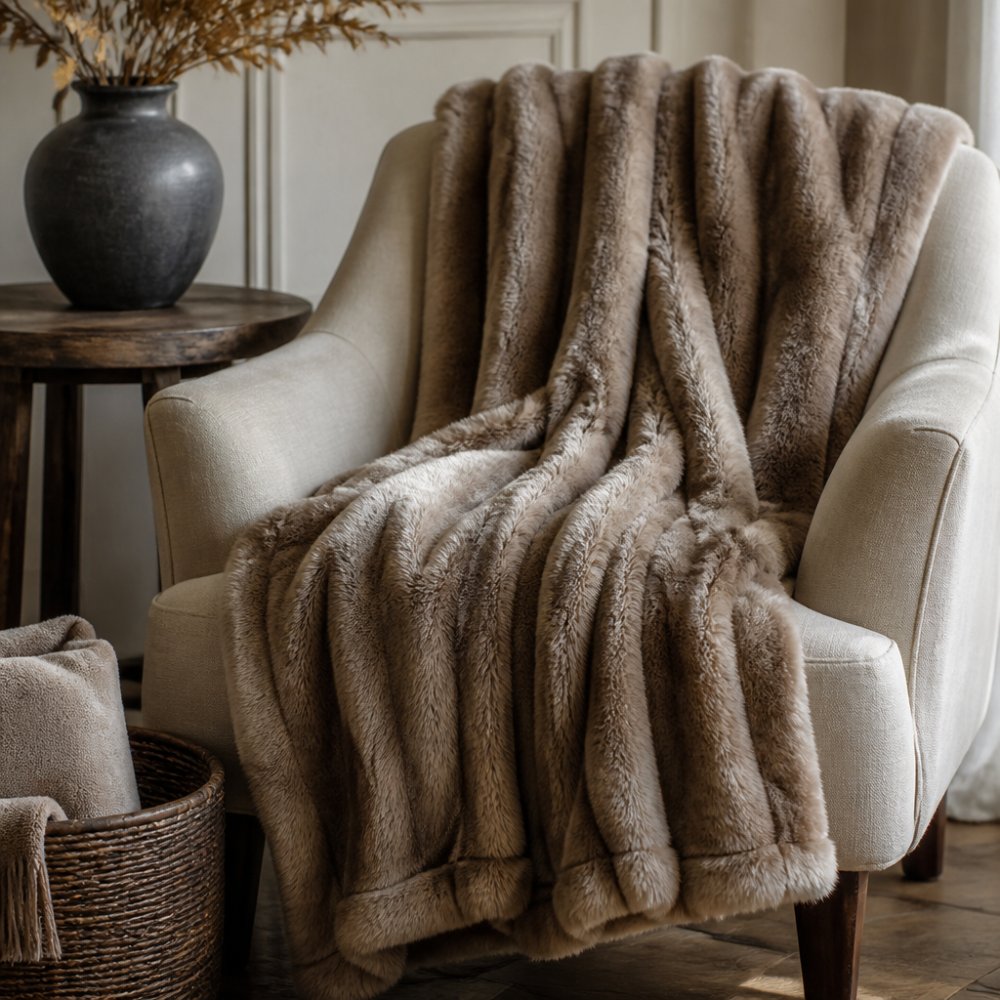
For a coordinated finish, the Cosy Blanket Rose in Lavender is made from soft, durable linen and sized at 160x160 cm, which makes it a natural layer over linen sheeting without fighting the texture underneath.

Certifications That Prove Sustainable Sourcing
Sustainability claims are easy to make and hard to verify, which is why certifications exist. The useful skill is knowing which certification answers which question, and which ones a brand quietly omits.
The Two You Will See Most Often
GOTS (Global Organic Textile Standard) certifies the entire supply chain, from organic fibre farming to the finished textile. It sets a minimum organic fibre content (70% for 'made with organic', 95% for 'organic'), restricts chemical inputs, requires wastewater treatment at processing mills, and includes social criteria for workers, verified at every stage and audited annually by an approved third-party body.
The Ones That Fill the Gaps
Certification |
What It Covers |
What It Does Not Cover |
|---|---|---|
GOTS |
Organic fibre, chemical inputs, wastewater, labour |
Non-organic blends above the threshold |
OEKO-TEX Standard 100 |
Harmful substances in the finished textile |
Fibre origin, farming, labour |
Fair Trade Certified |
Worker wages, conditions, community premium |
Fibre organic status, chemical inputs |
RWS (Responsible Wool Standard) |
Sheep welfare and land management |
Cotton, linen, downstream processing |
FSC (Forest Stewardship Council) |
Wood and pulp from responsibly managed forests |
Textiles, unless viscose is FSC-certified |
bluesign |
Chemical input management at mill level |
Finished-product testing, farming |
A linen sheet set might carry GOTS for the flax, OEKO-TEX for the finished cloth, and nothing on labour, where Fair Trade would sit. A wool quilt cover might carry RWS for the fibre and OEKO-TEX for the finish. The combination tells you more than any single logo.
How to Verify a Claim in Under Two Minutes
- Ask for the certification number. GOTS and OEKO-TEX both issue unique certificate numbers that can be checked in their public databases. A brand that cannot produce a number is making a marketing claim, not a certified one.
- Check the scope. A GOTS certificate covers a specific product and a specific facility. A brand with one GOTS-certified item does not have a GOTS-certified range.
- Look for the label wording. 'Made with organic' (70%+) and 'organic' (95%+) are different GOTS labels. Both are legitimate; they mean different things.
- Watch for invented logos. Terms like 'eco-certified', 'green-approved' or 'natural standard' are not recognised certification schemes. If the logo is not on a public register, treat it as decoration.
The Australian Competition and Consumer Commission takes green marketing claims seriously under the Australian Consumer Law, and vague environmental statements without substantiation risk enforcement action (Environmental and sustainability claims). Useful filter: if a brand cannot name its certification body and produce a certificate number, treat the claim as marketing, not proof.
Where Certifications Do Not Help
Certification is a floor, not a ceiling. A GOTS-certified sheet can still be woven at a low thread count, cut poorly, and wear out in eighteen months, and Fair Trade says nothing about whether the dye will bleed on the third wash. Use certifications to rule out the worst practices, then judge the fabric on fibre length, weave and finish, the same criteria that separate high end bedding from standard sets.
How to Care for Luxury Bed Linen So It Lasts
Luxury bed linen lasts longest when you wash it less aggressively, dry at lower heat, and store it where air can move. Most premature wear comes from overdosing detergent, high dryer temperatures, and storing damp linen in a closed cupboard.
- Wash at 40°C or lower on a gentle cycle
- Use a mild liquid detergent, roughly half the recommended dose
- Skip fabric softener entirely; it coats natural fibres and reduces breathability
- Avoid bleach and optical brighteners
- Tumble dry on low, or line dry in shade
- Remove while slightly damp and smooth by hand before folding
- Rotate two sets so each gets a rest between washes
- Store folded in a dry, ventilated linen cupboard, not a sealed plastic box
Washing, Drying and Storage Without Damaging Natural Fibers
For decorative pieces, care is simpler. The Shabby Rose European in Lavender is crafted from textured cotton and built to be used daily, so it handles a standard gentle wash without special handling.

Cost Per Use: The Real Math Behind Luxury Bedding
Cost per use is the purchase price divided by the nights the item remains in service, the only honest way to compare a $400 sheet set against a $120 one, because the cheap set is rarely cheap over its lifetime.
Factor |
Budget Set |
High End Set |
|---|---|---|
Upfront cost |
Lower |
Higher |
Typical service life |
1-2 years |
5-8 years with care |
Pilling and shedding |
Common after months |
Rare with long-staple fibre |
Replacement frequency |
Frequent |
Infrequent |
Cost per night |
Often comparable or higher |
Usually lower |
How Sleep Science Connects Fabric to Sleep Quality
Sleep quality depends heavily on skin temperature and humidity at the body surface. Core temperature needs to drop slightly for sleep to begin, and heat-trapping bedding works against that. Fabric choice is a functional decision, not just an aesthetic one.
Choosing Bedding for Specific Sleep Conditions
Different sleep conditions call for different fabric properties, and matching them matters more than brand labels. The mechanism is the same: skin temperature and humidity need to stay within a narrow band for sleep to initiate and stay consolidated, and fabric choice either supports that or fights it.
If You Sleep Hot
Prioritise breathability and moisture-wicking over smoothness. Two properties drive this:
- Weave structure. Percale is a one-over-one-under weave, leaving more open space between threads so air moves through. Sateen is four-over-one-under, producing a smoother, denser surface that traps heat. For a hot sleeper, percale in a genuine 200-400 thread count usually outperforms a 600-count sateen, even though sateen feels more luxurious.
- Fibre type. Flax linen and long-staple cotton wick moisture and dry quickly. Bamboo viscose wicks well but feels clammy once saturated. Polyester blends trap heat and should be avoided for the base layer.
If You Sleep Cold
Cold sleepers need insulation without trapped moisture. Higher GSM quilt covers and a heavier throw do more work than a denser sheet, because the sheet sits against the skin and the quilt insulates. Look for wool, which regulates temperature by absorbing and releasing moisture vapour, or brushed cotton flannelette for winter. A breathable base sheet under a heavier quilt beats a heavy sheet alone, because it lets moisture escape rather than condense on the skin.
If You Have Allergies or Sensitive Skin
For allergy sufferers, prioritise a tight-enough weave to limit dust mite penetration plus fast drying after washing. Mites thrive in warm, humid fabric, so keep the bed dry and wash frequently at a mite-killing temperature, most guidance settles on 60°C, though this shortens the life of some natural fibres, so a two-set rotation helps.
If You Share a Bed With Someone Who Runs at a Different Temperature
Layering beats compromise. A breathable base sheet suits the warmer sleeper, and a heavier throw on one side handles the cooler one, the single most effective change for couples, because it removes the nightly duvet negotiation. The Cosy Blanket Rose in Lavender at $159.00 works well here: linen breathes while adding warmth, and its 160x160 cm size covers one side of a queen bed without draping across the other sleeper.
A Quick Matching Guide
Condition |
Prioritise |
Avoid |
|---|---|---|
Hot sleeper |
Percale weave, flax linen, 200-400 thread count |
High-count sateen, polyester blends |
Cold sleeper |
Higher GSM quilt, wool or brushed cotton |
Lightweight throws as the only layer |
Allergy sufferer |
Tight weave, fast-drying fibre, 60°C wash cycle |
Short-staple cotton, heavy softener use |
Sensitive skin |
OEKO-TEX Standard 100, fragrance-free wash |
Dyed or perfumed finishes |
Couples with different needs |
Breathable base sheet plus one-sided throw |
Single heavy duvet for both sleepers |
For a coordinated finish across the room, the Velour 50cm Prefilled in Lavender at $75.00 and the Élise Floral Bolster in Lavender at $56.00 add texture without competing with the bedding itself.

Frequently Asked Questions
What makes bedding considered 'high-end'?
High end bedding typically uses long-staple cotton, flax linen or silk rather than short-staple fibres. The difference shows in durability, softness and how well the fabric regulates temperature. Look for certifications like OEKO-TEX or GOTS, which confirm the material has been tested for harmful substances and meets sustainable sourcing standards. Construction details such as sateen or percale weave, GSM weight and finishing also separate premium bedding from standard sets.
Is high thread count always better for luxury bedding?
No. Thread count only measures the number of threads woven into a square inch, and manufacturers can inflate it by counting multi-ply yarns. A 300-thread-count sheet made from long-staple cotton can feel softer and last longer than a 1000-thread-count sheet made from short fibres. Fabric quality, fibre length and weave matter more than the number on the label. For linen, thread count is largely irrelevant since the fabric is measured by weight and GSM instead.
How do I choose the right fabric for luxury bed sheets?
Start with your sleep environment and personal preference. Flax linen offers breathability and moisture-wicking properties that suit warm sleepers and humid conditions. Sateen weave cotton feels smooth and drapes well, making it a good choice for cooler rooms. Percale weave is crisp and light. If you have allergies, hypoallergenic options like organic cotton or linen reduce irritation. Consider how the fabric will feel against your skin across seasons before committing to a full bedding set.
How often should you replace high-end bed sheets?
Quality bed sheets made from long-staple cotton or flax linen typically last two to three years with regular use and proper care. Rotating between two or three sets extends their life because each set gets less wear. Signs it is time to replace include thinning patches, persistent staining, pilling that does not wash out and loss of softness after repeated laundering. Investing in pill-resistant fabrics and following correct washing instructions can push longevity further.
Are Australian-made bedding brands worth the investment?
Brands that manufacture or source locally often have shorter supply chains, which makes it easier to verify material quality and ethical production. The cost per use calculation matters more than the upfront price. A $300 linen sheet set that lasts three years costs roughly $100 per year, which is comparable to replacing a cheaper set every twelve months. Look for transparent sourcing information, Australian consumer law protections and clear care instructions when evaluating whether the investment is justified.