

Table of Contents
- Understanding Wool Fibre Types and Durability
- Key Quality Indicators: Micron Count and GSM Rating
- Weave Density and Construction Quality
- How to Wash Wool Throws Without Shrinking
- How to Prevent Pilling on Wool Blankets
- Certifications and Sourcing Standards
- Sizing, Seasonal Versatility, and Long-Term Investment
- Conclusion
Last Updated: August 25, 2026
Understanding Wool Fibre Types and Durability
Durability depends fundamentally on fibre type. Different wool fibres have distinct characteristics affecting longevity, comfort, and wear resistance.
Merino wool stands out as one of the most durable choices for throws. With a micron count typically between 17-24 microns, Merino fibres are fine yet strong (peer-reviewed research). Natural elasticity and tensile strength allow fibres to bounce back after compression, resisting permanent creasing. The fibre's natural crimp structure helps fibres grip each other, creating a cohesive fabric that resists unravelling.
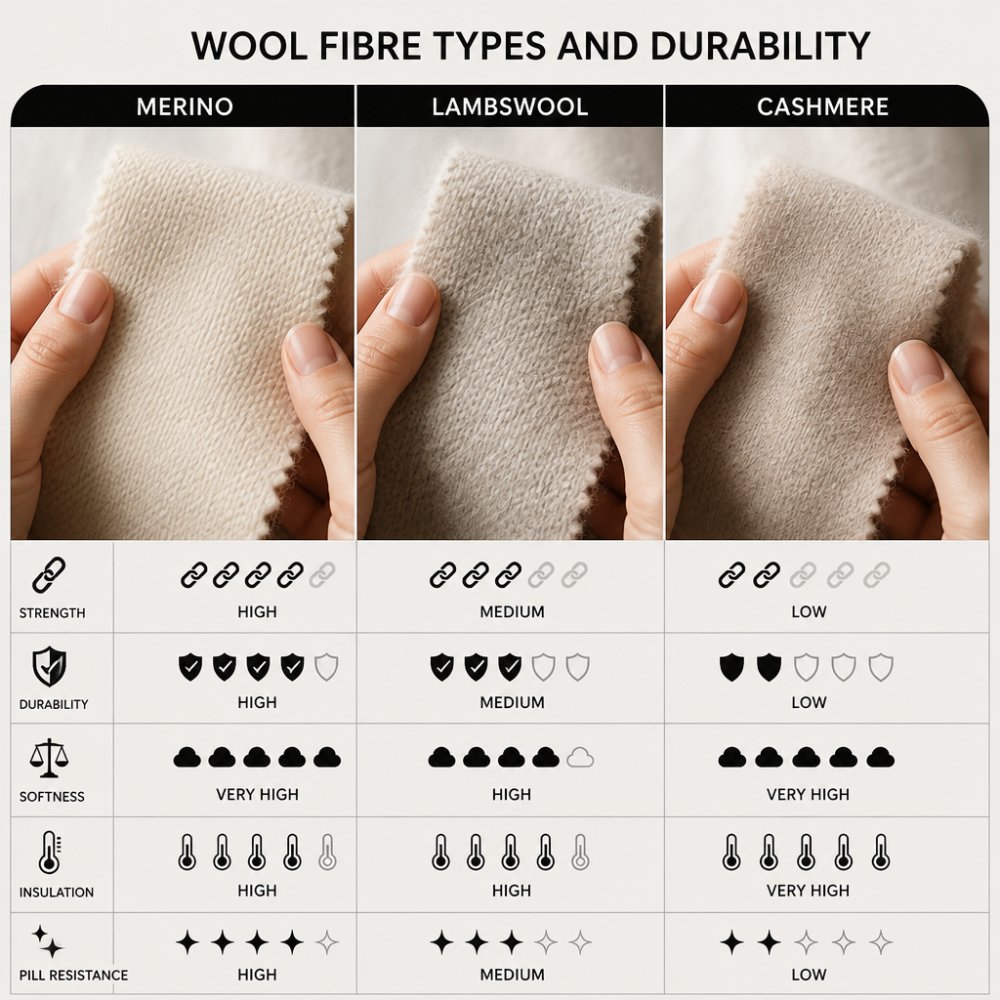
Lambswool, sourced from sheep in their first shearing, has fibres typically 23-30 microns, slightly coarser than Merino but still soft. First-shearing wool has fewer weak points than older sheep's wool. However, lower elasticity makes it more prone to pilling without proper care. A quality lambswool throw lasts years but requires more thoughtful maintenance than Merino.
Merino vs Lambswool Durability
Merino outperforms lambswool in direct durability comparisons due to fibre elasticity and lower pilling tendency. Merino's finer micron count and natural bounce mean throws maintain loft and appearance after years of use. Lambswool needs more careful washing and storage to prevent permanent deformation. The trade-off is comfort: lambswool feels softer initially, while Merino's refined hand-feel develops over time. For long-term use, Merino's superior elasticity and pilling resistance make it the more sensible investment.
Cashmere, Mohair, and Other Premium Fibres
Cashmere represents the luxury end with micron counts as fine as 12-15 microns (peer-reviewed research). This extreme fineness makes cashmere soft but delicate. Cashmere fibres have less tensile strength than Merino, making them prone to breakage. A cashmere throw lasts generations if treated carefully, but demands careful washing, moth protection, and minimal friction.
Mohair, with a micron count of 24-26 microns, has stronger fibres than cashmere but lower elasticity. Mohair throws develop characteristic sheen and resist pilling well, though construction quality becomes critical since smooth fibres can slip if poorly woven.
Blended throws combining wool with cashmere, silk, or synthetics offer durability advantages. A cashmere-wool blend provides cashmere's softness with wool's elasticity and strength. Synthetic blends are more durable than pure wool but sacrifice the breathability and temperature regulation that makes wool throws valuable.
Key Quality Indicators: Micron Count and GSM Rating
Micron count measures fibre diameter in micrometres. Lower counts mean finer, softer fibres; higher counts mean coarser, more durable fibres. For throws, aim for Merino wool between 17-22 microns, fine enough for skin comfort, coarse enough to resist pilling and wear.
GSM (grams per square metre) rating indicates fabric weight and density. Higher GSM means more yarn per square inch, generally indicating better durability and warmth. Quality wool throws sit between 400-600 GSM. Below 350 GSM feels thin and provides inadequate insulation; above 700 GSM becomes heavy and less versatile. The Casa Sereno Wool Blanket achieves optimal durability at 500+ GSM.

GSM and micron count work together. A 20-micron Merino at 500 GSM outlasts a 25-micron lambswool at 350 GSM because the combination of fine fibres and adequate density creates superior abrasion resistance. Check both specifications when shopping.
Weave Density and Construction Quality
How fibres are woven determines wear resistance. Tight weaves create durable throws because fibres are locked together; loose weaves allow shifting and separation, leading to pilling and unravelling. A properly constructed throw feels substantial and consistent across its entire surface.
Worsted vs Woolen Weaves
Worsted weaves (from combed, parallel fibres) produce tighter, smoother fabrics than woolen weaves (from carded fibres). Worsted construction is more durable because parallel alignment reduces fibre movement and pilling. Woolen weaves offer better insulation by trapping more air. The best throws balance both: tight enough to resist wear, loose enough for thermal regulation. For durability, worsted-spun Merino at 500+ GSM outperforms woolen-spun lambswool at 350 GSM.
In-Store Durability Testing: The Stretch-and-Snap Test
Before purchasing, perform a simple stress test. Gently stretch a small section of the throw (roughly 10 cm) between your fingers for 3-5 seconds, then release and observe how quickly it returns to original shape.
A durable throw snaps back almost immediately, within 1-2 seconds, indicating strong fibre elasticity and tight weave construction. Slow return (5+ seconds) signals weak elasticity or loose weave, both signs of quick pilling and wear.
Repeat this test in three areas: centre, edge, and selvedge. Inconsistent results indicate uneven construction quality, a red flag for premature deterioration.
Checking for Selvedge and Edge Reinforcement
Look for a selvedge finish on edges, this reinforced border prevents unravelling and marks quality construction. The throw's surface should feel smooth and consistent. Rough patches, loose threads, or visible weave gaps indicate poor construction that deteriorates quickly.
Examine corners and seams closely. Quality throws have flat, secure seams, nearly invisible and as durable as the main fabric. Raw edges or threads pulling from seam lines signal the throw will unravel with use.
Yarn Ply: Understanding Weight and Durability
Yarn ply (the number of strands twisted together) affects durability. Two-ply yarn is stronger than single-ply because two strands resist breakage better. Quality throws often use two-ply or three-ply construction. A throw made from thicker, multi-ply yarn at 500+ GSM resists pilling and wear far better than single-ply at 350 GSM, even with identical fibre type.
When shopping, check both GSM and yarn construction if available. A 20-micron Merino at 500 GSM with two-ply yarn outlasts a 25-micron lambswool at 350 GSM with single-ply yarn due to superior abrasion resistance and fewer weak points.
How to Wash Wool Throws Without Shrinking
Shrinking occurs when wool fibres felt, they bond together and compress, permanently reducing size. This happens when wool experiences heat, moisture, and agitation simultaneously.
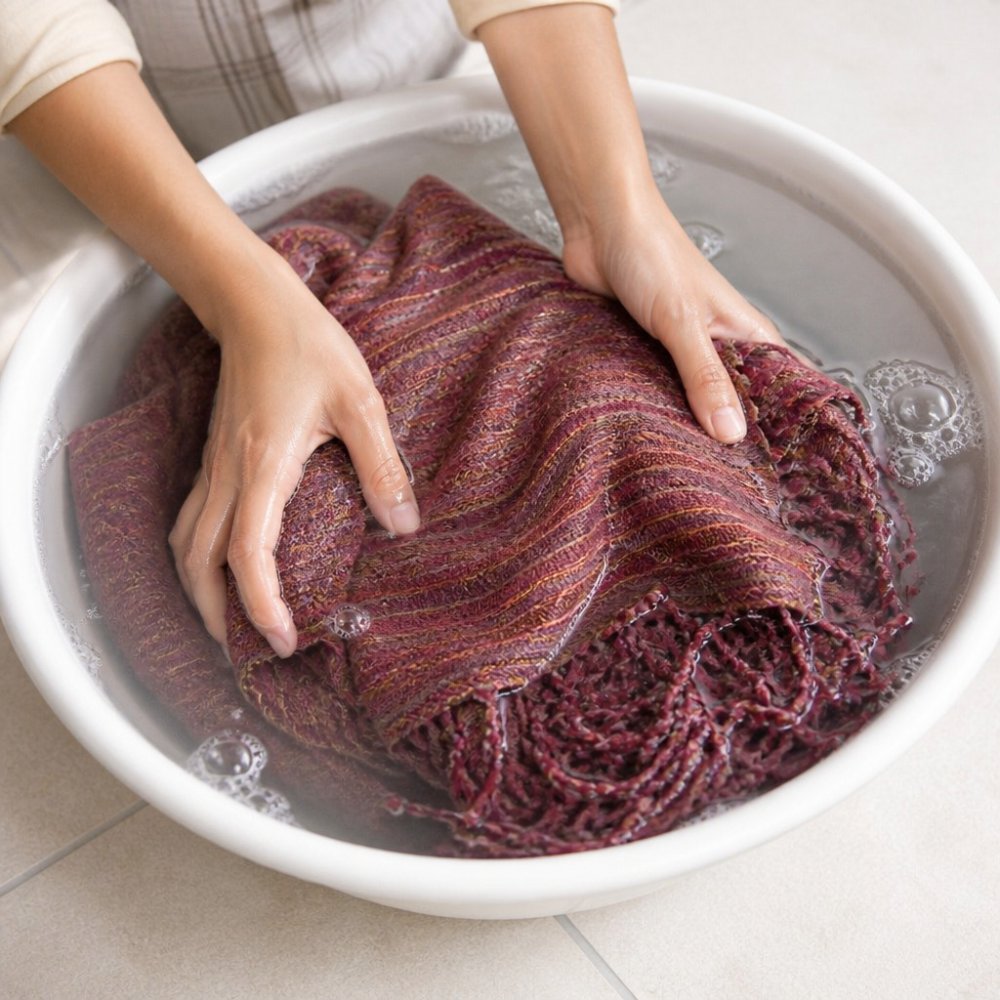
Wash wool throws in cool water (below 20°C) using wool-specific detergent. Regular detergents are too harsh and strip protective lanolin. Fill a basin, add detergent, submerge the throw and gently squeeze soapy water through fibres, never twist, wring, or agitate. Soak for 10-15 minutes, then rinse in cool water until soap is gone.
Never use a clothes dryer; heat causes felting. Gently squeeze excess water (don't wring), then lay flat on a clean towel or hang loosely over a drying rack. Air drying takes 24-48 hours but preserves structure. If using a washing machine, select the wool cycle with cold water and minimal spin, then flat dry.
Most quality wool throws need washing only every 6-12 months. Between washes, air them outside in sunlight; UV light refreshes wool and kills odour-causing bacteria. Spot-clean stains immediately with cool water and wool detergent before they set.
How to Prevent Pilling on Wool Blankets
Pilling occurs when short fibres work loose and tangle into balls. It's cosmetic rather than structural damage, but affects appearance. Prevention, removal, and restoration extend your throw's lifespan significantly.
Understanding Why Pilling Happens
Pilling happens most on lower-quality throws with inconsistent yarn or loose weaves. Fibres have less grip on each other, so movement causes them to escape the surface. Higher-micron wool and tightly woven throws pill less because fibres are held firmly in place. Friction points most prone to pilling are areas of frequent contact: sofa arms, where legs rest, or rough upholstery.
Prevention Strategies
Minimise friction by using your throw gently and avoiding rough surfaces. Wash carefully using cool water and gentle agitation; aggressive washing accelerates pilling. Store loosely, never compressed, because compression weakens fibre bonds. Rotate your throw regularly, move it to different positions or rooms every few weeks to distribute wear evenly and prevent concentrated friction.
Removing Pills Without Damaging the Throw
If pills appear, remove them carefully. A fabric comb or de-pilling tool works better than picking by hand, which damages surrounding fibres. Gently brush the surface in one direction; pills gather and can be removed. Apply light pressure and use smooth, unidirectional strokes. Avoid scrubbing or circular motions that damage the underlying weave. A well-executed de-pilling session can restore appearance almost completely.
Restoring Felted or Matted Wool
If your throw has experienced accidental felting from hot water or excessive agitation, restoration is possible. Soak the affected area in cool water with a small amount of hair conditioner or wool-specific fabric softener for 15-20 minutes. Gently massage the area with your fingertips, working in the direction of the weave. Rinse thoroughly in cool water.
Lay the throw flat on a clean towel and gently stretch the felted area back to original shape. This process may need repeating 2-3 times over several days. Once dry, the felted area should feel softer, though it may not return to original texture if felting was severe. For extensive felting, professional restoration by a textile specialist is worth considering.
Addressing Snags and Pulled Threads
If you notice a pulled thread, resist pulling it further. Use a crochet hook or needle to gently pull the thread back through the weave from the reverse side. Work slowly and carefully.
For a snag creating a small hole or tear, use a needle and matching wool yarn to repair it. Using small, tight stitches (roughly 2-3 mm apart), sew torn edges together on the reverse side. Keep stitches close to prevent reopening. Gently brush the repaired area to blend stitches into surrounding weave. Prompt attention to snags keeps throws structurally sound for decades.
When to Seek Professional Care
For damage beyond snags or minor felting, large holes, extensive staining, or severe felting across large areas, professional textile restoration is best. Specialists can re-weave damaged sections, deep-clean stubborn stains, and restore felted wool. The cost typically ranges $50-$150 depending on severity, often justified for high-quality throws you plan to keep long-term.
Certifications and Sourcing Standards
Quality certifications indicate a throw meets specific standards for fibre quality, ethical production, and environmental responsibility.
The Responsible Wool Standard (RWS) certifies wool comes from farms meeting animal welfare and environmental standards. RWS-certified wool comes from flocks where sheep are treated humanely, land is managed sustainably, and mulesing is prohibited. RWS certification signals the producer cares about quality at every stage.
GOTS (Global Organic Textile Standard) certification applies more often to blended throws. GOTS certifies fibres are grown without synthetic pesticides or fertilisers, and processing meets environmental and labour standards. For wool-cotton or wool-silk blends, GOTS ensures the entire throw meets organic standards.
Look for throws with at least one certification. They're verified by independent auditors, not marketing language. Certified throws typically cost more, reflecting genuine quality control and ethical sourcing.
Sizing, Seasonal Versatility, and Long-Term Investment
Throw sizing matters significantly. A standard throw measures approximately 130 x 170 cm, draping nicely over a single armchair or bed foot. Larger throws (150 x 200 cm or bigger) work better for sofas; smaller throws (100 x 150 cm) suit accent chairs and store more easily. The Casa Sereno Wool Blanket at 150 x 170 cm balances substantial coverage with manageable size.
Seasonal versatility extends a throw's value. Merino wool's moisture-wicking properties and breathability make it comfortable year-round, regulating temperature by releasing moisture in summer and trapping warmth in winter. A quality wool throw isn't winter-only; it's an investment earning its place every season.
Durability compounds value over time. A throw costing $110-$199 today, if properly cared for, remains beautiful and functional for 10-15 years, a cost per year of $7-20, lower than replacing cheaper throws every 2-3 years. A durable wool throw becomes part of your home's character rather than a disposable accessory.
Choosing a durable wool throw means understanding fibre types, construction quality, and long-term care. The throws that last are made from quality Merino or lambswool, woven tightly at 400+ GSM, and treated with gentle washing and proper storage. Casa Sereno's curated collections bring together these durability markers with timeless design, so your throw remains both beautiful and functional for years. Explore our Woolen Throw and Wool Blanket to find the piece that transforms your living space into a sanctuary of comfort and elegance.

Frequently Asked Questions
What is the most durable type of wool for throws and blankets?
Merino wool offers excellent durability due to its natural elasticity and fine fibre diameter (typically 17-24 microns), which resists pilling and maintains shape through years of use. Lambswool is also highly durable, with a slightly thicker fibre (23-30 microns) that provides robustness. For maximum longevity, look for durable wool throws with a GSM rating of 400 or higher and a tight weave density. Cashmere and mohair are luxurious but require more careful handling to preserve their delicate structure.
How can you tell if a wool throw is high quality?
High-quality wool throws display several hallmarks: a micron count below 25 (finer fibres feel softer and resist pilling), a GSM rating between 400-600 (indicating substantial weight and durability), and a tight, even weave with no loose threads or uneven areas. Check the fibre content label, virgin wool indicates new fibres, while worsted construction (combed and tightly spun) offers superior durability. Look for certifications like GOTS (Global Organic Textile Standard) or RWS (Responsible Wool Standard), which guarantee both quality and ethical sourcing. Run your hand across the surface; premium throws have a smooth drape and consistent hand-feel with no visible pilling.
Is Merino wool more durable than lambswool?
Merino and lambswool offer different durability profiles. Merino wool has finer fibres (17-24 microns) with exceptional elasticity, making it highly resistant to pilling and better for frequent use. Lambswool (23-30 microns) is thicker and offers greater insulation but may pill more readily with heavy friction. For a durable wool throw you'll use daily, Merino excels; for occasional layering or decorative throws, lambswool performs well. The real difference lies in weave density and GSM rating, a well-constructed lambswool throw often outlasts a poorly made Merino one.
How long should a quality wool throw last if cared for properly?
A high-quality wool throw with proper care can last 10-15 years or more. Longevity depends on fibre type, GSM rating, weave density, and maintenance. Merino and lambswool throws rated 400+ GSM with tight weaves resist wear and pilling effectively. Hand washing in cool water with mild detergent, air drying flat, and occasional brushing with a soft-bristled garment brush extend life significantly. Avoid dry cleaning and excessive heat, which damage fibres. Store in breathable cotton bags away from direct sunlight and moisture. With these practices, your investment in a durable wool throw becomes a timeless piece that ages gracefully.
This article was written using GrandRanker

