Table of Contents
- How to Wash White Sheets to Keep Them Bright
- How Often to Wash Quilt Covers and Bedding Sets
- How to Remove Yellow Stains from Pillows
- Natural Whitening Agents That Work
- Water Temperature and Drying Methods for Brightness
- Hard Water and Mineral Buildup: What You Can Do
- Storage and Rotation to Keep Bedding Looking New
- Frequently Asked Questions
Last Updated: September 14, 2026
How to Wash White Sheets to Keep Them Bright
To keep bedding genuinely white comes down to three things: how you pre-treat stains, how hot you wash, and how you dry. Get those right and cotton sheets stay crisp for years rather than months.
This guide from Casa Sereno covers the full routine, from pre-soak to storage, so your bed linens hold their colour and fibre integrity wash after wash.
The most common mistake is treating every white load the same. Protein stains, mineral deposits and general body oils each respond to different treatments, and using the wrong one sets the stain rather than lifting it.
Pre-Soak and Stain Treatment for Whites
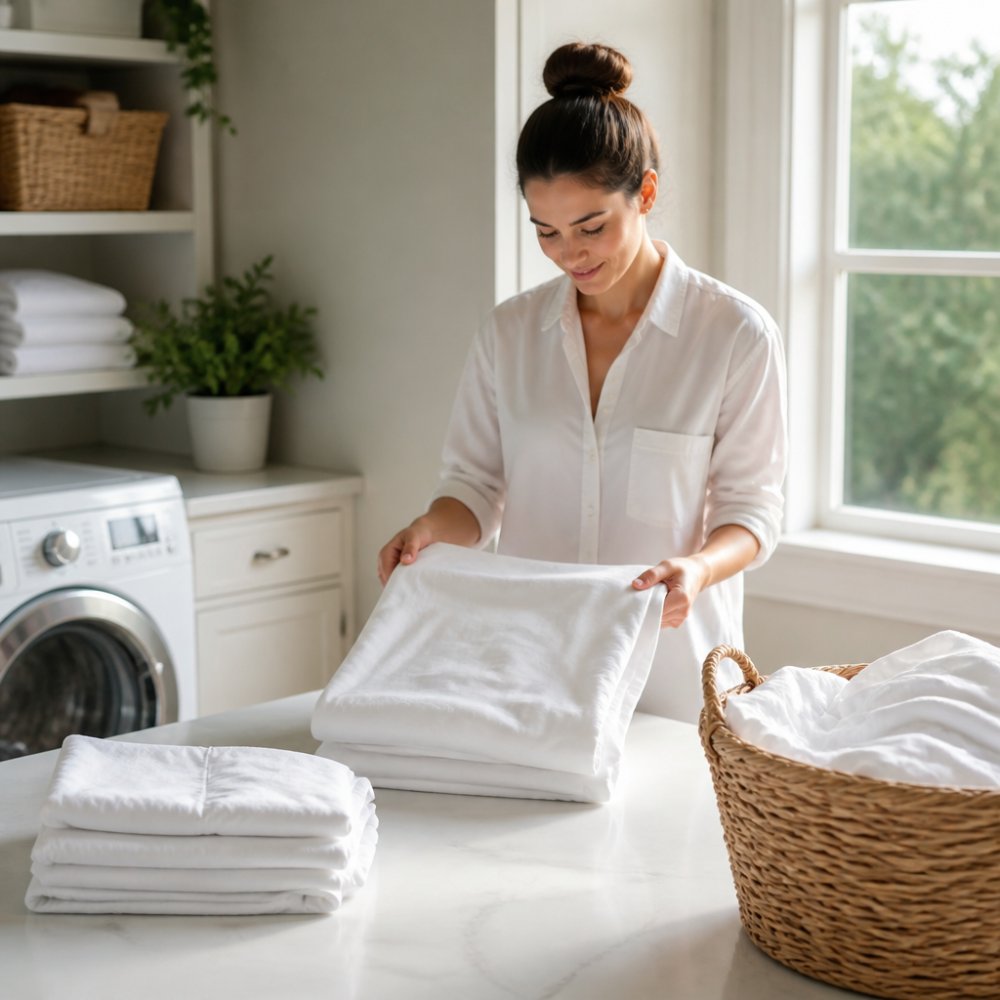
Pre-soak white sheets in cool water with oxygen-based bleach for 30 minutes before the main wash (How to do your laundry during the COVID-19 pandemic). This loosens body oils and sweat without the fibre damage that chlorine bleach causes over time.
For specific marks, treat before soaking:
- Sweat and deodorant stains: dab with a paste of bicarbonate of soda and water, leave 15 minutes
- Blood or protein stains: rinse in cold water first, never hot, which sets the protein
- Yellowed pillowcases: soak in oxygen bleach for an hour, then wash normally
How Often to Wash Quilt Covers and Bedding Sets
Wash quilt covers and sheet sets every one to two weeks. Pillowcases need more frequent attention, roughly every three to four days, because they collect facial oils and skincare residue that accelerate yellowing.
A simple schedule keeps laundry manageable:
Item |
Frequency |
Why |
|---|---|---|
Pillowcases |
Every 3-4 days |
Facial oils and skincare transfer |
Sheets |
Weekly |
Sweat and body oils |
Quilt covers |
Fortnightly |
Dust mites and surface soil |
Throws and blankets |
Monthly |
Less direct skin contact |
Washing Frequency by Fabric Type
Linen and cotton tolerate weekly washing and actually soften with use. Synthetic fibres and delicate voiles need a gentler cycle and cooler water to protect fibre integrity.
Thread count matters less than weave quality here. A well-made cotton pillowcase like the Louis Pillowcase White holds up to regular washing far better than a high-count sheet with a loose weave.

How to Remove Yellow Stains from Pillows
Yellow stains on pillows are oxidised body oils, sweat and skincare residue that have bonded to the fibre, not dirt, and not something extra detergent will shift. The fix depends almost entirely on what is inside the pillow, because the fill dictates what chemistry and heat it can survive.
Identify the fill first
Check the care label before any treatment. The wrong method will ruin the pillow faster than the stain would.
- Polyester and microfibre: the most forgiving. A 1-2 hour soak in oxygen bleach dissolved in hot water (around 60°C), then a gentle cycle with normal detergent, is safe. Repeat the soak rather than increasing the bleach dose for stubborn marks.
- Down and feather: durable but slow to dry and prone to clumping. Use a lukewarm oxygen-bleach soak (no hotter than 40°C), wash on a gentle cycle with a small amount of mild detergent, and dry on low with dryer balls to break up clumps. Never use chlorine bleach, it degrades the quills.
- Memory foam and latex: do not soak. Water breaks down the foam structure and it will not dry through. Spot-treat only: dab a diluted oxygen-bleach solution or a bicarbonate paste onto the surface, leave briefly, then blot with a damp cloth and air dry completely out of direct sun.
- Buckwheat, wool and other natural fills: usually spot-clean only. Soaking risks mould inside the fill. Refresh the outer cover in the wash and air the inner fill.
Why the yellowing comes back
Two factors drive recurrence. First, incomplete drying, any residual moisture in the fill oxidises over time and re-yellows. Dry pillows fully, ideally with airflow on both sides, before putting them back on the bed. Second, mineral buildup from hard water. If your supply is mineral-heavy, every wash leaves a small calcium deposit that traps oils and dulls the fabric. Adding a cup of white vinegar to the rinse, or using a detergent formulated for hard water, reduces that cycle.
A maintenance rhythm that prevents the problem
- Use a pillow protector under the pillowcase and wash it fortnightly, it absorbs the oils so the pillow itself stays cleaner.
- Wash pillowcases every 3-4 days, as the draft's schedule above notes.
- Deep-clean pillows every 3-4 months for polyester and down, spot-clean memory foam as needed.
- Rotate two pillows per sleeper so each gets rest and full drying time between washes.
Natural Whitening Agents That Work
Vinegar, bicarbonate of soda and lemon juice all have a place in a white-bedding routine, but they are not interchangeable and none of them is a substitute for oxygen bleach when yellowing has already set in. Understanding what each one actually does stops you wasting effort on the wrong treatment.
White vinegar (acetic acid). Its job is residue removal, not bleaching. Detergent and fabric softener leave a slightly alkaline film on cotton that scatters light and reads as grey. A half-cup of white vinegar in the rinse cycle neutralises that film and leaves fibres smoother, which is why bedding feels softer without softener. It also helps dissolve the calcium carbonate that hard water deposits in the weave, the single biggest cause of whites turning dull in areas with mineral-heavy supply. Do not mix it with chlorine bleach; the reaction releases chlorine gas.
Bicarbonate of soda (sodium bicarbonate). A mild alkali that lifts acidic soils, sweat, body oils, deodorant residue, and neutralises odour rather than masking it. For maintenance, add half a cup to the drum with your normal detergent. For spot work, a thick paste of three parts bicarbonate to one part water, left 15-20 minutes, shifts underarm and collar marks on pillowcases. It is gentle enough for linen and bamboo, but it is abrasive if scrubbed hard, so dab rather than rub on fine weaves.
Lemon juice. A mild natural acid and a weak photosensitiser. Its brightening effect comes mostly from the sunlight it is paired with, not the juice itself, the UV does the oxidising work. That also means undiluted lemon juice left on fabric in direct sun can bleach unevenly and weaken fibres, so dilute it (roughly one part juice to four parts water), keep exposure short, and rinse thoroughly. Never use it on silk, wool or anything with elastane.
What none of them do. None of these three breaks down the oxidised body-oil compounds that cause genuine yellowing on pillows and stored sheets. That is a chemical reduction job, and oxygen-based bleach (sodium percarbonate) is the correct tool. Treat vinegar, bicarbonate and lemon as maintenance between oxygen-bleach treatments, not as replacements for them.
Water Temperature and Drying Methods for Brightness
Hot water washes clean whites best, but only for sturdy cotton and linen. Use 60°C for white cotton sheets, 40°C for coloured or mixed loads, and cold water for delicate fibres and anything with elastane.
Drying matters as much as washing. Sunlight bleaching is real: UV light naturally breaks down the compounds that cause yellowing. Air drying whites in direct sun for a few hours keeps them bright without chemicals. If you use a dryer, choose a low heat setting and remove items slightly damp to avoid heat damage.
Hard Water and Mineral Buildup: What You Can Do
Hard water leaves mineral buildup in fabric that traps soil and dulls whites over time. If your whites feel stiff or look grey despite proper washing, water quality is the likely cause.
Solutions that work:
- Add a water softener or a cup of white vinegar to the wash
- Use a detergent formulated for hard water
- Run an occasional hot wash with a washing machine cleaner to clear mineral scale
Smart Approved WaterMark guidance on water quality
Storage and Rotation to Keep Bedding Looking New
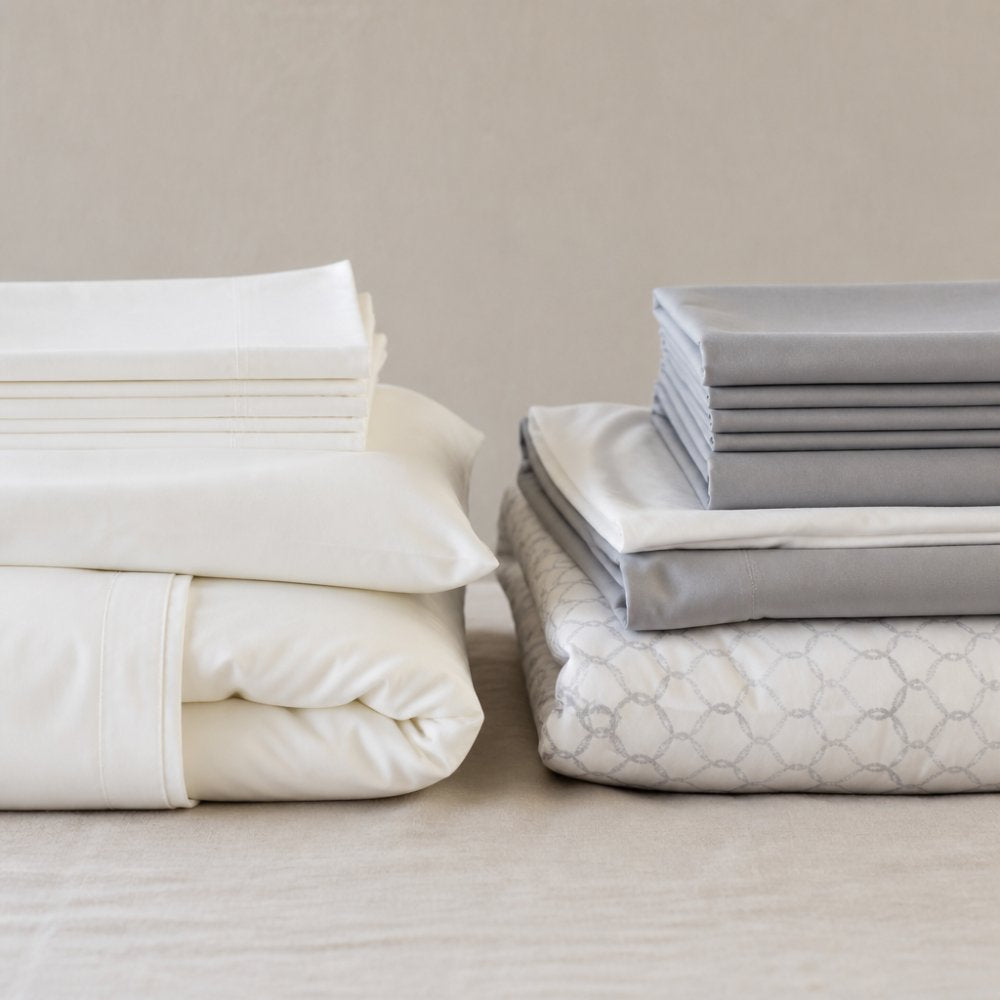
Store clean, fully dry bedding in a cool, dark cupboard away from direct sunlight. Damp linens stored in a warm space develop mildew and yellow patches that are difficult to reverse.
Rotation extends textile lifespan more than any single product. Keep two or three sets in rotation so each gets rest between washes, and fold rather than stuff to prevent creasing that weakens fibres over time.
If you're building a rotation, a second set in a contrasting tone like the Pillowcase Willow lets you alternate while keeping the bed looking considered rather than mismatched.

Frequently Asked Questions
How do hotels keep their bedding so white?
Hotels use commercial laundry processes with high temperatures, oxygen-based bleaching agents, and industrial detergents that remove mineral buildup and stains. They also replace bedding frequently. For home care, you can mimic this by washing whites in hot water (if the fabric allows), using a gentle oxygen bleach, and avoiding fabric softener which leaves residue that dulls whites over time.
How do I keep my white sheets from turning yellow?
Yellowing often comes from body oils, sweat, and detergent residue that build up over time. Wash white sheets regularly in the hottest temperature the fabric care label allows, use a pre-soak for stubborn areas, and skip fabric softener. Adding half a cup of baking soda to the wash cycle can help neutralise odours and lift dullness. For hard water areas, a water softener or a mineral-removing laundry additive prevents the mineral deposits that cause yellowing.
How often should you replace your bed sheets?
With proper care, quality cotton or linen sheets can last two to three years of regular use. Signs it's time to replace include thinning fabric, persistent stains or yellowing that won't lift, and pilling that affects comfort. Rotating between two or three sets extends the life of each, as does washing on a gentle cycle and avoiding over-drying. Investing in well-made bedding from the start reduces the frequency of replacement.
What is the best way to wash luxury linen?
Luxury linen should be washed on a gentle cycle in cool or lukewarm water with a mild, pH-neutral detergent. Avoid bleach and fabric softener, which damage linen fibres and reduce absorbency. Tumble dry on low or line dry in the shade to prevent fading. Remove while slightly damp and smooth by hand or iron on a low setting. Proper care keeps linen soft and helps it last for years.