

Table of Contents
- Start With Your Base Layer
- Best Cushion Sizes for Sofa and Bed Styling
- How to Mix and Match Cushion Patterns Without Clashing
- Building Your Colour Palette and Texture Coordination
- Styling Cushions on a Bed: Creating Visual Interest
- Arranging Cushions on a Sofa: The Rule of Three and Beyond
- Maintenance and Care for Long-Lasting Layered Cushions
- Budget-Friendly and Seasonal Layering Transitions
Last Updated: August 27, 2026
Start With Your Base Layer
The foundation of any successful cushion arrangement is a proper base layer, the largest cushion or set of cushions that anchors your entire composition. Without it, even beautiful accent pieces look scattered and unfocused.
Think of your base layer as the canvas. On a sofa, this typically means one or two large cushions (usually 50-60cm) positioned at the back or sides. On a bed, it's the larger decorative cushions arranged at the headboard. The base layer establishes scale, determines your colour palette, and sets the tone for every decision that follows.
Casa Sereno's approach emphasises timeless, neutral-toned pieces that won't date. A well-chosen base layer in natural linen or soft cotton becomes the anchor that allows you to experiment with bolder textures and patterns on top. Invest in quality here, your base layer should last for years, not be swapped out seasonally.

Material matters significantly. A base layer in heavyweight cotton or linen holds its shape better and creates the visual impression of luxury. Lighter fabrics tend to collapse, making your arrangement feel flat and uninspired.
Best Cushion Sizes for Sofa and Bed Styling
Proportion is everything when layering decorative cushions, and choosing the right sizes is where most people stumble. The relationship between cushion sizes creates visual rhythm and prevents clutter.
For sofas, use a tiered size system: start with two 50cm cushions at the back corners, add 40cm cushions in the middle section, then layer 30cm accent pieces in front. This graduated approach creates depth and prevents your sofa from looking like a wall of identical shapes.
On beds, begin with two 65-70cm rectangular cushions at the headboard (these anchor the styling), then layer 50cm square cushions in front, and finish with smaller 30-40cm accent pillows. This creates a pyramid effect that draws the eye upward.
The rule of three applies here: three distinct sizes create visual interest without overwhelming the space. More than three sizes feels chaotic; only two feels too uniform.
Casa Sereno's 40cm Prefilled Cushion works beautifully as a mid-layer piece. Its generous proportions hold their shape without constant fluffing, and the prefilled construction means consistent volume without maintenance hassle. For renters or anyone hesitant about permanent pieces, prefilled cushions eliminate guesswork.
Consider your furniture's depth too. A shallow sofa (around 75cm deep) handles smaller cushions more effectively than a deeper sectional. Measure your furniture before buying, slightly oversized cushions create a more luxurious impression than ones that fit too snugly.
How to Mix and Match Cushion Patterns Without Clashing
Pattern mixing requires understanding how patterns relate in terms of scale and visual weight. Start with an "anchor pattern", usually a larger-scale geometric, floral, or textured design you genuinely love. This becomes your reference point.
Next, introduce a secondary pattern that shares at least one colour with your anchor but operates at a different scale. If your anchor is a large geometric print, your secondary might be a smaller-scale stripe or subtle texture. Scale difference is crucial, it prevents patterns from competing for attention.
Finally, add a solid or nearly-solid piece (a tonal cushion in one of the colours from your patterns) to give the eye a place to rest. This solid acts as a visual brake, preventing pattern fatigue.
Avoid mixing patterns with the same visual weight at the same scale. Two large-scale florals side by side will clash; two small geometric prints might disappear into each other.
Consider colour temperature too. Warm patterns (terracotta, ochre, warm neutrals) sit differently next to cool patterns (slate, navy, cool greys) than they do next to other warm tones. If your patterns don't share a colour family, they need to be far enough apart visually to appear intentional.
The Petal Poetry Deco Cushion demonstrates this principle, its floral pattern is large enough to stand as an anchor, but the colour palette is soft enough to work alongside other patterns without dominating.

Building Your Colour Palette and Texture Coordination
Colour is where layering becomes personal; texture is where it becomes professional. Beautiful textures in clashing colours look chaotic, while a cohesive colour palette with mismatched textures looks incomplete.
Start by choosing your dominant colour (roughly 60% of your layered cushions). This is usually a neutral (cream, grey, taupe, soft white) or a muted version of your favourite colour, creating visual continuity.
Your secondary colour (roughly 30%) should contrast enough to be interesting but harmonise enough to feel intentional. If your dominant is warm cream, your secondary might be soft sage or warm terracotta.
Your accent colour (the remaining 10%) is where you take risks. One cushion in this jewel tone or unexpected pop is enough; more than that stops being an accent and starts competing with your primary palette.
Texture coordination is equally important. Balance multiple patterned pieces with smooth, tactile textures. Linen, cotton, wool, and velvet each catch light differently. Layering too many textured pieces (embroidered, quilted, chunky knit) together makes the arrangement feel busy rather than curated.
The Cushion Adorabella in cotton offers smooth, refined texture that grounds more textured neighbours. This principle explains why minimalist interiors often feel more luxurious, there's breathing room.
Styling Cushions on a Bed: Creating Visual Interest
Bed styling requires a different approach than sofa styling because you're working with a horizontal canvas viewed from multiple angles. The goal is creating a focal point at the headboard while maintaining balance across the entire bed.
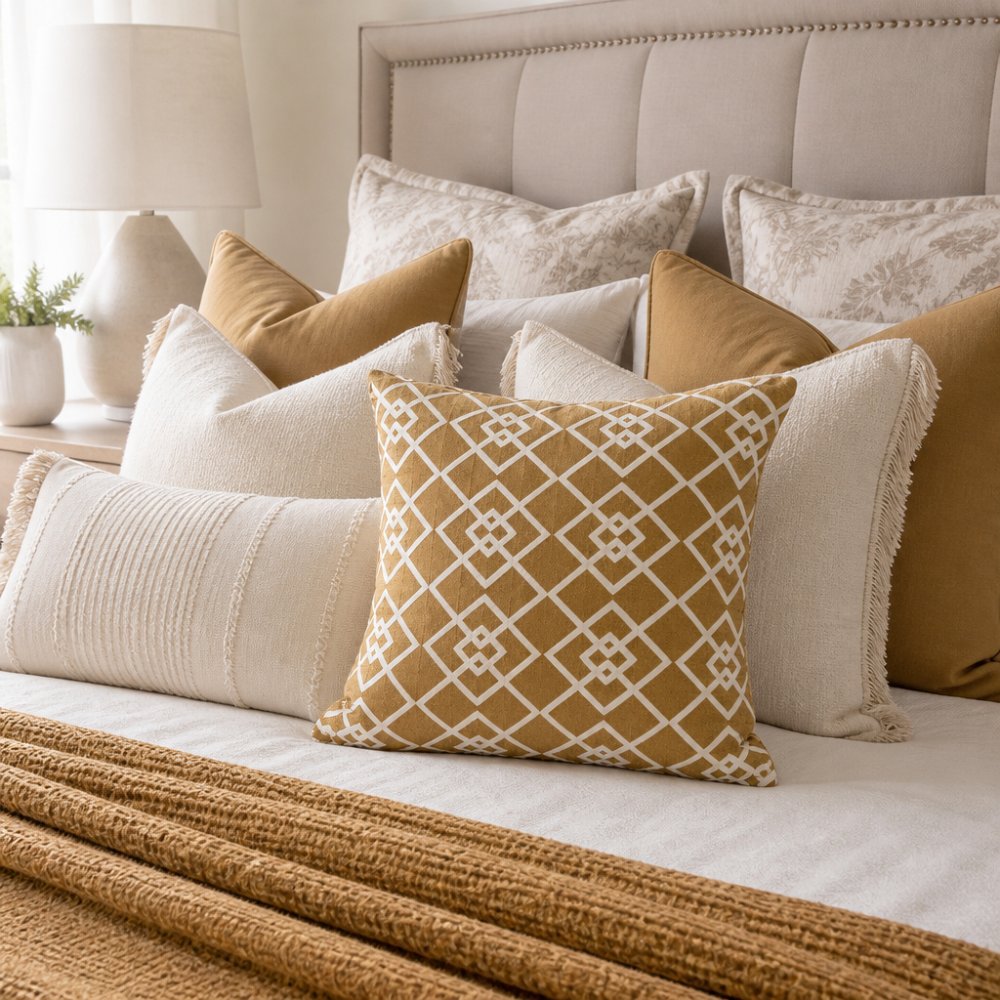
Begin with your base layer: two large rectangular cushions (65-70cm) positioned vertically at the headboard. Position them slightly off-centre rather than perfectly symmetrical; asymmetry feels more intentional and modern.
Layer your mid-size cushions (50cm square) in front of the base layer, again slightly asymmetrical. This creates depth and prevents flatness. The Petal Poetry Deco Cushion works beautifully at this layer because its visual weight justifies its position without overwhelming the composition.
Add smaller accent cushions (30-40cm) in front, clustering them slightly to one side. This creates visual flow that guides the eye across the bed.
The throw blanket is crucial, it adds softness, texture, and invitation. Drape it casually over one arm of your cushion arrangement rather than folding it neatly.
Ensure your bed styling is actually functional. If you're layering eight cushions but only use four when you sleep, you've created work rather than beauty. The best styling is an arrangement you'll actually maintain.
Arranging Cushions on a Sofa: The Rule of Three and Beyond
The rule of three means creating three distinct visual zones or focal points in your arrangement, not necessarily using exactly three cushions.
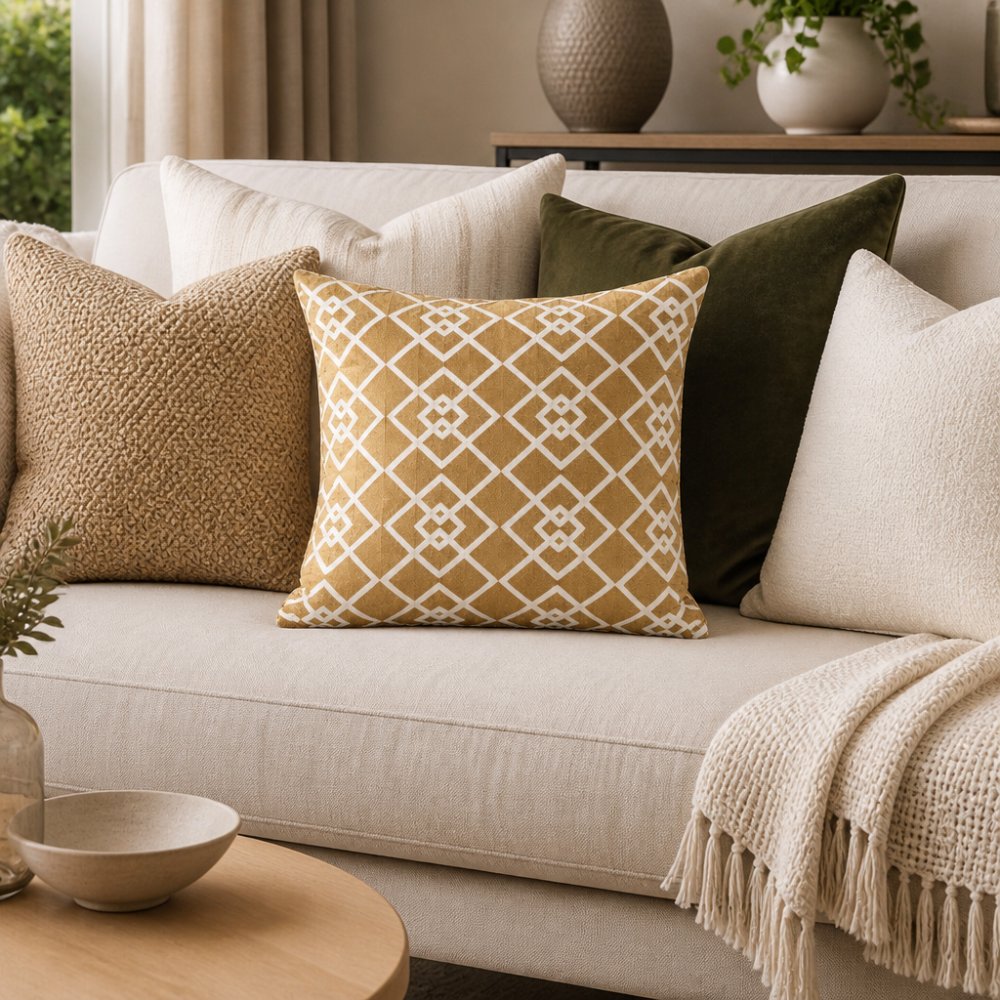
On a three-seater sofa, position your base layer (two large 50cm cushions) at the back corners, create a middle zone with 40cm cushions and textural interest, then finish with smaller accent pieces clustered toward one end. This creates movement and prevents static feeling.
Deliberate asymmetry is key. A perfectly symmetrical arrangement feels formal and uninviting. Slight asymmetry, more cushions on one side, a throw draped over one arm, creates the impression that someone actually sits here and enjoys the space.
Consider how people actually use your sofa. If it's primarily for sitting, don't layer so many cushions that guests have nowhere to sit comfortably. If it's primarily for visual impact, you can be more generous with layering.
The Casa Sereno 40cm Prefilled Cushion is ideal for sofa layering because its consistent plumpness won't collapse under weight or lose shape from regular use.
Layering on a sectional requires concentrating your most interesting pieces in one zone and using simpler pieces elsewhere. Avoid scattering identical cushions across every surface, as this dilutes visual impact.
Maintenance and Care for Long-Lasting Layered Cushions
Regular fluffing keeps cushions looking plump. A gentle squeeze and reshape every few days prevents permanent creases. Prefilled cushions require less frequent fluffing than loose-fill alternatives.
Rotate cushions every few months to prevent uneven fading and wear. Vacuum monthly with an upholstery attachment to keep dust from settling into fabric. For embroidered or textured pieces, use a softer brush attachment to avoid snagging threads.
Spot clean immediately when spills occur, blot rather than rub with a clean cloth. Test any cleaning solution on an inconspicuous area first.
Before storing cushions, ensure they're completely clean and dry. Store in breathable cotton bags rather than plastic (which traps moisture). Keep them in cool, dry locations away from direct sunlight.
Sunlight fades colour vibrancy. If your cushions sit in a south-facing window, use sheer curtains to filter intense afternoon light.
Check seams and zips regularly for wear. Small loose threads or separating seams are easy to repair if caught early.
Budget-Friendly and Seasonal Layering Transitions
Layering doesn't require complete overhauls every season. Strategic piece swaps create freshness without expense or effort.
Start with permanent base layers in neutral, timeless colours. One or two quality base cushions in cream or grey become your anchor for multiple styling seasons.
Seasonal accents create budget-friendly layering. In warmer months, introduce lighter fabrics and brighter accent colours. In cooler months, swap in heavier textures (wool, velvet, chunky knit) and deeper, warmer tones.
The Embroidered Cushion works beautifully for this approach because its pattern transcends seasons. A single well-chosen patterned piece can anchor multiple seasonal arrangements.

Buy quality in base layers and neutral supporting pieces. Experiment with trend-driven or bold colours in smaller, less expensive accent pieces. If a colour trend passes, you've only invested in one or two accent cushions.
Thrifting and vintage shopping offer budget-friendly options. A vintage linen cushion cover or well-made older textile adds character at a fraction of new-piece pricing. Mixing new and older pieces creates more interesting arrangements than using only new items.
Consider learning basic sewing skills. Simple repairs, replacing zips, or adding new covers to existing cushion forms costs far less than buying new pieces.
Creating a beautifully layered cushion arrangement is one of the most accessible ways to transform your living space. The principles of starting with a solid base layer, choosing complementary sizes, mixing patterns strategically, and maintaining your pieces properly apply whether you're styling a sofa, a bed, or both.
Casa Sereno's curated collection of decorative cushions, from the versatile 40cm Prefilled Cushion to statement pieces like the Petal Poetry Deco Cushion, makes it easier to build an arrangement that feels intentional and luxurious. Quality pieces that hold their shape and colour over time eliminate the frustration of constantly refreshing your styling. When you invest in well-made cushions, you're investing in an arrangement that will look beautiful for years rather than seasons.
Australian Consumer Law and product durability standards
Interior design principles and home styling guidance
Sustainable textiles and fabric care best practices
Frequently Asked Questions
How many cushions should you layer on a sofa or bed?
The rule of three is a designer-backed principle: start with three cushions of varying sizes on a sofa, then add a fourth for symmetry if desired. For beds, layer four to six cushions at the headboard, mixing rectangular and square shapes for visual interest. Begin with your base layer, then add accent pillows and throws. The key is proportion, larger sofas handle more cushions without feeling cluttered, while smaller seating benefits from restraint. Odd numbers generally create asymmetry that feels intentional and sophisticated.
What's the best way to mix patterned and solid cushions when layering?
Combine patterned and solid cushions by anchoring with one dominant pattern, then layering solids in complementary tones. If your base pattern is bold, surround it with neutral solids; if subtle, pair it with tonal or textured pieces. A common mistake is mixing too many competing patterns, limit yourself to two patterns maximum, separated by solid-coloured cushions. Use your colour palette to tie them together: if your pattern contains navy and cream, echo those colours in your solid pieces. This creates cohesion without monotony.
How do I ensure layered cushions look expensive and intentional?
Invest in quality fabrics with varied texture, cotton, linen, and woven blends feel more luxurious than synthetic materials. Layer different fabric weights: pair plump, densely filled cushions with lighter, looser pieces for depth. Include designer-finished details like embroidery or subtle patterns. Arrange with intention using the rule of three and asymmetrical placement rather than perfect symmetry. Finish with a coordinating throw blanket. Casa Sereno's Embroidered Cushion ($45) and Petal Poetry Deco Cushion ($65) add texture and visual interest at different price points, allowing you to build a curated look without overspending.
Can you layer decorative cushions if you're renting and can't commit to a full redesign?
Absolutely. Layered cushions are one of the easiest ways to transform a rental space without permanent changes. Start with a base layer of neutral tones that complement existing furniture, then add statement accent pillows in colours or patterns you love. Since you're renting, focus on portable pieces, cushion covers are removable and washable, so you can change your look seasonally or take them with you. The 40cm Prefilled Cushion from Casa Sereno ($69) is a standalone piece that works instantly on sofas or beds without requiring any installation or commitment.
This article was written using GrandRanker

