Table of Contents
- 1. The Base Layer: Mattress Protectors and Toppers
- 2. How to Choose Luxury Bed Sheets That Last
- 3. Quilt Covers, Duvets and Inserts: The Complete Bedding Essentials List
- 4. Pillows, Shams and Protectors: The Finishing Touch
- 5. How to Layer a Bed Like a Designer
- 6. Caring for High-Quality Linen and Cotton
- 7. Budget vs. Investment: Building Your Bedding Essentials List Over Time
- Frequently Asked Questions
Last Updated: September 23, 2026
1. The Base Layer: Mattress Protectors and Toppers
A mattress protector is a fitted barrier that shields your mattress from spills, sweat and dust mites, while a mattress topper sits on top to change how the bed feels. Both sit beneath your sheets, and both extend the life of the most expensive piece you own.
Start here before you buy anything else. A protector keeps stains and allergens out of the mattress itself. A topper adds softness if your mattress runs firm, or firmness if it runs soft.
National Asthma Council Australia advice on bedding and dust mites
That's the foundation. Everything above it depends on this layer being right.
2. How to Choose Luxury Bed Sheets That Last
Choosing luxury bed sheets comes down to three things: fibre, weave and fit. Thread count matters far less than most retailers suggest.
Thread count is the number of threads woven into one square inch of fabric. Beyond roughly 400, the number stops telling you much, because some mills count multi-ply yarns to inflate it.
Look at the weave instead:
- Percale: crisp, matte, breathable. Best for hot sleepers.
- Sateen: smooth, slightly lustrous, heavier drape. Best for cool sleepers.
- Linen: relaxed texture, excellent airflow, softens with every wash.
Natural fibres like long-staple cotton and linen breathe better than synthetics, which matters for thermal regulation through the night. Check the fitted sheet has a deep pocket that matches your mattress depth, and confirm the flat sheet is long enough to tuck in properly.
3. Quilt Covers, Duvets and Inserts: The Complete Bedding Essentials List
A quilt cover is the removable outer layer you wash; the duvet insert is the padded inner layer that provides warmth. Buying them separately lets you change the look without replacing the warmth.
This is where most bedding essentials lists get vague, so here's the practical split:
- Quilt cover: the decorative, washable outer shell.
- Duvet insert: down or down alternative, rated by warmth.
- Comforter: a single quilted piece, cover and fill in one.
If you want one purchase that does both jobs, a bedspread set covers the bed in a single layer. The Sky Watson King Bedspread Set is finished in premium cotton at 290cm, and the Taj Queen Quilt Cover Set uses soft, durable cotton if you prefer a two-piece approach.


| Layer | What It Does | Wash Frequency |
|---|---|---|
| Mattress protector | Blocks spills and allergens | Every 4-6 weeks |
| Fitted and flat sheet | Direct contact layer | Weekly |
| Quilt cover | Outer decorative shell | Every 1-2 weeks |
| Duvet insert | Provides warmth | Seasonally |
| Pillow protector | Shields the pillow | Monthly |
4. Pillows, Shams and Protectors: The Finishing Touch
A pillow protector is a zippered or envelope cover that sits under the pillowcase to keep the pillow itself clean. A pillow sham is a decorative cover with a flanged edge, usually placed behind the sleeping pillow for styling.
Match the pillow to your sleep style. Side sleepers need a higher loft to keep the neck aligned; back sleepers do better with medium; stomach sleepers need something low and soft. Hypoallergenic fills suit anyone sensitive to dust.
Then layer the covers. The Marino Pillowcase pairs textured cotton with an understated look, while the Vintage Pillowcase measures 40x60cm in quality materials built to last.
Sky Watson King Bedspread Set →

5. How to Layer a Bed Like a Designer
Layering a bed like a designer means working bottom to top in a fixed order, so each layer shows a clean edge. Get the sequence right and the bed looks considered without looking fussy.
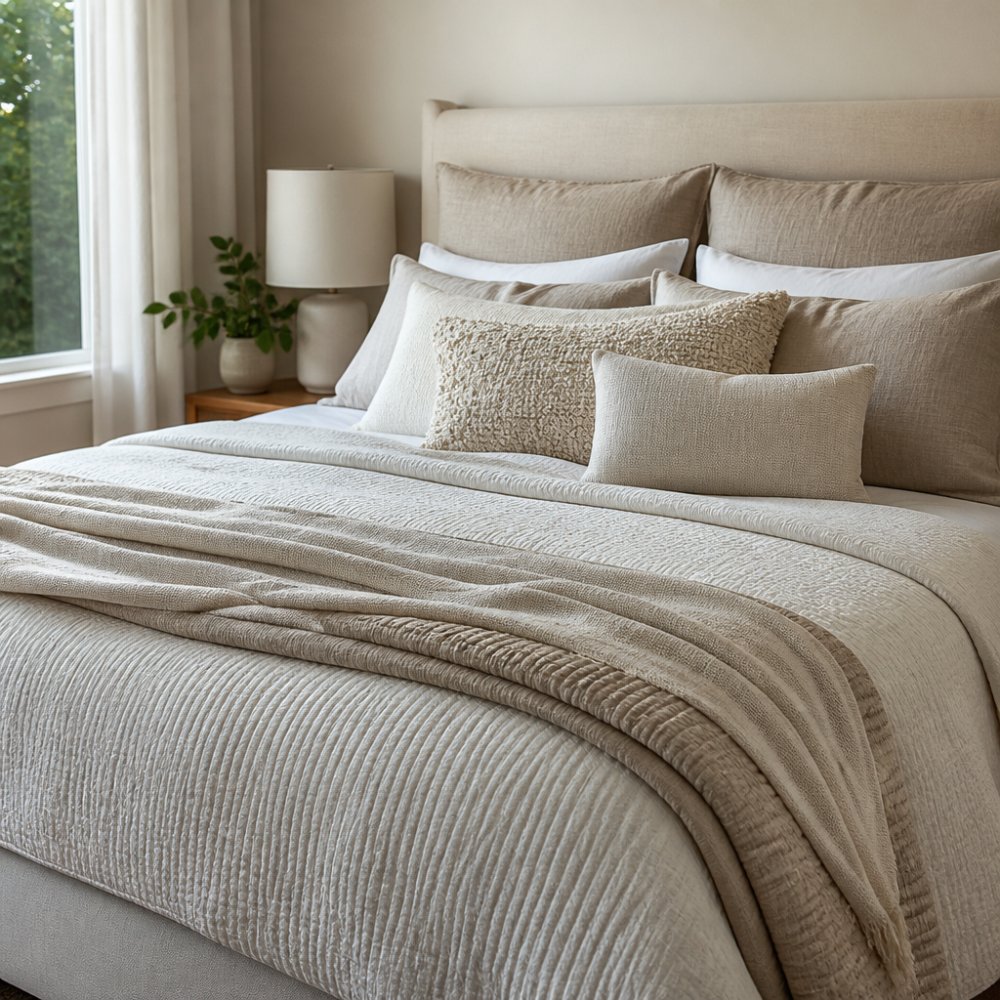
- Fit the mattress protector, then the fitted sheet, tucking corners firmly.
- Add the flat sheet, folded back about 30cm at the top.
- Lay the quilt cover and insert, pulled up to the fold.
- Fold a throw across the lower third for texture.
- Add sleeping pillows, then shams behind them.
- Finish with one or two decorative cushions, no more.
Good Housekeeping Institute guidance on textile care and laundering
6. Caring for High-Quality Linen and Cotton
Caring for high-quality linen and cotton comes down to temperature and restraint. Wash cool, dry gently, and skip the harsh additives.
- Wash at 30°C or lower to protect fibres and colour.
- Use a mild detergent; skip bleach and fabric softener, which coat the fibre.
- Line dry in shade where possible, or tumble on low.
- Rotate two sets so each rests between washes.
- Store folded, not compressed, in a dry cupboard.
Linen softens with each wash, so the first few cycles feel stiffer than later ones. Cotton holds its shape well but fades faster in direct sun, which is why shade drying matters.
7. Budget vs. Investment: Building Your Bedding Essentials List Over Time
Build your bedding essentials list over time rather than in one hit. Start with the layers closest to your skin, then add the decorative pieces as budget allows.
Here's a sensible order of priority:
- First: mattress protector, fitted sheet, pillow protectors.
- Second: quilt cover and insert, or a bedspread set.
- Third: flat sheet, extra pillowcases, bed skirt.
- Last: throws, shams, decorative cushions.
A bed skirt, also called a dust ruffle, hides the space under the bed and finishes the base. The Bed Skirt King Size Camelot and the Bed Skirt Queen Lopez both use soft cotton, with the queen sized at 40cm.
On sustainability, look for natural fibres and traceable sourcing. Linen and long-staple cotton last years longer than blended fabrics, which is the real eco argument: fewer replacements over time. Casa Sereno's curated collections are built around timeless style rather than trend cycles, so a piece you buy now still works in five years.
Upgrading a bedroom is really a sequencing problem, not a spending one. Most people buy the visible layers first and the invisible ones last, then wonder why the bed never feels quite right. Casa Sereno's collections cover the full stack, from cotton quilt cover sets and pillowcases to bed skirts and bedspread sets, all built around timeless style rather than seasonal trends. With free shipping on orders over $150 and 20% off your first order for new subscribers, there's no reason to wait on the layers that matter most. Get started with Casa Sereno and build a bedroom that feels finished from the mattress up.
Frequently Asked Questions
What are the essentials for bedding?
A complete bedding essentials list includes a mattress protector, fitted and flat sheets, a quilt cover with an insert, pillowcases, and pillow protectors. For a designer finish, add a bed skirt, a throw, and decorative cushions. Start with the base layers for comfort and protection, then build your bedding layers with textiles that suit your sleep style and room's aesthetic.
How often should you replace your pillows and quilt?
Replace pillows every one to two years, or sooner if they lose shape and no longer support your neck. Quilts and duvet inserts generally last three to five years with proper care. Quilt covers and sheets should be replaced when they show thinning, pilling, or stubborn stains. Rotating two sets of sheets extends the life of each and keeps your bedding looking fresh.
Do I really need a mattress protector?
Yes, a mattress protector is a foundational bedding essential. It shields your mattress from spills, sweat, dust mites, and everyday wear, which helps extend its lifespan. Look for a breathable, hypoallergenic option that fits your mattress depth. A protector is far easier to wash than a mattress, making it a practical investment for any bedding ensemble.
How do I choose the right thread count for luxury sheets?
Thread count is not the only measure of quality. For luxury bed sheets, look for long-staple cotton like Egyptian or Pima, a weave such as percale or sateen, and a thread count between 200 and 400. Higher counts can feel heavier, not necessarily softer. Breathability and the feel of the fabric matter more than a high number. Always check the material and weave before buying.
What are the benefits of using natural fibres in bedding?
Natural fibres like cotton, linen, and wool offer breathability, moisture-wicking properties, and thermal regulation. They feel comfortable across seasons and are often hypoallergenic. Linen, for example, keeps you cool in summer and warm in winter. Choosing natural fibres also supports sustainability, as they are biodegradable and often produced with fewer synthetic chemicals than polyester alternatives.