

Table of Contents
- What Hypoallergenic Really Means for Sensitive Skin
- Best Natural Materials for Sensitive Skin: Cotton, Silk, Bamboo and Linen
- Best Hypoallergenic Bed Sheets for Eczema and Contact Dermatitis
- OEKO-TEX Certified Bedding Australia: What the Labels Actually Tell You
- How to Wash Luxury Bedding to Remove Allergens
- Lifecycle and Replacement: When Hypoallergenic Bedding Stops Working
- Frequently Asked Questions
Last Updated: September 21, 2026
What Hypoallergenic Really Means for Sensitive Skin
Hypoallergenic luxury bedding is bedding made from materials and finishes that are unlikely to trigger allergic reactions or skin irritation. The term itself has no legal definition in Australia, which is why so many labels use it loosely.
So what actually separates a genuinely low-irritation fabric from clever marketing?
Two things: what the fibre is, and what was done to it during manufacturing. A natural fibre can still irritate if it's coated in resin, dyed with heavy metals, or finished with formaldehyde-based agents. And a synthetic fibre can be perfectly tolerable if it's clean and breathable.
The Difference Between Hypoallergenic and Allergen-Resistant
These two terms get used interchangeably. They shouldn't be.
Hypoallergenic means a product is unlikely to cause an allergic reaction. It's about what's in the fabric and how it was processed.
Allergen-resistant means the fabric physically blocks allergens like dust mites from settling in or reaching your skin. It's about weave density and pore size.
You want both. A tightly woven organic cotton cover resists dust mites and avoids the chemical finishes that flare up contact dermatitis. A loosely woven "hypoallergenic" blend might do neither.
Best Natural Materials for Sensitive Skin: Cotton, Silk, Bamboo and Linen
Natural fibres dominate the sensitive-skin market for good reason: they breathe, they wick moisture, and they don't trap heat the way polyester does. But they are not interchangeable.
Here's how the main options compare for allergy-prone sleepers.
Material |
Breathability |
Dust Mite Resistance |
Best For |
Watch Out For |
|---|---|---|---|---|
Organic cotton |
High |
High when tightly woven |
Eczema, contact dermatitis |
Loose weaves trap mites |
Mulberry silk |
High |
High (smooth fibres) |
Dust mite allergy, fine skin |
Needs gentle washing |
Bamboo viscose |
Very high |
Moderate |
Hot sleepers, humidity |
Check chemical processing |
Linen |
Very high |
Moderate |
Thermoregulation |
Can feel rough when new |
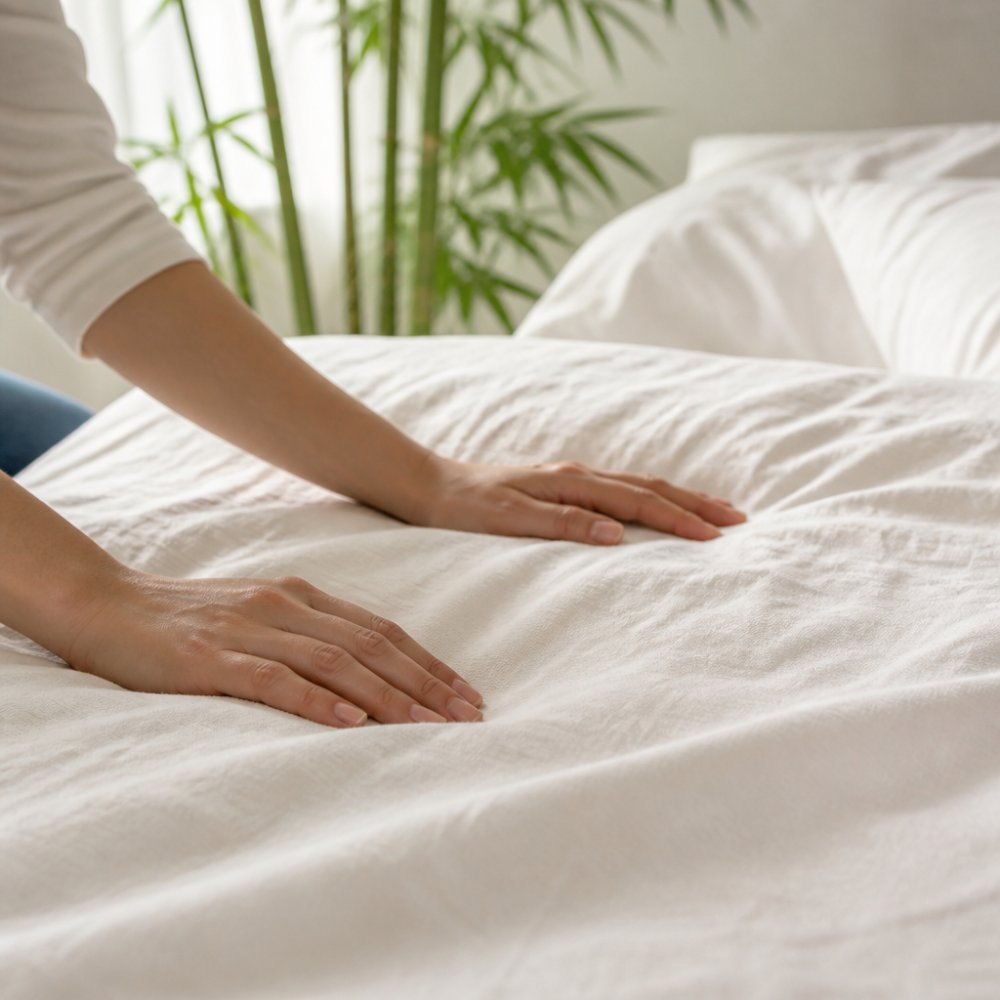
Organic cotton is the safest default. It's breathable, moisture-wicking, and holds up to frequent washing.
How Woven Fabric Structure Affects Allergen Resistance
Thread count isn't the whole story, but weave density matters more than most shoppers realise.
Best Hypoallergenic Bed Sheets for Eczema and Contact Dermatitis
The best hypoallergenic bed sheets for eczema and contact dermatitis are smooth, tightly woven, chemical-free cotton or silk. But eczema, psoriasis, and contact dermatitis do not behave the same way against fabric, and the bedding that suits one can aggravate another. This is the part most buying guides skip.
Matching the Fibre to the Condition
Eczema (atopic dermatitis) is a barrier-function problem. The skin loses moisture and reacts to friction, heat, and chemical residue. The priority is a smooth, breathable surface that wicks sweat and holds no dye or finish. GOTS certified organic cotton in a sateen or percale weave is the safest default. Silk is a strong second because its fibres are smooth and less abrasive on broken skin.
What Dermatologists Look For in Bedding
Most practitioners who treat textile-related skin conditions apply a similar checklist:
Taj Queen Quilt Cover Set - White →
- Low chemical residue, GOTS or OEKO-TEX STANDARD 100 Class I or II certification, which sets limits on formaldehyde, heavy metals, and certain azo dyes.
- Smooth surface, sateen, percale, or silk. Rough textures and pilling catch on inflamed skin and worsen the itch-scratch cycle.
- Breathability, a fabric that moves moisture away reduces the sweat that triggers eczema and psoriasis.
- No optical brighteners or resin finishes, these are common hidden irritants in 'easy care' bedding.
- Frequent hot washing tolerance, the fabric must survive 60°C washes without degrading, because dust mite allergen removal depends on temperature.
A Note on 'Natural' vs. 'Safe'
Casa Sereno's Taj Queen Quilt Cover Set is made from soft, durable cotton.

OEKO-TEX Certified Bedding Australia: What the Labels Actually Tell You
OEKO-TEX certified bedding in Australia means the finished fabric has been tested for harmful substances, not that it's organic. The STANDARD 100 label sets limits on substances like formaldehyde, heavy metals, and certain azo dyes.
Here's what the main certifications actually cover:
- OEKO-TEX STANDARD 100: tests the finished article for harmful substances
- GOTS: covers organic fibre content plus processing and social criteria
- OEKO-TEX MADE IN GREEN: adds traceability and sustainable production
How to Wash Luxury Bedding to Remove Allergens
Washing is where most people undo their good choices. The right routine removes dust mites, dead skin, and residue without wrecking the fabric.
Follow these steps:
- Wash weekly in water at 60°C or above to kill dust mites
- Use a fragrance-free, dye-free detergent with no softener
- Add a second rinse cycle to flush out residue
- Tumble dry on medium or line dry in direct sun
- Wash quilt covers inside out to protect the finish
Washing Frequency and Temperature Guide
Item |
Frequency |
Temperature |
Notes |
|---|---|---|---|
Sheets and pillowcases |
Weekly |
60°C+ |
Kills dust mites |
Quilt covers |
Weekly to fortnightly |
60°C+ |
Inside out |
Quilts and doonas |
Every 2-3 months |
Follow care label |
May need commercial laundry |
Pillows |
Every 3-6 months |
Follow care label |
Replace if not washable |
Silk needs different handling. Wash it on a delicate cycle at 30°C with a pH-neutral detergent, then air dry away from direct sun. Hot water will destroy the fibre's smooth surface, which is the exact property that keeps dust mites off it.
Lifecycle and Replacement: When Hypoallergenic Bedding Stops Working
Bedding doesn't stay hypoallergenic forever. Fibres break down, weaves loosen, and pore size grows. Once that happens, the fabric stops blocking allergens and starts collecting them. This is the part of the buying decision almost no guide covers, and it matters more than the thread count on the label.
Why Performance Declines
A tightly woven cotton sheet blocks dust mites because the gaps between yarns are smaller than the mite's body. Dust mites are roughly 200 to 300 microns across. After a year or two of weekly 60°C washing, mechanical agitation and fibre fatigue widen those gaps. The sheet still looks fine, but its pore size has crept past the threshold where it was doing any work.
A Practical Replacement Schedule
These are general guides, not hard rules. Hotter washing, harder water, and heavier use shorten the interval.
Item |
Typical replacement interval |
Why |
|---|---|---|
Sheets and pillowcases |
Every 2 years |
Weave loosens, pilling begins |
Quilt covers |
Every 2-3 years |
Same mechanism, slightly slower |
Quilts and doonas |
Every 3-5 years |
Filling compacts and holds allergen |
Pillows |
Every 1-2 years |
Filling breaks down, cannot be hot-washed |
Signs It's Already Past Its Best
- The fabric feels thinner or you can see light through it when held up
- Pilling has created a rough surface that catches on skin
- A persistent musty smell remains after washing
- Visible staining that won't lift
- More than two to three years of weekly hot washing
The Environmental Trade-Off
There's a tension here worth naming. Replacing bedding more often reduces allergen load but increases textile waste. Cheap bedding that fails in a year generates more waste than a well-made set that lasts five. Sustainable textiles and skin health usually point in the same direction: buy fewer, better pieces and care for them properly. The exception is the dust mite allergy household, where replacement frequency is a health decision rather than a sustainability one.
Frequently Asked Questions
What materials are best for sensitive skin bedding?
Natural fibres like organic cotton, mulberry silk, and bamboo viscose work best for sensitive skin. Organic cotton is breathable and free from harsh chemical residues. Mulberry silk contains natural proteins that reduce friction and moisture loss. Bamboo viscose is moisture-wicking and anti-microbial. Avoid synthetic fibres like polyester, which trap heat and can trigger contact dermatitis. Look for tightly woven fabrics with a thread count between 200 and 400 for the best balance of softness and allergen resistance.
Is bamboo or silk better for people with skin allergies?
Both have advantages. Bamboo viscose is naturally anti-microbial and moisture-wicking, which helps reduce dust mite survival and keeps skin dry. Mulberry silk is hypoallergenic because its protein structure repels dust mites and mould. Silk also regulates temperature well, keeping you cool in summer and warm in winter. For eczema-prone skin, silk's smooth texture reduces friction and irritation. Bamboo is often more affordable and easier to wash. Choose based on your budget and whether you prefer a cool, crisp feel or a smooth, luxurious drape.
How often should I wash hypoallergenic bedding to prevent dust mites?
Wash quilt covers and sheets weekly in hot water at 60°C or above to kill dust mites and remove allergens. Pillowcases should be washed every three to four days if you have sensitive skin or allergies. For luxury fabrics like silk or bamboo, check care labels first, as some require cooler temperatures or gentle cycles. Use a fragrance-free, hypoallergenic detergent. Tumble dry on low or line dry in direct sunlight, which adds natural anti-microbial benefits. Regular washing maintains the hypoallergenic properties of your bedding.
What certifications should I look for when buying luxury bedding?
Look for OEKO-TEX Standard 100, which tests for harmful substances in textiles, and GOTS (Global Organic Textile Standard), which certifies organic fibres and chemical-free processing. These certifications confirm the bedding is free from allergens, pesticides, and toxic dyes. Check that the certification label is current and applies to the specific product, not just the brand. Certified bedding costs more but delivers verified safety for sensitive skin.

