

Table of Contents
- Bamboo vs Linen Quilt Covers: A Quick Comparison
- How Bamboo and Linen Get Their Cooling Effect
- Bamboo Bedding Pros and Cons
- Cons of bamboo bedding:
- Texture, Drape and Skin Sensitivity
- Durability, Pilling Resistance and Long-Term Wear
- How to Wash Linen Quilt Covers (and Keep Bamboo in Shape)
- Best Breathable Bedding for Summer Sleepers
- Sustainability and Certification: What Actually Matters
- The Verdict
- Frequently Asked Questions
Last Updated: October 1, 2026
Bamboo vs Linen Quilt Covers: A Quick Comparison
Choosing between bamboo and linen quilt covers comes down to one question: do you want cool and silky, or textured and lived-in? This guide from Casa Sereno compares the benefits of bamboo vs linen quilt covers across cooling, feel, durability and sustainability, so you can pick the fibre that suits how you actually sleep.
Bamboo quilt covers are made from regenerated bamboo fibre, usually viscose or lyocell, and feel smooth, cool and fluid against the skin. Linen quilt covers are woven from flax plant fibres and feel textured, breathable and increasingly soft with every wash.
Here is the short version before we get into the detail.
| Feature | Bamboo | Linen |
|---|---|---|
| Cooling method | Active moisture-wicking | Open weave breathability |
| Initial feel | Silky, cool, fluid | Crisp, textured, dry |
| Long-term feel | Stays smooth | Softens with every wash |
| Wrinkle tendency | Low | High, by design |
| Best for | Hot sleepers, night sweats | Humid climates, layered styling |
Both fibres earn their place in a bedroom. The difference is in how they get there.
How Bamboo and Linen Get Their Cooling Effect
Bamboo cools by moving moisture away from your skin. Linen cools by letting air pass straight through the weave. Two different mechanisms, two different sensations, and the difference comes down to fibre geometry and weave structure, not marketing claims.
Bamboo fibre is spun into a smooth yarn with a rounded cross-section and very few surface scales. That smoothness lets perspiration spread quickly across the fabric surface, where it evaporates and pulls heat away from your body. Bamboo also has a relatively high moisture regain for a regenerated cellulose fibre, which is why it feels cool the moment you touch it and why it suits hot sleepers who wake up clammy.
Linen works differently. Flax fibres are naturally hollow, slightly irregular and pectin-rich, and they are woven loosely rather than tightly. That loose weave creates thousands of tiny air channels. Air moves through those channels, so heat escapes rather than building up. Linen does not feel cold to the touch, but it never feels stuffy either, it feels dry and neutral, which is why it performs so well in humid conditions where sweat does not evaporate easily.
Moisture-Wicking and Thermoregulation Explained
Moisture-wicking is the ability of a fabric to pull sweat away from your skin and spread it across the surface so it evaporates faster. Thermoregulation is the broader effect: keeping your body temperature steady through the night rather than spiking and dropping.
Bamboo leads on wicking. Linen leads on airflow. In practice, bamboo suits sleepers who sweat, while linen suits sleepers who overheat. If you want the technical background on how textile fibres manage moisture, the CSIRO textile research publishes useful material on fibre performance.
Weave and Thread Count: Why Two Covers at the Same Price Feel Different
Fibre is only half the story. The weave decides how the fibre behaves against your skin.
Bamboo is usually woven as sateen or a fine twill. Sateen uses long floats that put more yarn surface on top of the fabric, which is why bamboo quilt covers feel silky and drape heavily. Twill is slightly more durable and a touch less glossy.
Bamboo Bedding Pros and Cons
The main advantage of bamboo bedding is comfort for hot sleepers. It feels cool on contact, wicks moisture well, and stays smooth rather than creasing.
Pros of bamboo bedding:
- Naturally smooth, with a softness closer to silk than cotton
- Strong moisture-wicking for night sweats
- Hypoallergenic and resistant to dust mites
- Static-free and low-wrinkle
Cons of bamboo bedding:
- Can pill if washed roughly or tumble dried hot
- Less breathable airflow than linen in humid conditions
Where Bamboo Wins and Where It Falls Short
Bamboo wins on tactile feel and moisture management. If you sleep hot, sweat at night, or have sensitive skin that reacts to rougher weaves, bamboo is the easier choice.
Texture, Drape and Skin Sensitivity
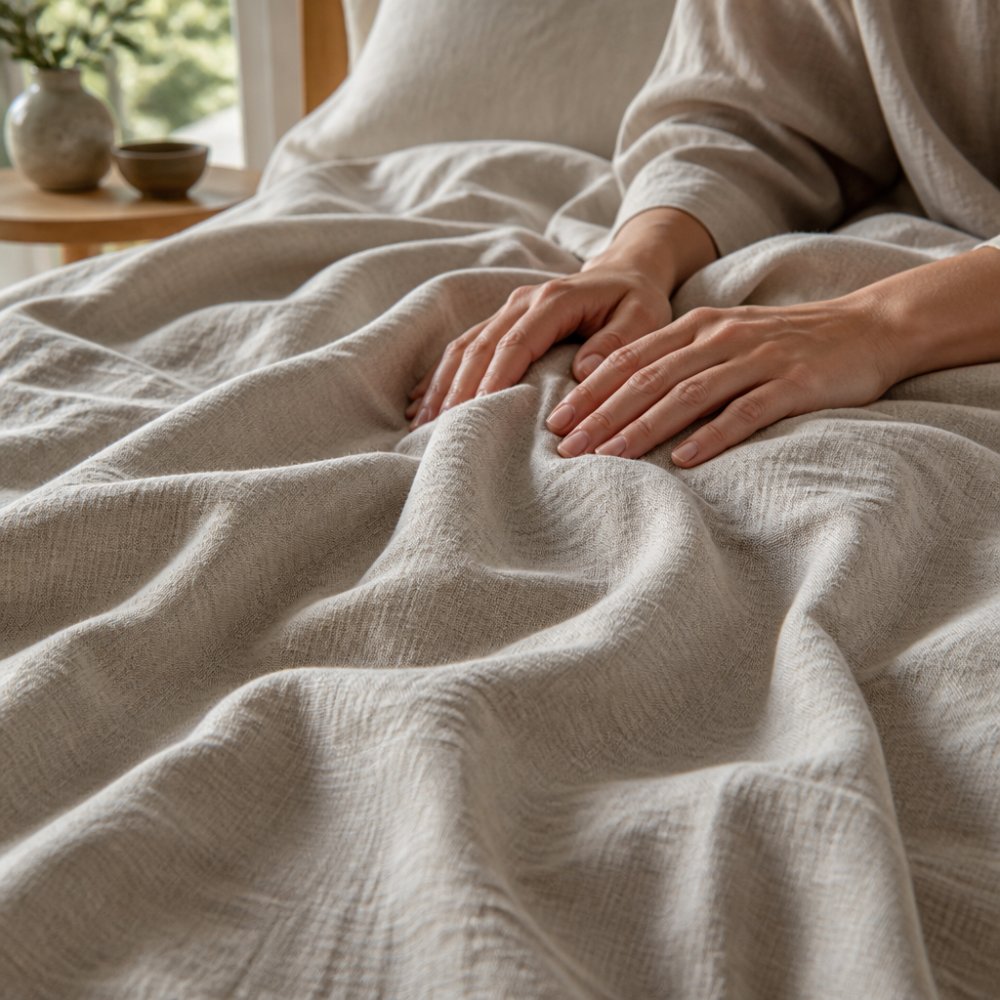
Texture is where these two fibres diverge most. Bamboo drapes softly and slides over the body. Linen holds its shape, creases visibly, and has a dry, almost linen-crisp hand feel that many people love and some find scratchy at first.
Taj Queen Quilt Cover Set - White →
Durability, Pilling Resistance and Long-Term Wear
Linen outlasts bamboo in most cases. Flax fibres are longer and stronger, and linen actually improves with age, softening rather than degrading.
How to Wash Linen Quilt Covers (and Keep Bamboo in Shape)
Wash linen quilt covers in cool water on a gentle cycle, then line dry or tumble on low. Bamboo needs the same cool, gentle treatment, but should be air dried and never wrung out.
How to wash linen quilt covers:
- Separate lights and darks, and close any zips or buttons
- Use a mild liquid detergent, never bleach or fabric softener
- Wash cool, around 30°C, on a gentle cycle
- Line dry in shade, or tumble on low heat
- Remove while slightly damp and smooth by hand to reduce creasing
Keeping bamboo in shape:
- Wash cool and inside out to reduce surface friction
- Skip the dryer entirely, or use the lowest setting
- Avoid rough textures in the same load
- Store folded, not compressed
Best Breathable Bedding for Summer Sleepers
For most summer sleepers, linen is the better breathable bedding. Its open weave moves air more effectively than a smooth bamboo surface, which matters most in humid heat.
Sustainability and Certification: What Actually Matters
Linen has the cleaner sustainability story by default. Flax is a rain-fed crop in most growing regions, needs relatively little pesticide, and the whole plant is used, fibre, seed and shive. The fibre is biodegradable at the end of its life, and a well-made linen quilt cover can stay in use for a decade or more, which is itself a sustainability argument.
Viscose vs Lyocell: The Distinction That Actually Matters
Bamboo viscose (sometimes labelled 'bamboo rayon') uses a chemical dissolution process with a solvent that is difficult to recapture. Depending on the mill, that solvent can be released into air or water, and the process is energy-intensive. The bamboo plant may be grown responsibly, but the fibre that reaches your bed carries the footprint of the mill, not the field.
Certification: How to Read a Label
Certification is where you separate real claims from marketing. The schemes worth knowing:
- OEKO-TEX Standard 100, tests the finished textile for harmful substances. Applies to both fibres and is the most common label you will see.
- GOTS (Global Organic Textile Standard), covers organic fibre content and processing. Common on linen, rare on bamboo.
- EU Ecolabel, covers the full lifecycle including manufacturing emissions. Occasionally seen on lyocell.
- Forest Stewardship Council (FSC), relevant to bamboo because it is a grass grown in managed plantations; FSC certification indicates responsible sourcing of the raw material.
Water, Land and Longevity
Flax is typically grown without irrigation in cooler, wetter regions, so its water footprint is low compared with cotton. Bamboo grows fast on marginal land with little intervention, so its land and water footprint at the farm gate is also low, the problem is downstream, in processing.
The Verdict
Bamboo wins on feel and moisture-wicking. Linen wins on breathability, durability and sustainability. Neither is universally better, and anyone claiming otherwise is selling something.
Frequently Asked Questions
Is bamboo or linen better for bedding?
It depends on what you prioritise. Bamboo has a smoother, silkier hand feel and wicks moisture quickly, which suits sleepers who want a cool, soft surface. Linen has a textured, breathable weave that gets softer with every wash and holds up well over many years. For a bedroom that leans toward a relaxed, lived-in look, linen quilt covers age beautifully. For a cooler, sleeker surface straight out of the packet, bamboo is often the easier choice.
What are the main downsides of bamboo quilt covers?
Bamboo fibres can pill in high-friction areas if the weave is loose or the fibre quality is low. Bamboo bedding goes through textile processing rather than being used raw. It can also lose shape faster than linen if washed roughly. Checking the fabric weave and following the care label closely will extend its life considerably.
Is bamboo or linen better for hot sleepers?
Both perform well, but they cool differently. Bamboo has a smooth surface and strong moisture-wicking, so it feels cool and dry against the skin. Linen's open weave allows more air movement, which supports thermoregulation through the night. Hot sleepers who sweat heavily often prefer bamboo for its quick-dry feel, while those who want steady airflow and a lighter drape tend to reach for linen.
How do you care for bamboo versus linen quilt covers?
Linen quilt covers can be machine washed in cool water and tumble dried on low; the fibres get softer with each wash. Bamboo needs a gentler approach: cold water, mild detergent, and air drying where possible to prevent pilling and shrinkage. For both, avoid fabric softener and hot water. Wash linen separately from bamboo to prevent friction damage to the smoother bamboo fibres.
Which material is more sustainable for quilt covers?
Linen comes from the flax plant, which needs little water and can be grown with minimal chemical input, and it is biodegradable at end of life. Bamboo grows quickly and regenerates without replanting, but turning it into fibre involves processing that varies widely by manufacturer. Look for organic certification if sustainability is a deciding factor.
Choosing the right quilt cover is less about following a trend and more about matching a fibre to how you sleep. Casa Sereno curates luxury bedding and home décor designed to bring warmth, texture and timeless style to every room, with free shipping on orders over $150 and 20% off your first order for new subscribers. Explore the collection and build a bedroom that feels like a sanctuary.

