Table of Contents
- Why Timeless Home Decor Beats Trend Chasing Every Time
- How to Choose Timeless Home Accessories That Last
- Elegant Home Decor Ideas for Every Room
- Home Decor Investment Pieces Worth Every Dollar
- Secondhand, Vintage and Resale: Where Elegant Home Accessories Hold Value
- Care, Repair and Expected Lifespan of Your Pieces
- Common Mistakes When Buying Elegant Home Accessories
- Conclusion
- Frequently Asked Questions
Last Updated: October 9, 2026
Why Timeless Home Decor Beats Trend Chasing Every Time
Timeless home decor is the practice of choosing pieces whose appeal does not expire when a trend cycle ends.
Trend chasing carries a hidden cost. Fast decor cycles push you to rebuy cushions, throws and tableware before the old ones wear out, which drains both budget and patience.
That is the core argument of this guide: buy once, buy well, and let versatility do the heavy lifting.
How to Choose Timeless Home Accessories That Last
Choosing timeless home accessories comes down to three tests: construction, versatility and how the piece ages. A lamp, throw or dining table that passes all three will still look right in ten years.
The Three-Question Quality Check
Run this before any purchase:
- Is it built from materials that improve or hold up? Solid wood, metal, glass, marble and quality textiles age better than composite lookalikes.
- Could it move rooms? A piece that works in the living room, bedroom and entryway earns far more of its cost back.
- Does it rely on a trend to look good? If the appeal depends on this season's colour or silhouette, it is not timeless.
Proportion and Scale in Your New Space
Measure before you buy. A tall candelabra that looks elegant in a showroom can overwhelm a small dining table, while an oversized rug can make a modest living room feel cramped.
Note your ceiling height, the width of your dining table and the distance between furniture. Proportion and scale decide whether a piece elevates a space or fights it. When in doubt, choose the smaller option; you can always layer more in later.
Elegant Home Decor Ideas for Every Room
Elegant home decor ideas work best when each room gets one or two considered pieces rather than a full overhaul. The trap for new homeowners is treating every room as equally urgent. It is not. A prioritisation order based on daily use, household needs and visual impact will stretch your budget further than buying a little for every room at once.
A Room-by-Room Priority Order
Use this sequence as a starting point, then adjust for how you actually live:
- Living room first. It carries the most daily use and the most visible square metres. One good throw, one cushion and one floor mat change how the whole room reads.
- Dining and kitchen second. These rooms are used daily and seen by guests. Glassware, a bowl and a marble topper do more work here than another decorative object in a hallway.
- Bedroom third. Soft textiles and a jewellery stand improve the room you start and end every day in, but they are rarely the first thing visitors notice.
- Entryway last. A floor mat and a small tray are enough. The entryway sets a first impression, but it does not need to be finished before the rooms you live in.
A common pattern is to overspend on the entryway because it is small and feels achievable, then run out of budget for the sofa you sit on every night. Reverse that.
How to Decide What Comes First in Your Home
Three questions settle most prioritisation arguments:
- How often will I touch or see it? Daily-use items earn their cost back fastest.
- Does it solve a problem? A floor mat that stops grit at the door or a jewellery stand that ends dresser clutter does more than a purely decorative piece.
- Would its absence be noticed? If a room feels unfinished without it, it belongs higher on the list.
Living Room: Throws, Cushions and Floor Mats
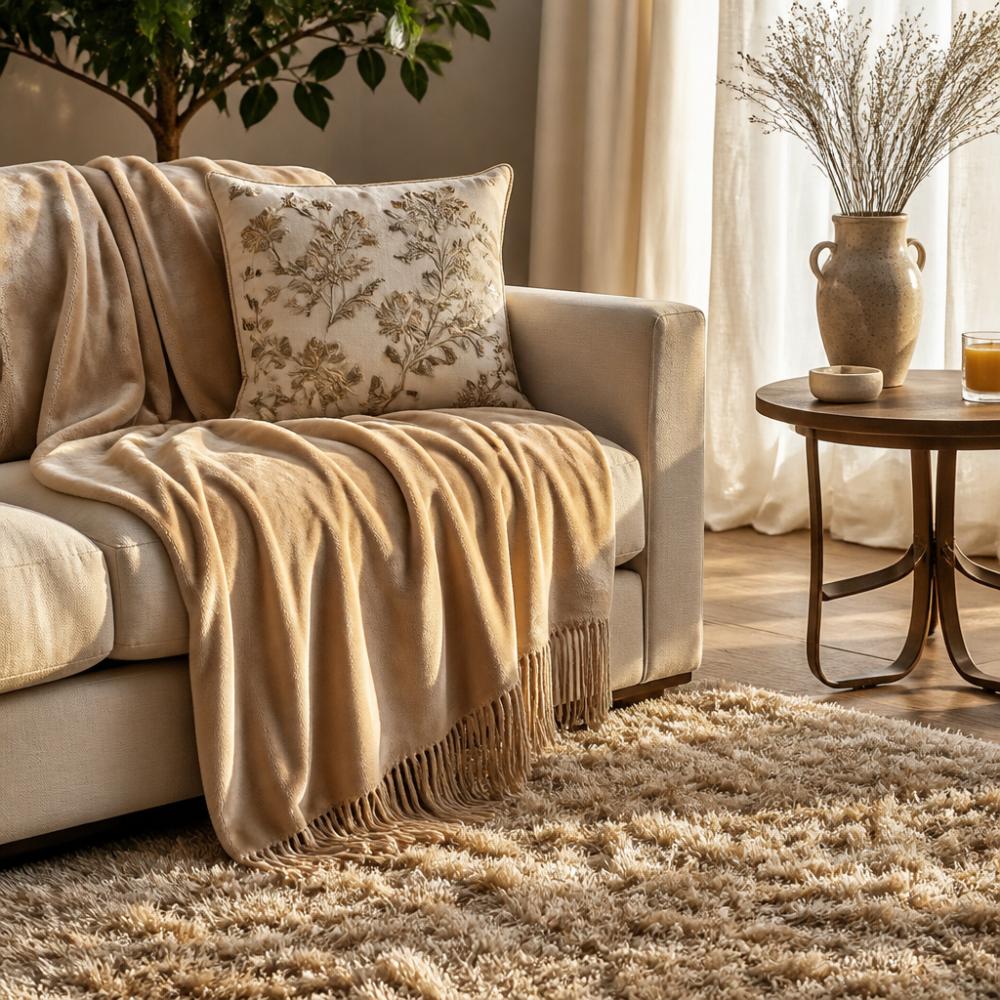
The living room rewards texture. Our Florence Throw Champagne ($289) is a premium velvet throw that adds warmth and a soft sheen without shouting. Pair it with the Embroidered Deco Pillow ($79) for pattern, and ground the seating area with the Shaggy Floor Mat ($72), a luxuriously soft cotton mat that works as a standalone statement or layered with other rugs.
Layer in this order: floor mat first to define the zone, throw second for warmth and colour, cushion last for pattern. That sequence stops the room looking over-styled.
Dining and Kitchen: Glassware, Candelabras and Toppers
Dining rooms benefit from pieces that serve a purpose and look good doing it. The Decorative Tall Candelabras ($59) in quality glass lift a table setting instantly. The Glass Bowl Clear D16xH14.5cm ($80) handles fruit, salads or display, and the Hartley Topper ($77) in quality marble brings a classic country feel to the table.
Buy these in pairs where the piece is symmetrical. A single candelabra on a long table looks accidental; two look deliberate.
Bedroom and Entryway: Jewellery Stands and Soft Textiles
Small accessories carry a lot of weight here. The Jewellery Stand Antoinette ($85) is a 55cm metal piece built for daily use, and it tidies a dresser without hiding your pieces away.

If your budget only stretches to one of these rooms this month, choose the bedroom. You spend more waking minutes there than in the entryway, and the payoff compounds daily.
Home Decor Investment Pieces Worth Every Dollar
Home decor investment pieces are the items you would replace immediately if they disappeared. They earn that status through construction and cost per use, not price alone. The useful question is not "is this expensive?" but "what does each use cost me, and can I repair it when it wears?"
A Practical Buying Framework: What to Inspect Before You Pay
Run these checks in order. They apply whether you are buying new or secondhand.
- Construction and joinery. On wood, look for joints that meet tightly and squarely. Dovetail and mortise-and-tenon joints outlast staples and glue blocks. Run a finger along the seam; if you feel movement, the piece will loosen.
- Upholstery. Press the seat and back. A firm, even resistance suggests denser filling that will not collapse into a hollow. Check that patterns align across seams and that the frame does not creak when you lift one corner.
- Materials. Solid wood, glass, metal and marble age predictably. Composite lookalikes can mimic the appearance but rarely the lifespan. For textiles, a tighter weave resists pilling and pulls.
If a seller cannot answer questions about joinery or materials, treat that as information.
Budget Tiers and Cost Per Use
Cost per use is the honest way to compare a $24 cabinet handle with a $289 throw.
| Tier | Typical Spend | What You Get | Best For |
|---|---|---|---|
| Everyday accents | $24-$85 | Handles, jewellery stands, tea light stands, cushions | Renters and first styling |
| Core statement pieces | $59-$85 | Glassware, marble toppers, bowls | Dining and kitchen upgrades |
| Long-term textiles | $72-$289 | Velvet throws, floor mats | Living room and bedroom anchors |
Worked example: a $289 throw seen or used daily for five years costs roughly 16 cents per day.
The Cabinet Handle Brushed Metal - Black ($24) is the cheapest way to change how a whole kitchen feels, while the Florence Throw Champagne costs more but gets seen every single day.

Where the Money Actually Goes
Spend on the pieces you touch, sit on or look at daily. Save on the pieces that are purely decorative and rarely noticed. A marble topper that anchors every dinner earns more than a shelf object you dust monthly.
Secondhand, Vintage and Resale: Where Elegant Home Accessories Hold Value
Secondhand and vintage pieces are where timeless home decor proves its worth.
When shopping secondhand, inspect joints, check for wobble, and look for hairline cracks in glass and marble. Patina on metal is usually a sign of age rather than damage.
This is also why buying well new pays off later. A piece with real craftsmanship keeps its resale value; a flat-pack imitation rarely does.
Care, Repair and Expected Lifespan of Your Pieces
Care and repair extend lifespan more than any single purchase decision. Most elegant home accessories fail from neglect, not from use.
- Glass and glassware: hand wash where possible and store with padding between pieces.
- Metal: dust with a dry cloth and avoid abrasive cleaners that strip the finish.
- Marble: wipe spills promptly and reseal periodically to prevent staining.
Repair before you replace. A loose handle can be re-tightened, a faded cushion cover replaced, and a scratched surface refinished. Good construction makes all three possible.
Common Mistakes When Buying Elegant Home Accessories
The biggest mistake is buying a full room at once. It locks you into a look before you know how you actually live in the space, and it leaves no room for pieces you find later.
Other frequent errors:
- Ignoring measurements. Buying before checking proportion and scale leads to returns and regret.
- Chasing a trend colour. A bold seasonal shade dates fast; a neutral palette outlasts it.
- Skipping the care plan. Any piece will look tired if you never maintain it.
- Buying for the showroom, not the home. Lighting and space change how a piece reads.
Conclusion
Furnishing a new home well is a test of patience, not budget. The homeowners who get it right buy fewer pieces, choose them for durability and versatility, and let quality do the talking.
Casa Sereno curates timeless home decor designed to last, from premium velvet throws and embroidered cushions to marble toppers and quality glassware.
Get started with Casa Sereno and build a home that still feels right years from now.
Frequently Asked Questions
What home accessories make a new house feel like home?
The fastest way to make a new house feel lived-in is to layer texture and light. Start with a velvet throw or a soft cotton floor mat in the living room, add a decorative cushion or two, and place a glass bowl or candelabra on the dining table. These small changes soften empty rooms and give each space a finished feel. Choose pieces in a neutral palette so they work together across rooms rather than competing for attention.
How do I choose timeless home accessories that won't date?
Look for clean lines, natural materials and a restrained colour palette. Solid wood, glass, marble and quality metals age well because they do not rely on a seasonal trend. Ask three questions before buying: will this still look right in five years, does it work in more than one room, and is the construction solid enough to repair rather than replace? Pieces that pass all three are the ones you keep.
Which elegant home accessories are worth investing in first?
Prioritise the pieces you touch and see daily. A quality throw like the Florence Throw Champagne ($289) or a marble Hartley Topper ($77) earns its cost through constant use. Smaller accents such as the Black Tall Tea Light Stand ($49) or the Jewellery Stand Antoinette ($85) add polish for less.
Can I make my home look elegant on a budget?
Yes, by concentrating spending on a few well-made pieces instead of many cheap ones. The Cabinet Handle Brushed Metal ($24) updates a whole kitchen or wardrobe for very little. A Shaggy Floor Mat ($72) or Clear Jar with Lid ($79) adds texture and interest without a full redecorate. Buy one considered piece at a time, and let each addition earn its place before you buy the next.
How do I choose accessories that work with my existing furniture?
Pull one or two colours from what you already own and repeat them in your accessories. If your sofa is grey, a champagne throw or an ivory marble topper sits comfortably beside it. Keep metals consistent, so a brushed black handle matches your other hardware. Before buying, photograph the room in daylight and hold the image next to the product photo to check tone and scale.