Table of Contents
- How to Maintain Linen: The Habits That Keep It Beautiful
- What You'll Need Before You Start
- How to Wash Linen Bedding and Clothing
- Drying Linen: Air-Dry, Line-Dry or Tumble
- How to Remove Stains from Linen Without Damaging Fibres
- Linen Storage Tips for Between Uses
- Common Mistakes That Shorten Linen's Life
- Repair and Care Between Washes
- Conclusion
- Frequently Asked Questions
Last Updated: October 6, 2026
How to Maintain Linen: The Habits That Keep It Beautiful
Linen is one of the oldest and most loved natural fibres, spun from the flax plant and prized for its cool touch and lived-in texture, and knowing how to maintain high quality linen starts here. At Casa Sereno, we choose linen for our throws, cushions and quilted pieces precisely because it wears in rather than out.
The catch is that linen is easy to ruin with good intentions. Hot water, harsh detergent and a hot tumble dryer strip the fibre of everything that makes it special. Get the basics right and a good piece of linen can last for years.
Why linen rewards gentle, regular care
Flax fibres are strong but not rigid. Washing relaxes the weave and softens the hand feel, which is why old linen feels better than new.
Linen also creases. That rumpled look is part of its character, not a flaw. Fighting it with high heat is where most damage happens.
So the goal is not to keep linen crisp, but to keep the fibre intact so it stays soft, breathable and beautiful for as long as possible.
What You'll Need Before You Start
You do not need a cupboard full of specialist products. A handful of basics covers almost every linen item you own.
- A mild, plant-based detergent with no optical brighteners
- A mesh laundry bag for smaller or delicate pieces
- A drying rack or clothesline
- White vinegar for softening and odour removal
Skip anything labelled "heavy duty", "whitening" or "stain-lifting" unless it is made for delicate fabrics. Those formulas are built for cotton and synthetics, not flax.
How to Wash Linen Bedding and Clothing
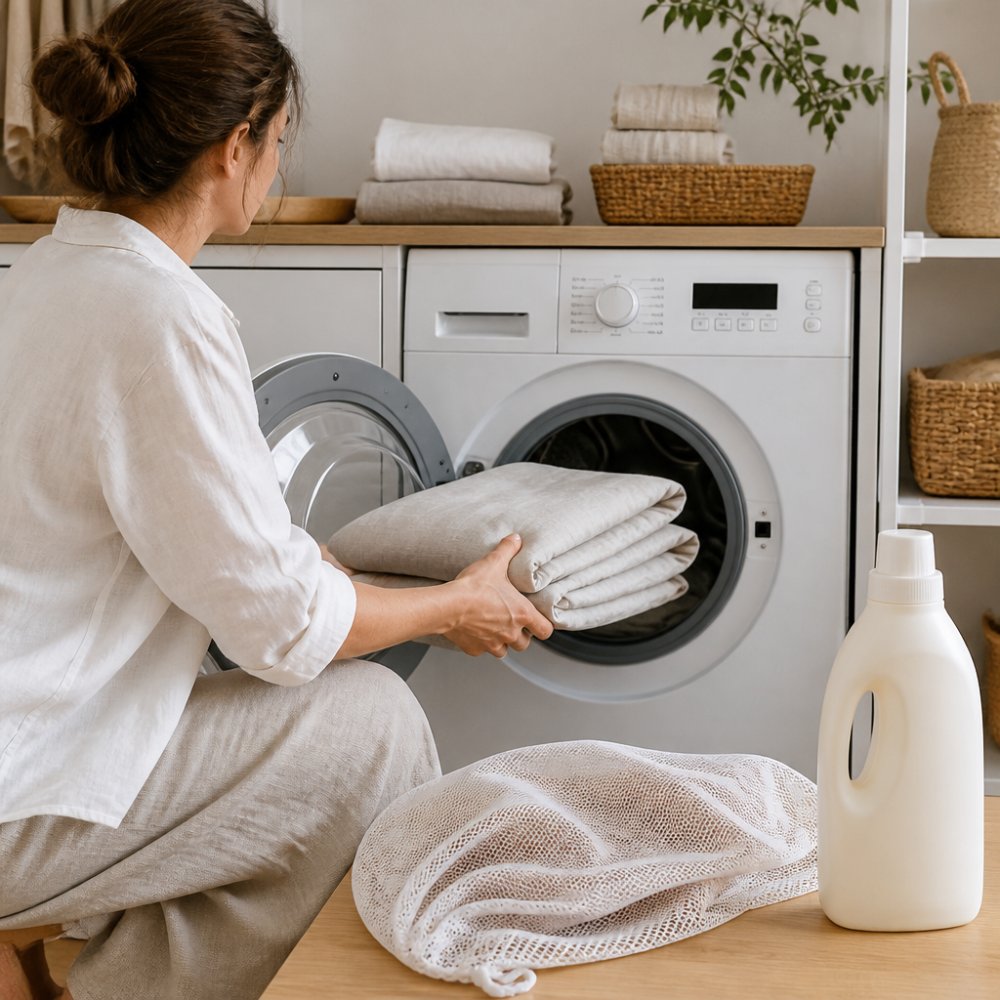
Wash linen in cold or lukewarm water on a gentle cycle with a small amount of mild detergent. That combination does more to protect the fabric than any specialist product, but the right settings depend on the item and its blend, so sort your linen before loading the machine.
Water temperature and detergent choice
Cold water is the safe default. For heavily soiled items, lukewarm is fine, but keep it below a hot setting.
For detergent, choose something mild and plant-based. Standard powders often contain enzymes and brighteners that break down plant fibres and dull colour.
In hard-water areas this matters more: minerals react with detergent and leave a chalky film in the weave.
Match the method to the item and the blend
Not all linen is the same: care that suits a quilted euro may be too rough for a fine shirt or too gentle for a heavy throw.

- Pure linen bedding (sheets, duvet covers, pillowcases): machine wash on a gentle cycle at 30°C or below, low spin. Wash separately from towels and denim. Bedding can handle a full gentle cycle because it is flat and evenly woven, but it will crease if overloaded.
- Linen shirts and lighter garments: hand wash or use a delicate cycle in a mesh bag. These pieces have seams, buttons and collars that distort under a fast spin. Turn them inside out and close any buttons before washing.
- Heavier linen textiles (throws, quilted pieces, cushions): these hold more water and take longer to dry. Wash less often, use a mesh bag for cushion covers, and support the weight of a wet throw with both hands when lifting it to avoid stretching the weave.
- Linen-cotton blends: the cotton content makes the fabric slightly more tolerant of machine washing, but it also means the item may shrink differently from pure linen. Follow the care label first, and if in doubt, treat the blend as if it were pure linen.
Hand washing and machine cycles
Hand washing is the gentlest option for delicate pieces like a quilted euro or a fine linen shirt.
For machine washing, use a gentle or delicate cycle with a low spin speed. A fast spin is a common cause of stretched, misshapen linen.
Always separate linen from heavy or abrasive items.
Smaller items belong in a mesh laundry bag. It keeps cushion covers and delicate pieces from snagging.
Drying Linen: Air-Dry, Line-Dry or Tumble
Air-drying is the best way to dry linen. Line-drying or laying pieces flat on a rack keeps the fibre relaxed and avoids heat-related shrinkage.
If you must use a tumble dryer, choose the lowest heat and remove the item while still slightly damp.
For a softer finish, dry linen in a light breeze rather than direct harsh sun, which fades colour over time.
How to Remove Stains from Linen Without Damaging Fibres
Treat stains as soon as you notice them, using cold water and a mild detergent. The longer a stain sits, the more it bonds with the fibre and the harder it is to lift without harsh treatment. Because linen is a plant fibre, the method matters as much as the speed.
Fresh stains: act quickly
Blot the stain with a clean cloth. Do not rub, which pushes it deeper into the weave.
Rinse the area with cold water from the back of the fabric. This pushes the stain out rather than through.
Apply a small amount of mild detergent, work it in gently with your fingertips, let it sit a few minutes, then rinse.
Stain-by-stain guidance
Use this as a quick reference. Always test any treatment on an inconspicuous area first, and never mix cleaning agents.
- Oil and grease (cooking oil, salad dressing, cosmetics): Blot off what you can, then sprinkle baking soda or cornflour over the mark and leave it for 15-20 minutes to absorb the oil. Brush it away, then apply a small amount of mild detergent and rinse with cool water. For set-in grease, a drop of dishwashing liquid worked in gently can help, but rinse thoroughly.
- Red wine: Blot immediately, then cover the stain with salt while it is still wet to draw out the liquid. Rinse with cool water. If a trace remains, mix one part white vinegar with three parts cool water and dab it on, then rinse. Avoid hot water, which sets the pigment.
- Coffee and tea: Flush with cool water from the back of the fabric. Apply mild detergent and rinse. For milk-based coffee stains, treat as a protein stain first (see below) before using detergent.
- Sweat and deodorant: These leave both a protein residue and a yellow tint over time. Soak the item in cool water with a small amount of mild detergent for 30 minutes, then wash as normal. A paste of bicarbonate of soda and water can be dabbed on older yellow marks before washing.
- Food and sauces (tomato, curry, berry): Scrape off any solids, flush with cool water, then apply mild detergent. For coloured sauces, a diluted white vinegar rinse can help lift the pigment. Avoid rubbing, which spreads the stain.
Set-in stains and what to avoid
Older stains may need a longer soak in cool water with mild detergent. Repeat the soak rather than reaching for something stronger.
Avoid chlorine bleach, hot water and vigorous scrubbing. All three damage flax fibres and can leave a permanent mark where the stain used to be.
If a stain will not budge after two gentle attempts, take the item to a professional cleaner rather than risk the fabric.
Linen Storage Tips for Between Uses
Store linen clean, dry and folded in a cool, dark place. Dampness encourages mildew that stains the fibre and is very hard to remove.
- Wash items before storing them for the season
- Make sure everything is completely dry first
- Fold rather than hang heavy pieces, which can stretch on a hanger
- Use a breathable cotton bag or pillowcase, not plastic
- Keep stored linen away from direct sunlight
Never store linen in plastic bags or vacuum-sealed containers. The fibre needs to breathe, and trapped moisture causes musty smells and mildew.
Common Mistakes That Shorten Linen's Life
Most linen damage is avoidable, and it usually comes from one of a few habits.
- Using hot water because it "cleans better" (it shrinks and weakens the fibre)
- Overloading the machine so items rub together
- Pouring in too much detergent and leaving residue behind
- Tumble drying on high heat
- Using chlorine bleach to brighten whites
Fix these habits and your linen will outlast most of the cotton in your cupboard.
Repair and Care Between Washes
A little attention between washes goes a long way. Snip loose threads rather than pulling them, and mend small tears before they spread along the weave.
For wrinkles, press linen while still slightly damp on a medium setting, or use a steamer.
If a button or seam comes loose, repair it early. Small fixes cost minutes; ignored ones cost the whole piece.
Conclusion
Keeping linen beautiful is less about products and more about restraint. Cold water, a mild detergent, a gentle cycle and air-drying protect the fibre far better than any shortcut.
At Casa Sereno, we build our linen pieces to be lived with, not saved for best. Our Linen Hand Quilted Euro and Cosy Blanket Rose are made from beautifully textured linen that softens with every careful wash.

Treat your linen gently and it will reward you with years of comfort and quiet elegance.
Frequently Asked Questions
How can you tell if linen is high quality?
High-quality linen has a tight, even weave and a slightly irregular texture from natural flax fibres. It feels cool to the touch and softens with each wash rather than pilling. Check the care label for 100% linen or a high linen blend, and look for longer fibres, which resist fraying. Heavier weights (such as 165-190 gsm) tend to wear better over time. If a piece feels stiff and thin, it may be lower grade.
Should you use fabric conditioner on linen?
Skip it. Fabric conditioner coats flax fibres and reduces the natural breathability and absorbency that make linen comfortable. It can also leave a waxy residue that traps odours. A small splash of white vinegar in the rinse cycle softens linen without coating the fibres. If you want extra softness, wash with a mild plant-based detergent and let the linen soften naturally over repeated washes.
How do you remove stains from high quality linen without damaging fibres?
Blot fresh stains immediately with a clean cloth, then rinse with cold water. For oil-based marks, apply a drop of mild detergent and work it in gently with your fingers. For protein stains like wine or berry juice, soak in cold water with a little oxygen-based (non-chlorine) bleach for up to 30 minutes. Never rub hard or use chlorine bleach, which weakens flax fibres and yellows white linen. Wash as normal afterwards.
Is it better to air dry or tumble dry luxury linen?
Air drying is gentler and helps linen keep its shape and texture. Line dry or lay flat in the shade, away from direct sun, which can fade colour. If you tumble dry, use the lowest heat setting and remove the linen while slightly damp, then smooth by hand or press with a warm iron. High heat causes shrinkage and breaks down fibres over time, so keep tumble drying for occasional use only.