Table of Contents
- Start With a Cohesive Home Colour Scheme
- Use the 3-5-7 Rule in Decorating to Build a Room
- How to Mix Interior Design Styles Without Visual Conflict
- Layering Textures in Home Decor for Depth and Warmth
- A Room-by-Room Plan for a Cohesive Home Aesthetic
- Rental-Friendly and Budget-Conscious Ways to Unify a Space
- Common Mistakes That Make a Home Feel Disjointed
- Frequently Asked Questions
Last Updated: October 7, 2026
Start With a Cohesive Home Colour Scheme
A cohesive home starts with colour, and colour starts with restraint.
This guide from Casa Sereno breaks down seven tips for creating a cohesive home aesthetic, from palette to room-by-room rollout.
A cohesive home colour scheme is a small set of colours used across every room, repeated in paint, textiles, and finishes. It is not about matching everything.
Pick a Dominant Hue, Then Two Supporters
Choose one main colour, then two supporting tones. That is your base.
- Dominant hue: covers walls and large furniture
- Supporter one: a neutral that softens the main colour
- Supporter two: an accent for cushions, art, and throws
Keep the ratio roughly 60-30-10 (60-30-10 rule: how to use it for a balanced color palette). The dominant colour fills most of the space. Neutrals bridge rooms. Accents add life.
Balance Warm and Cool Tones Across Rooms
Warm tones bring comfort. Cool tones keep things calm. Most homes lean too far one way.
If your living room is all warm timber and cream, add a cool grey or soft blue cushion. If a bedroom feels cold, layer in a warm throw. Balance stops rooms feeling flat.
Use the 3-5-7 Rule in Decorating to Build a Room
The 3-5-7 rule in decorating is a simple formula for arranging decor: use three, five, or seven items in a group, never an even number.
Odd numbers feel natural to the eye because the viewer cannot instantly pair or halve them. An even group reads as symmetrical and staged; an odd group reads as collected.
Here is how to apply it:
- Pick a focal point for the room, such as a sofa, bed, or fireplace
- Group three items on a side table or bedside
- Build a shelf or mantel with five pieces
- Style a larger surface, such as a console or dining table, with seven items
Vary Height, Scale and Weight Within the Group
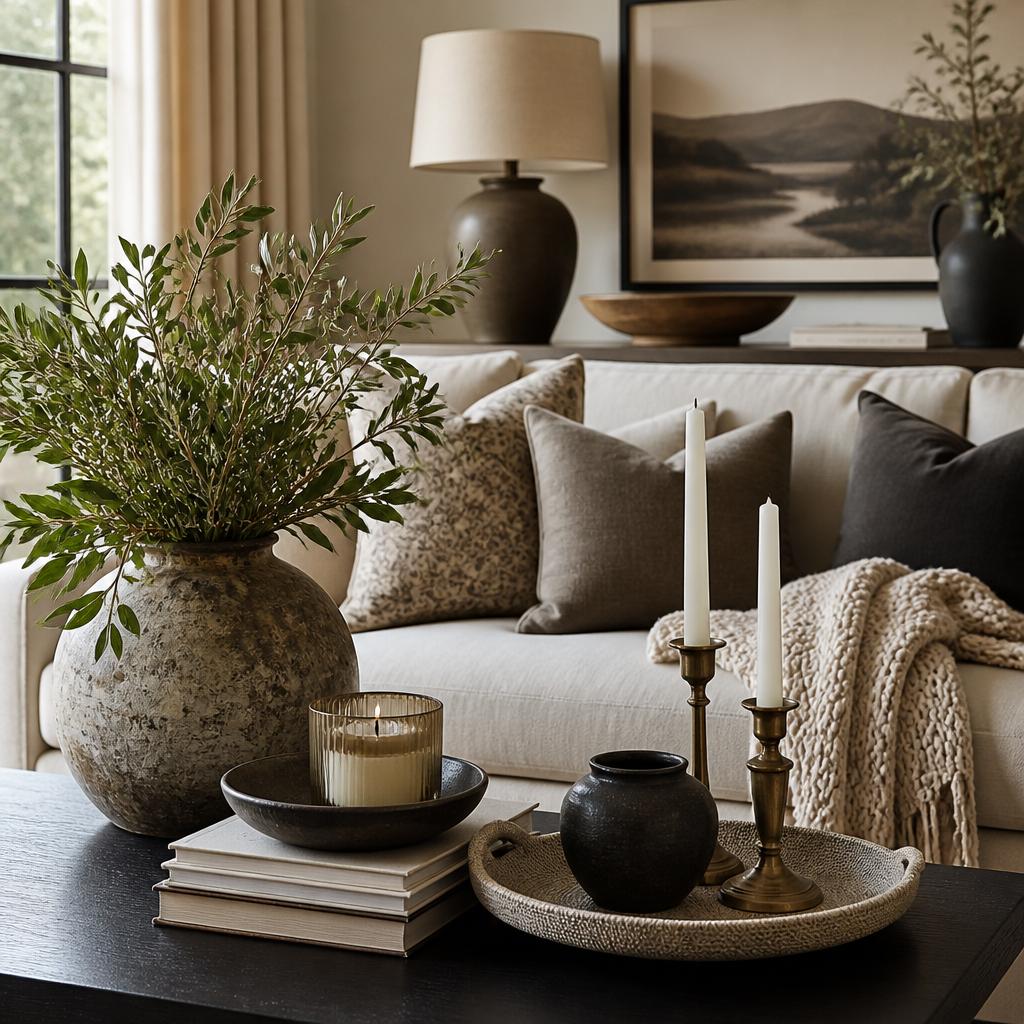
The count matters less than the variation. A group of three identical candles will still look flat. Aim for a tall piece, a mid-height piece and a low piece, and mix visual weight, one solid or dark object, one light or reflective object, one textured object.
A workable three-piece formula for a side table: a tall vase, a mid-height stack of two books, and a small dish or candle. For five on a shelf: add a framed print and a small plant.
When to Break the Rule
The rule is a starting structure, not a law. Break it when:
- The surface is very small, two well-chosen pieces beat three cramped ones
- You are styling a symmetrical arrangement, such as matching bedside lamps, where pairs are the point
- The group is deliberately minimal, where a single object is the statement
The Lighting Caveat
A styled group only reads as cohesive if it is lit consistently. A warm 2700K bulb on one shelf and a cool 4000K bulb on the next will make identical objects look like they belong to different homes. Keep bulb temperature consistent across a room, and use the same temperature in adjacent rooms where the spaces are visible from one another.
This rule gives you a repeatable structure. Once you know it, styling any surface takes minutes rather than an afternoon of rearranging.
How to Mix Interior Design Styles Without Visual Conflict
Mixing styles works when one style leads and the others follow. The trick is to know how to mix interior design styles without creating a fight.
Conflict happens when two styles compete for equal weight. A coastal room with industrial furniture and ornate traditional art will feel chaotic.
Choose One Dominant Style, Then Add Accents
Pick the style that fills most of the room. Then add one or two accents from another style.
- If coastal leads, add a single industrial light fitting
- If modern leads, add one vintage timber piece
- If traditional leads, add one clean-lined contemporary cushion
Keep the accent pieces small. A cushion, a lamp, or a single chair. That is enough.
Layering Textures in Home Decor for Depth and Warmth
Layering textures in home decor means combining materials with different surfaces in one space. Smooth with rough. Soft with hard.
A room with only one texture feels flat, even if the colours are perfect.
Try this mix in a living room:
- Cotton or linen on the sofa
- Wool or chunky knit in a throw
- Woven natural fibre underfoot
- One smooth surface, such as glass or ceramic
Repeat at least one texture in every room. That repetition is what ties the house together.
Our Alex Throw is a good example.

A Room-by-Room Plan for a Cohesive Home Aesthetic
A cohesive home aesthetic is a single look carried through every room using the same palette, textures, and repeated details. The fastest way to get there is a room-by-room plan, not a whole-house overhaul in one weekend.
Start with the rooms guests see first, then work outward. The sequence below is the one most designers follow, because each room confirms decisions made in the last.
Step 1: Audit What You Already Have
Before buying anything, walk through the home and note:
- Every wall colour and trim colour
- Every fixed floor and benchtop material
- The direction each main room faces (north, south, east, west)
- The colour temperature of existing bulbs
This audit tells you what you are working with. North-facing rooms receive cool, indirect light and can carry warmer paint and textiles. South-facing rooms receive cooler light and benefit from warmer tones to avoid feeling grey. East-facing rooms are warm in the morning and cool by afternoon; west-facing rooms are the reverse. Choosing a palette without this step is the most common reason a scheme looks right in one room and wrong in the next.
Step 2: Living Room
The living room sets the tone. Lock in your dominant hue here first.
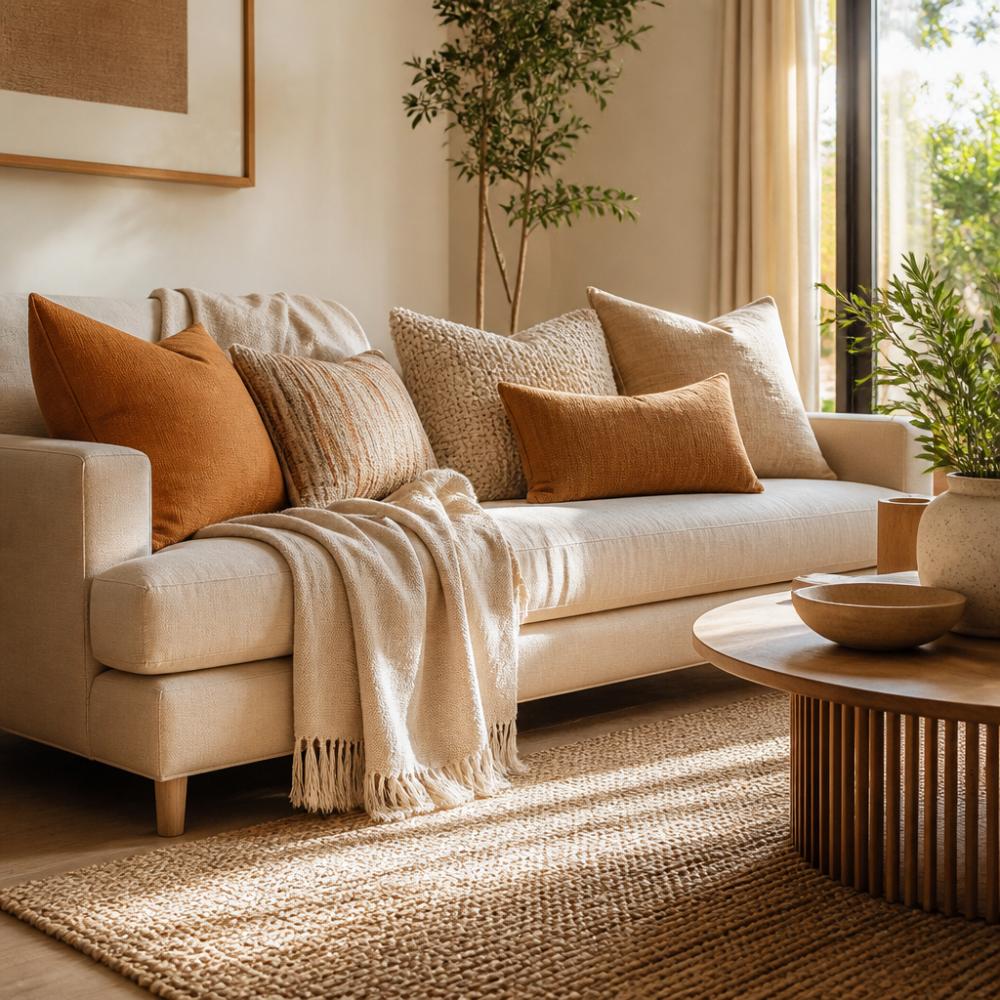
Add cushions in your accent colour. Our Forest Lace Deco Cushion brings a relaxed Hamptons feel in premium cotton. Layer it with a round Daisy Round Cushion in Ivory for contrast in shape.


Repeat one texture from this room in every room that follows. If you use a woven natural fibre rug here, plan a smaller woven piece in the entry.
Step 3: Entry and Hallway
The entry is where the palette gets confirmed. A console, a mirror, and one textured piece are enough.
Use the same accent colour as the living room. Our Charlotte Set of 2 Curtains in Iron can carry that colour through a hallway or doorway in textured cotton.
In open-plan homes, the entry often opens directly into the living space.
Step 4: Bedroom
Carry the same palette into the bedroom, but soften it. Bedrooms should feel calmer than living spaces, so reduce the accent colour to one small element, a cushion, a throw, or a single piece of art.
Repeat one texture from the living room. If you used cotton there, use cotton here too. Keep the bulb temperature warm and consistent with the rest of the home.
Step 5: Kitchen and Dining
Kitchens are dominated by fixed finishes, so work with them rather than against them. If the cabinetry is warm timber, lean into warm neutrals in the adjoining dining space.
In open-plan kitchens, repeat one colour from the living area in the dining zone, a rug, a set of cushions on a bench, or a bowl on the table.
Step 6: Bathroom and Laundry
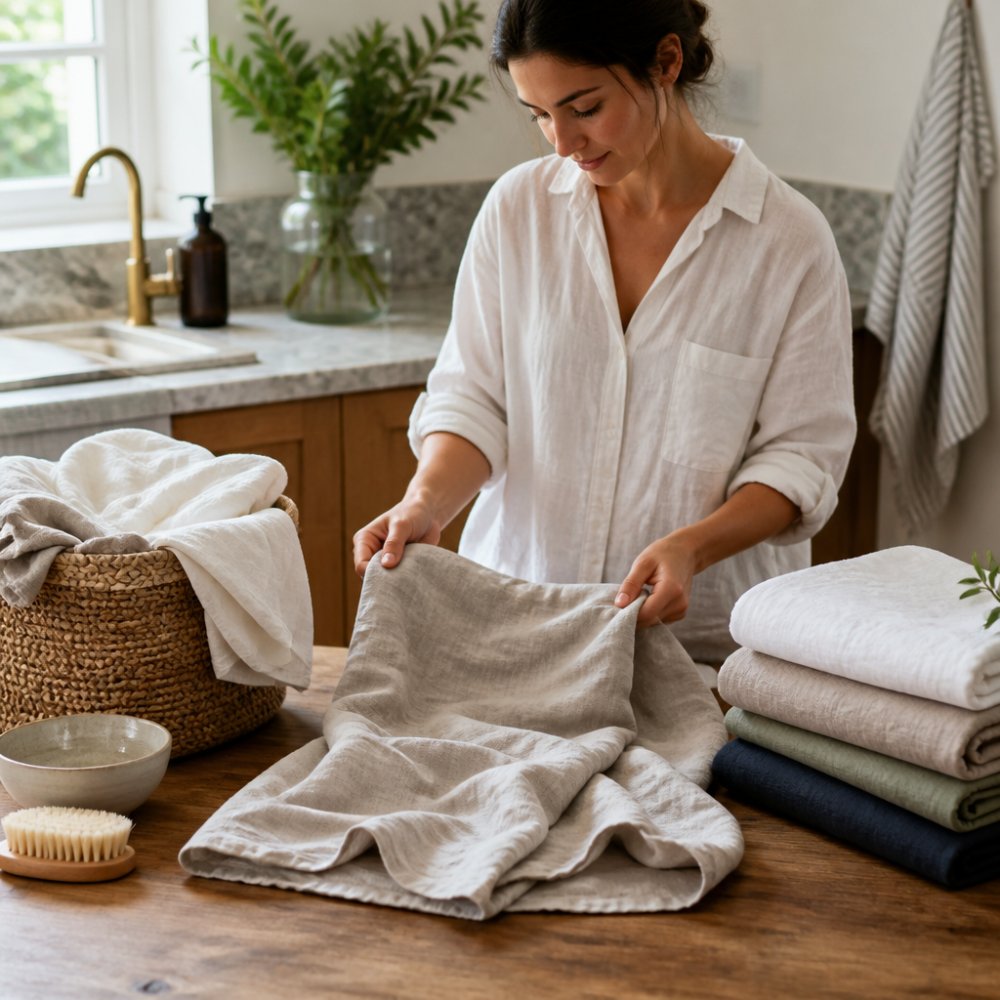
These rooms can carry the palette in a lighter form. Repeat the neutral, add one accent in a towel or a soap dispenser, and keep the same bulb temperature. You do not need to match the living room exactly, you need it to feel related.
Small Spaces and Open-Plan Homes
In compact homes, cohesion matters more, not less, because every room is visible from another. Two rules help:
- Limit the palette to three colours across the whole home, not three per room
- Repeat one texture in every space, even if it is only a cushion or a towel
In open-plan areas, use rugs to define zones without breaking the palette. Two rugs in the same colour family, different patterns, will separate a living zone from a dining zone while keeping the space visually connected.
Rental-Friendly and Budget-Conscious Ways to Unify a Space
Renters can create a cohesive home without touching a single wall. Focus on what you can take with you.
The highest-impact changes, ranked:
| Change | Cost Level | Reversible | Impact |
|---|---|---|---|
| Cushions and throws | Low | Yes | High |
| Area rug | Medium | Yes | High |
| Curtains | Medium | Yes | Medium |
| Art and wall decor | Low | Yes | Medium |
| Freestanding lighting | Medium | Yes | Medium |
| Paint | Low | No | High |
Start at the top. Cushions and throws in your chosen palette will unify a room faster than almost anything else, and they move house with you.
Common Mistakes That Make a Home Feel Disjointed
Most disjointed homes share the same handful of problems. Fix these and the rest gets easier.
- Too many accent colours. Two accents maximum per home.
- Every room styled separately. Repeat at least one colour and one texture across rooms.
- Even-numbered decor groups. Switch to three, five, or seven.
- Ignoring the architecture. Work with existing trim, flooring, and light, not against them.
A quick fix for a disjointed home: walk through and list every colour you can see. If the list runs past five, you have found your problem.
Frequently Asked Questions
What is the 3-5-7 rule in decorating?
The 3-5-7 rule is a simple ratio for arranging decor: three of one type of item, five of another, and seven of another. For example, three large cushions, five medium accessories, and seven small decorative objects. The odd numbers create visual balance because the eye reads them as natural rather than symmetrical. Apply it to shelves, coffee tables, or mantel displays to make a cohesive home aesthetic feel intentional rather than cluttered.
How do I make my home look cohesive without buying new furniture?
Work with what you already own. Pull every decorative item, cushion, throw, and artwork into one room and sort by colour family. Return only pieces that share two or three base colours, then redistribute them so each room has at least one repeated tone. Rotate rugs and lamps between rooms, and group accessories in odd numbers. Adding a single new textile, such as a cotton throw or cushion, can tie existing pieces together without replacing furniture.
How do you choose a colour palette that works throughout your home?
Choose one dominant hue, then pick two supporting colours and one accent. Test paint samples on large cardboard sheets and move them between rooms at different times of day, because lighting changes how a colour reads. Keep floors, walls, and large furniture in the neutral base, then repeat the accent in smaller doses across rooms. This creates colour flow so each space feels connected rather than separately decorated.
How can you mix different interior design styles cohesively?
Choose one dominant style for about 70 per cent of a room, then add a secondary style in the remaining 30 per cent. Link the two through a shared colour, material, or shape. For example, pair a coastal cotton curtain with a modern leather chair. Repeating one design element across both styles stops the room from looking like a showroom of mismatched pieces.
Creating a cohesive home takes time, and most people stall on where to start. We built Casa Sereno to make that first step simple, with curated collections in timeless styles that work across rooms. Our throws, cushions, and curtains are designed to layer together, and we offer free shipping on orders over $150 plus 20% off your first order for new subscribers. Get started with Casa Sereno and build a home where every room belongs to the same story.