Table of Contents
- What You'll Need to Style Linen Bedding
- 1. Start With a Neutral Base: Linen Sheets and Duvet Cover
- 2. How to Layer a Bed Like a Stylist
- 3. Styling Cushions on a Bed for Boutique Hotel Appeal
- 4. Building a Cohesive Color Palette for Relaxed Luxury
- 5. Linen Bedding Care and Maintenance for Lasting Softness
- 6. Budget-Friendly Luxury Hacks and Lighting for Ambiance
- 7. Common Mistakes That Undermine a Luxury Linen Look
- Frequently Asked Questions
Last Updated: September 27, 2026
What You'll Need to Style Linen Bedding
Linen bedding looks better the more you use it, that relaxed, rumpled finish is the point.
- One linen sheet set (fitted sheet and flat sheet)
- One linen duvet cover
- Two to four cushion covers in mixed sizes
- One throw blanket for the foot of the bed
- A steamer or iron, used sparingly
- Neutral-toned bedside lighting
1. Start With a Neutral Base: Linen Sheets and Duvet Cover
The base layer does most of the work. A neutral linen sheet set and duvet cover create the calm foundation everything else sits on. Skip this and no amount of cushions will save the room.
2. How to Layer a Bed Like a Stylist
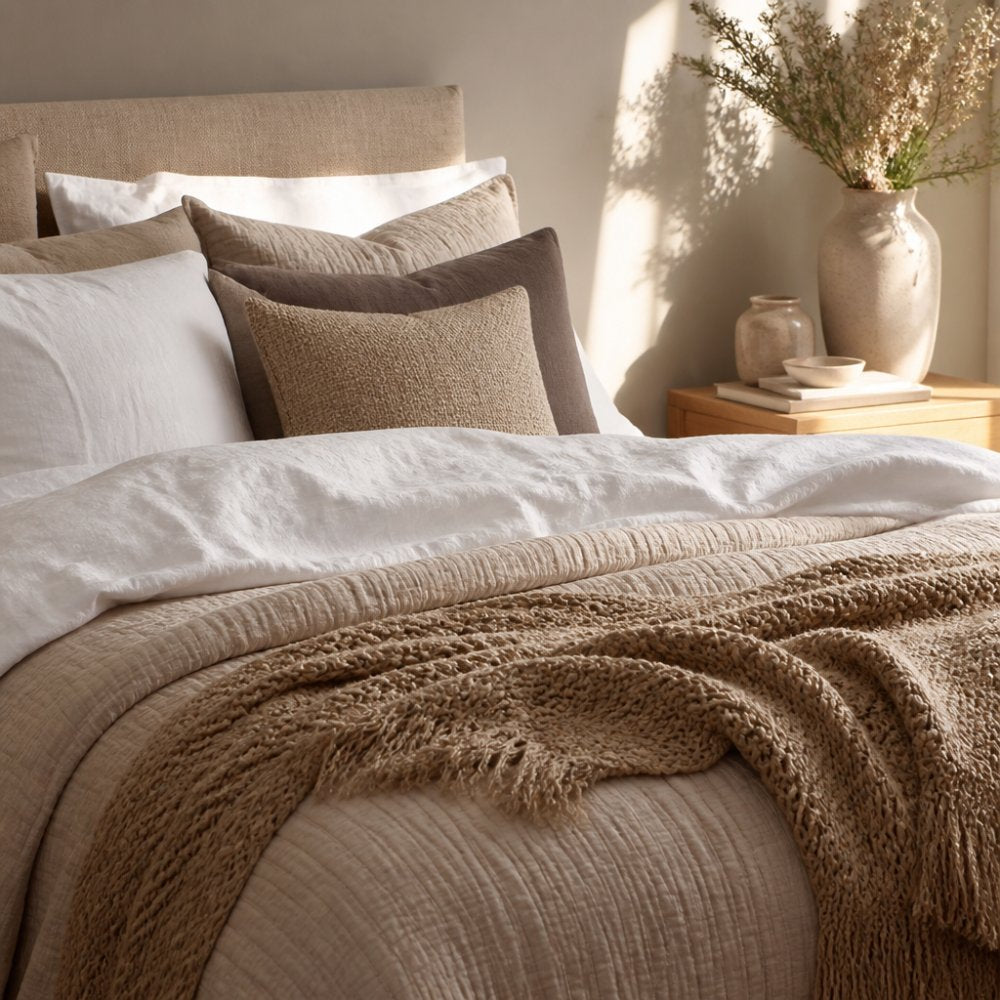
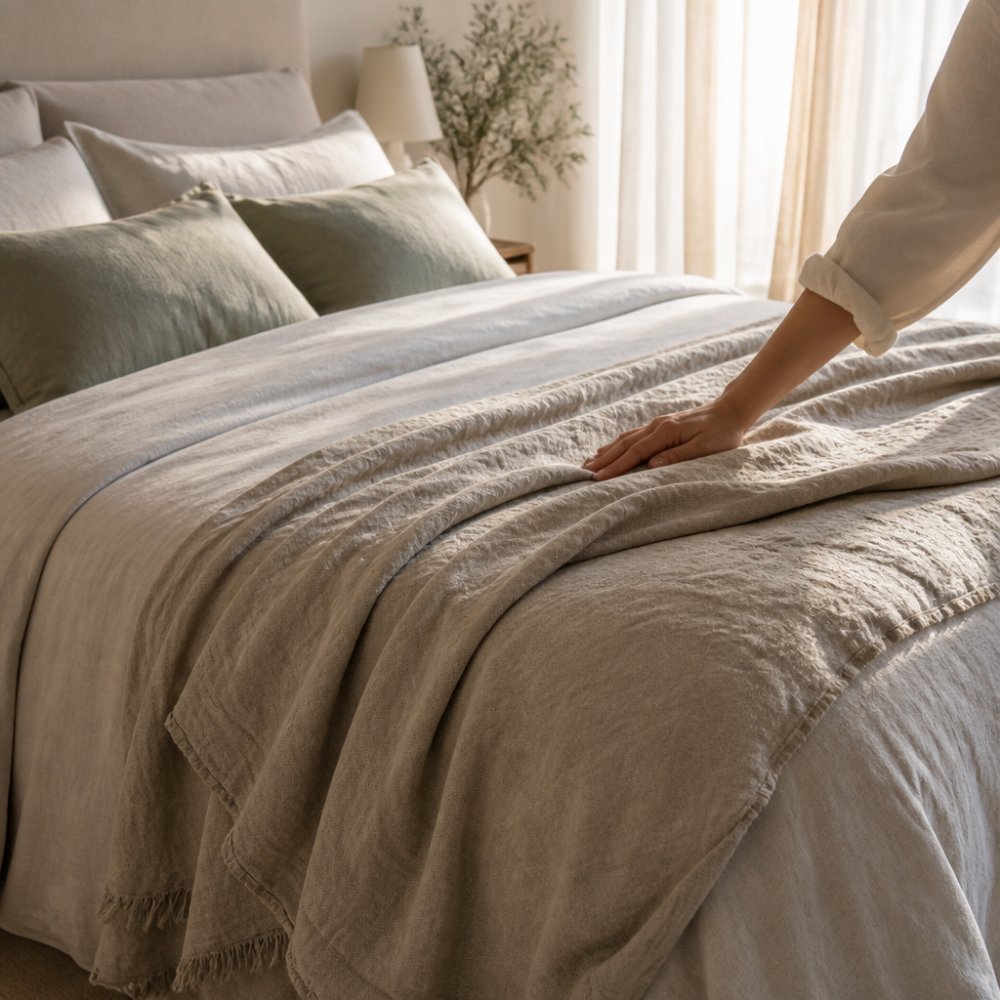
Layering a bed like a stylist comes down to one idea: build from flat to full, in thin layers that add texture or height without hiding the one beneath.
The Three-Layer Rule for Visual Depth
Three layers is the sweet spot for most beds. More looks heavy; fewer looks unfinished.
- Base layer: Fitted sheet, tucked tight.
- Mid layer: Flat sheet, folded back neatly at the top.
- Top layer: Duvet cover, pulled up to just below the pillows.
Seasonal Transition Styling: Swap Layers, Not the Whole Bed
You don't need a whole new bedding ensemble when the seasons change, just swap one or two layers.
- Warmer months: Drop the throw, switch to lighter cushions, keep the duvet thin.
- Cooler months: Add a wool or heavier throw, layer in a textured cushion, fold the duvet back further.
3. Styling Cushions on a Bed for Boutique Hotel Appeal
Styling cushions on a bed is where the boutique hotel aesthetic is won or lost. The rule: odd numbers, mixed sizes, a clear front-to-back order.
Cushion Arrangement: The 2-4-2 Formula
The 2-4-2 formula creates balance without looking crowded, and works on almost any bed size.
| Position | Count | Size | Purpose |
|---|---|---|---|
| Back row | 2 | European | Height and structure |
| Middle row | 4 | Standard | Main colour and pattern |
| Front row | 2 | Small accent | Texture and contrast |
Mixing and Matching Colors and Textures
Keep the base neutral, then add contrast through texture rather than loud colour. A linen cushion against a linen duvet looks flat; against cotton or velvet it looks considered.

Try these pairings:
- Smooth linen with a chunky knit throw
- Matte cotton with a slight sheen cushion
- Two tones from the same family, like oat and sand
4. Building a Cohesive Color Palette for Relaxed Luxury
A cohesive colour palette separates a styled bed from a made bed. Pick three tones and stay inside them across sheets, duvet, cushions, and throws.
A simple framework that works for most bedrooms:
- One dominant neutral: ivory, stone, or oat
- One mid-tone: soft grey, sand, or mushroom
- One accent: teal, lavender, or a muted terracotta
5. Linen Bedding Care and Maintenance for Lasting Softness
Linen bedding care and maintenance keeps the softness and drape you paid for, get it wrong and even good linen turns stiff within a year. "Wash cold, tumble low" is the floor, not the ceiling.
Why Linen Softens, and What Reverses It
Linen is a cellulose fibre. Every wash swells the fibres, loosens the pectin holding them together, and breaks down weaving stiffness, which is why linen feels softer after the third or fourth wash and keeps improving for years.
Three things reverse that progress:
- Fabric softener. It coats the fibre in a waxy film, blocks the swelling action, and traps detergent residue. Over time the linen feels coated rather than soft, and breathability drops.
- High heat. Drying on high or ironing on a hot setting shrinks the fibre and can set creases that never relax out.
- Overloading the machine. Linen needs room to move. A packed drum means less agitation, less rinsing, and more residual detergent.
The Wash Routine That Preserves Drape
- Wash on a gentle or hand-wash cycle at 30-40°C. Cooler is safer for colour; warmer cleans harder.
- Use a mild liquid detergent; powders leave residue in the weave.
- Skip fabric softener and bleach. For a softener effect, add half a cup of white vinegar to the rinse, it strips detergent residue without coating the fibre.
- Wash linen separately from towels, denim, and anything with zips or hooks; linen abrades easily against heavy items.
- With hard water, a water softener or laundry ball reduces mineral buildup, a common cause of scratchy linen.
Drying and Pressing Without Flattening the Look
Tumble dry on low for 10-15 minutes to relax the fibres, then remove while slightly damp. Line drying in shade works just as well. Never dry in direct sun, UV fades dyes and weakens the fibre.
Storing Linen Between Seasons
Store linen clean, dry, and folded loosely. Damp linen in a cupboard develops mildew, and mildew stains are almost impossible to remove without bleaching. A cotton storage bag breathes better than a plastic vacuum bag, which traps moisture. Rotate your sets so each gets washed and aired; linen unused for a year can feel stiff again on first use.
6. Budget-Friendly Luxury Hacks and Lighting for Ambiance
You don't need to replace everything to get a luxury look, a few small changes do most of the work, and the most underrated is lighting. Bulb colour temperature changes how your linen reads, and matching the two is the cheapest upgrade in the room.
Match Your Linen Tone to Your Light Temperature
Light has a colour temperature measured in kelvin (K): warm around 2700K, neutral around 3000K, cool or daylight at 4000K and above. Linen is a warm, low-saturation fibre, so it responds strongly to the light hitting it.
- Warm neutrals (ivory, oat, sand, stone): pair with 2700K bulbs. Warm light amplifies the yellow undertones in these tones and makes the bed look softer and more expensive.
- Cool neutrals (soft grey, mushroom, pale blue-grey): pair with 3000K. Too warm and grey linen turns muddy; too cool and it turns clinical.
- Deep accents (teal, terracotta, lavender): 2700K brings out the richness. 4000K flattens them and makes them look synthetic.
Layer Your Light Sources
One ceiling light, however good, flattens texture. Luxury bedrooms use at least three sources at different heights:
- Bedside lamps at mattress height, with warm bulbs and fabric or linen shades. These are the workhorses.
- A low-level source, a floor lamp, a small table lamp on a dresser, or a dimmable wall sconce, to fill the room without hitting the bed directly.
- A dimmable overhead or pendant on the lowest setting, used only for cleaning or finding things.
Budget Hacks That Actually Lift the Look
- Swap cushions first. They're the cheapest way to change a bed's whole feel, and the first thing the eye reads.
- Add one throw. A single throw at the foot of the bed reads as styled, not sparse. A chunky knit or wool blend adds texture linen alone can't.
- Change your lampshades, not your lamps. A linen or cotton shade in a warm tone diffuses light far better than a bare bulb or cool-toned shade, for a fraction of a new lamp.
- Use a dimmer. A plug-in dimmer costs little and drops the room to a warm, low glow in the evening, the setting that makes linen look its best.
- Add one small finishing detail. The Valerie Lace Boarder is an affordable way to add a refined detail that lifts a neutral scheme without a big spend.
The Test: Look at Your Bed at 8pm
Styling decisions made in daylight often fail at night. Before buying anything else, turn on the lights you actually use in the evening and look at the bed. If the linen looks grey, flat, or cold, fix the bulbs before the bedding. If the texture disappears, add a lower, warmer source closer to the bed.

7. Common Mistakes That Undermine a Luxury Linen Look
Most failed linen styling comes down to a handful of errors. Fix these and the bed improves immediately.
- Over-ironing. A flat, pressed bed looks like a hotel, not a home. Let linen breathe.
- Too many cushions. Seven cushions isn't luxury, it's effort. Stick to the 2-4-2 formula.
- Mismatched sizes. A duvet that's too small ruins the drape no matter how good the fabric is.
- Cool-toned lighting. It makes warm neutrals look grey and cheap.
- Skipping the throw. Without a top layer, the bed looks unfinished.
- Ignoring the wash routine. Fabric softener and high heat quietly destroy linen over time.
Frequently Asked Questions
How do I make my linen bedding look expensive and polished?
Start with a neutral linen base, then layer a quilt or coverlet in a complementary tone. Add a throw blanket folded across the foot of the bed and finish with an odd-numbered cushion arrangement. Linen's natural drape and breathability do the heavy lifting, so avoid over-styling. A cohesive color palette of two to three calming colors keeps the look refined rather than cluttered.
What are some popular color combinations for linen bedding?
Soft neutrals like oatmeal, stone, and ivory are timeless. For a boutique hotel aesthetic, pair white linen with teal or lavender accents through cushions and throws. Earthy tones such as clay and sage work well for a relaxed luxury feel. Choose two to three colors and repeat them across your bedding ensemble to create aesthetic cohesion.
Should linen bedding be ironed for a luxury look?
No. Linen's natural creases are part of its charm and signal authentic natural fibers. Ironing can flatten the weave and reduce breathability. Instead, smooth your linen while it is slightly damp after washing, then let it air dry. A gentle shake before making the bed encourages the relaxed, textural look that defines high-end linen styling.
How can decorative cushions enhance a linen bedding setup?
Cushions add textural contrast and visual depth without overwhelming the bed. Use a 2-4-2 arrangement: two large European cushions at the back, four standard cushions in the middle, and two accent cushions at the front. Mix linen with cotton or velvet for contrast. Casa Sereno's Malta Linen Cushion ($78.00) and Linen European in Teal ($55.00) are ideal for building this layered look.