Table of Contents
- What Separates Quality Furniture Retailers From the Rest
- Materials, Construction and the Questions That Reveal Both
- Luxury Home Décor Stores: What You're Actually Paying For
- Small-Space and Apartment Living Solutions
- The Best Furniture Stores for Interior Design Projects
- High-Quality Bedding and Homewares: How to Judge Them
- Timber, Textiles and Ethical Sourcing
- Caring for Furniture and Textiles in a Coastal Climate
- Delivery, Assembly and Showroom Visits
- Frequently Asked Questions
Last Updated: September 26, 2026
What Separates Quality Furniture Retailers From the Rest
The best furniture retailers in any market are separated by three things: how honestly they describe materials, how they handle delivery and assembly, and whether their pieces still look right five years later. At Casa Sereno, we think the difference between a good furniture retailer and a forgettable one comes down to transparency. This guide to furniture retailers Sydney shoppers can actually trust breaks down what to check before you spend.
Furniture retailers are businesses that sell sofas, beds, dining settings, storage and homewares, either through showrooms, online catalogues, or both. The category spans budget flat-pack sellers through to curated luxury home décor stores, and the buying experience changes dramatically depending on which end you're shopping.
Most buying guides skip the questions that matter. They list showrooms and prices, then stop. But the real test of a furniture retailer is what happens after the sale: whether the timber was sourced responsibly, whether the upholstery survives a humid summer, and whether someone answers the phone when a leg arrives chipped.
Below, we'll show you exactly how to judge a retailer before you hand over a deposit, and which details reveal more than any showroom styling ever will.
Materials, Construction and the Questions That Reveal Both
Construction quality shows up in the details a retailer is willing to discuss. A retailer confident in their product will happily explain joinery methods, foam density, and fabric rub counts. One that deflects to "premium quality" is telling you something too.
What most guides miss is that the frame matters more than the finish. A hardwood frame with doweled and glued joints will outlast a cheaper frame every time, regardless of how good the fabric looks on the showroom floor.
For upholstery, ask what's under the cover. Feather-and-foam blends feel luxurious but need regular plumping. High-resilience foam holds shape with less maintenance. Neither is wrong; they suit different households.
- Timber: Ask whether it's solid or veneered, and which species
- Upholstery: Request the rub count (commercial-grade fabrics typically exceed 15,000 double rubs)
- Joinery: Dowels, mortise-and-tenon, or corner blocks signal durability
- Hardware: Metal knobs and handles outlast plastic in high-use pieces
A common mistake is judging a sofa by sitting on it for thirty seconds. Sit for ten minutes. Shift your weight. Lean on the arms. That's when you learn whether the frame flexes.
Luxury Home Décor Stores: What You're Actually Paying For
Luxury home décor stores charge more because of materials, sourcing, and design provenance, not just branding. The gap between a cushion and a $55 cotton cushion often comes down to fibre quality, weave density, and whether the piece was designed in-house or bought wholesale.
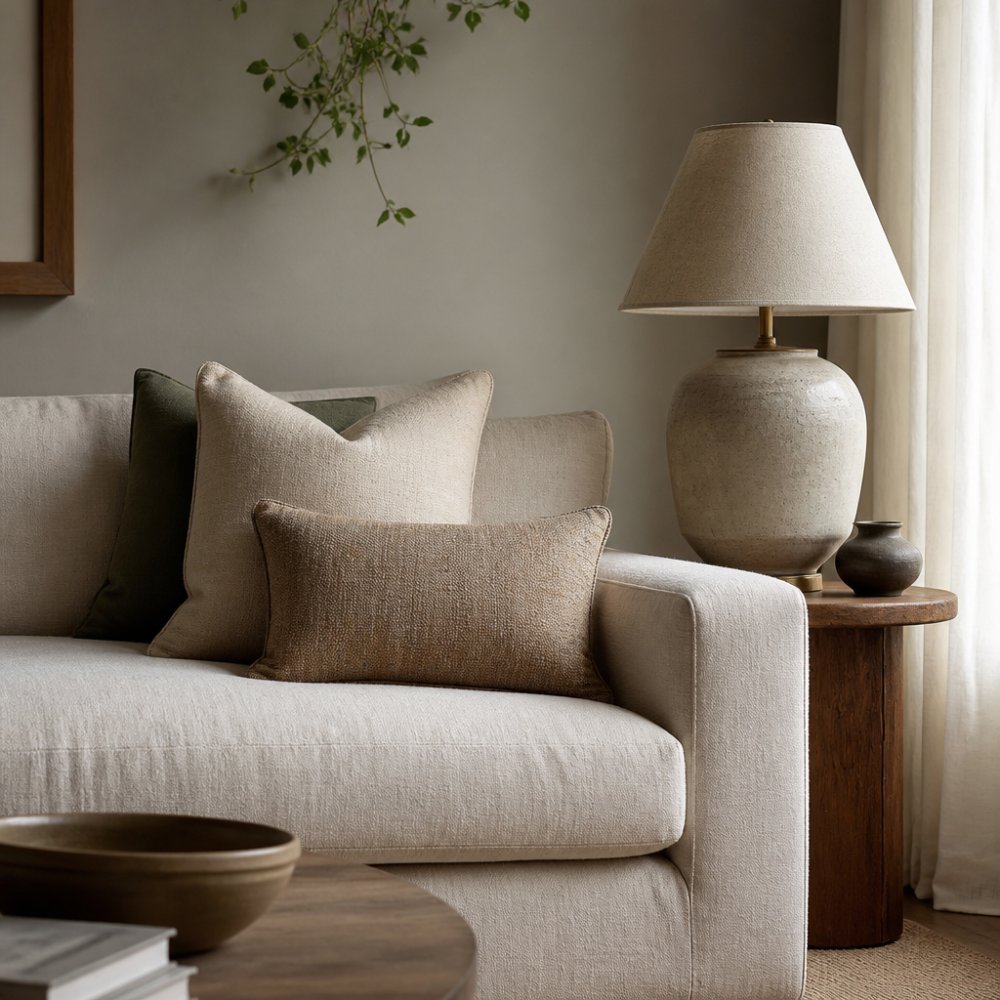
Where a retailer falls short is when "luxury" means nothing more than a higher price tag on the same imported stock. The tell is in the catalogue: if every product photo looks identical to three other stores, the markup is marketing, not craftsmanship.
Casa Sereno's approach is to keep the range curated rather than sprawling. A smaller collection means each piece, like the Sydney Cushion in soft durable cotton, earns its place rather than filling a category.

Small-Space and Apartment Living Solutions
Apartment living changes what "good furniture" means. In a compact space, every piece has to work harder: storage that doubles as seating, tables that scale down for two and up for six, and textiles that add warmth without visual bulk.
Renters face an extra constraint. You can't rip out built-in wardrobes or repaint walls, so the pieces you choose have to carry the aesthetic on their own. Statement accessories do more work than big furniture in a rental.
That's where smaller pieces earn their keep. A Sydney Breakfast Prefilled Pillow in soft cotton adds texture to a bedroom without committing to a full redesign. A set of ceramic knobs can refresh a tired rental dresser in an afternoon, then travel with you to the next place.

- Multi-purpose pieces: Ottomans with storage, nesting tables, bed frames with drawers
- Scale check: Measure your lift and doorways before buying anything over 1.5 metres
- Vertical storage: Tall, narrow shelving beats wide, low units in tight rooms
- Light textiles: Lighter colours and natural fibres make small rooms feel larger
Measure twice. A sofa that fits the room but not the stairwell is a sofa you'll be selling at a loss.
The Best Furniture Stores for Interior Design Projects
The best furniture stores for interior design work combine a deep catalogue, trade-friendly terms, and the ability to source bespoke or custom pieces. Designers need consistency across a project, which means a retailer with a coherent collection rather than a random assortment.
What separates a design-friendly retailer from a general one is follow-through.
| Project Need | What to Look For | Why It Matters |
|---|---|---|
| Whole-room schemes | Coherent colour and material range | Avoids mismatched tones |
| Staged installs | Stock holding and coordinated delivery | Keeps timelines on track |
| Custom pieces | Bespoke options and swatch service | Matches client briefs |
| Repeat projects | Trade terms and account management | Saves time per job |
High-Quality Bedding and Homewares: How to Judge Them
High-quality bedding and homewares are judged by fibre, weave, and finish, not by thread count alone. A 300-thread-count long-staple cotton sheet will often outperform a 1,000-thread-count sheet made from short fibres, because staple length determines how the yarn holds up over time.
- Cotton: Look for long-staple or extra-long-staple fibres
- Linen: Softens with every wash; expect a break-in period
- Wool: Regulates temperature well but needs careful, cool washing
- Blends: Convenient, but check the natural-fibre percentage
Timber, Textiles and Ethical Sourcing
Ethical sourcing in furniture means the retailer can trace where their timber, cotton, wool, and leather came from, and can show certification when asked. It's not a marketing line; it's a paper trail.
- Timber: Look for chain-of-custody certification
- Cotton: Organic or transitional certification signals lower chemical use
- Wool: Traceable, non-mulesed wool is increasingly standard
- Recycled materials: Reclaimed timber and recycled fibres reduce landfill
Caring for Furniture and Textiles in a Coastal Climate
Coastal climates are hard on furniture. Salt air, humidity, and strong UV exposure all accelerate wear on timber, metal, and textiles, which means maintenance routines matter more here than in drier inland regions.
- Timber: Oil or wax annually; keep out of direct sun
- Textiles: Air weekly; wash on cool cycles; dry in shade
- Metal: Wipe dry; avoid abrasive cleaners
- Outdoor pieces: Cover or store during extended wet periods
Delivery, Assembly and Showroom Visits
Delivery, assembly, and showroom visits are where a furniture retailer's service either proves itself or falls apart. Anyone can sell you a sofa online; the test is whether it arrives intact, on time, and with someone who knows how to put it together.
- Delivery: Confirm the time window and access requirements
- Assembly: Ask whether it's included or an extra fee
- Inspection: Check for damage before signing the delivery docket
- Returns: Understand the window and who pays return freight
Frequently Asked Questions
How do I choose between high-end and affordable furniture retailers?
Start with the pieces you use daily. A sofa, dining table and mattress justify spending more because construction quality shows up over years, not weeks. Look for hardwood or kiln-dried frames, corner-blocked joinery and covers you can remove for cleaning. For decorative items, cushions, knobs and small accessories, affordable options work well and let you refresh a room without a full spend. A mixed approach usually delivers the best result for the budget.
What should I check when visiting furniture showrooms?
Sit on the sofa, open the drawers and lift a chair. Check whether the frame flexes, whether handles feel solid and whether upholstery seams sit straight. Ask about lead times, delivery windows and whether assembly is included. Measure your lift, stairwell and doorways before you buy, since a piece that fits the room may not fit the building. Photograph the showroom styling so you can recreate the look at home.
How do I find furniture retailers that use sustainable or high-quality materials?
Ask directly what the timber is and where it came from. Retailers sourcing responsibly can usually name the species and the certification. For textiles, look for natural fibres such as cotton, linen and wool, and check whether the retailer publishes care instructions and sourcing details. Vague claims about being eco-friendly mean little without specifics. A retailer that answers material questions clearly is usually the one worth buying from.
Which furniture retailers offer the best luxury home décor?
The strongest options are those with a curated range rather than a warehouse of everything. Look for stores that stock a consistent aesthetic across cushions, bedding, tableware and accessories, so pieces layer together. Casa Sereno builds its collections this way, with cotton cushions from $55, prefilled pillows from $49 and pillowcases from $25, plus ceramic and metal knobs from $8 to $10 for finishing furniture. Free shipping applies on orders over $150.
How do I care for furniture and textiles in a humid coastal climate?
Humidity and salt air affect timber, metal and fabric differently. Keep timber furniture out of direct sun and away from air conditioning vents, and wipe metal hardware dry after cleaning to slow tarnishing. Wash cotton bedding and cushion covers according to the care label, and air them fully before storing. Rotate cushions so fading is even, and check outdoor pieces seasonally for loose joints or surface wear.