

Table of Contents
- Why Visualising Home Decor Matters Before You Buy
- How to Measure a Room for Furniture Placement
- How to Create a Digital Mood Board for Your Space
- Best Home Design Apps for Beginners
- Using Springboard Objects to Anchor Your Design
- Balancing Scale, Proportion, and Visual Weight
- Testing Colour, Texture, and Lighting in Your Space
- Common Mistakes When Visualising Home Decor
- Frequently Asked Questions
Last Updated: September 1, 2026
Why Visualising Home Decor Matters Before You Buy
The difference between a cohesive room and a chaotic one often comes down to planning. Visualising home decor lets you test ideas without financial risk, especially when investing in premium pieces like those from Casa Sereno, where each item carries real weight in both budget and aesthetic impact.
Most people make decisions based on emotion alone. A cushion looks beautiful in isolation, but when you bring it home, it clashes with your colour palette or doesn't work at the scale your room demands. Visualising home decor before purchase prevents this. When you know how a piece will actually look in your room, how it sits with your lighting, relates to existing furniture, and contributes to your overall aesthetic, you make better decisions.
How to Measure a Room for Furniture Placement
Accurate measurements are the foundation of successful visualisation. Start by measuring the room's overall dimensions: length, width, and ceiling height. Write these down in simple format: 4m × 3.5m × 2.7m, for example.
Next, map fixed elements that won't move: windows, doors, fireplaces, built-in shelving, and radiators. Measure the distance from corners to each feature, noting window dimensions and door swing direction. Don't skip measuring doorways and hallways if you're moving large pieces, a sofa that fits through your front door might not fit around a hallway corner.
For furniture placement, measure from walls to existing pieces you're keeping. These become your anchor points when visualising how new pieces will relate to them. Photograph your room from multiple angles: straight on from each wall, corners, and from above if possible.
How to Create a Digital Mood Board for Your Space
A mood board is your visual reference for the aesthetic direction you're moving toward.
Gathering inspiration images
Start by collecting images that appeal to you. Use Pinterest, Instagram, design blogs, or furniture websites. Aim for at least 15-20 images. Include close-ups of textures, full room shots, and detail photos of accessories. Look for patterns in what you've collected: do most images feature warm or cool tones? Are they minimalist or layered with pattern and texture?
Organising by colour palette and aesthetic
Sort your images into a digital mood board using Canva, Pinterest, or Google Slides. Group images by colour palette first. You might notice most inspiration features warm neutrals, creams, taupes, and soft greys with touches of deep green or terracotta. That's your colour palette emerging.
Next, look at aesthetic consistency. Are your images mostly contemporary, traditional, farmhouse, or eclectic? Do they share a common material language? This is where your design concept becomes clear.
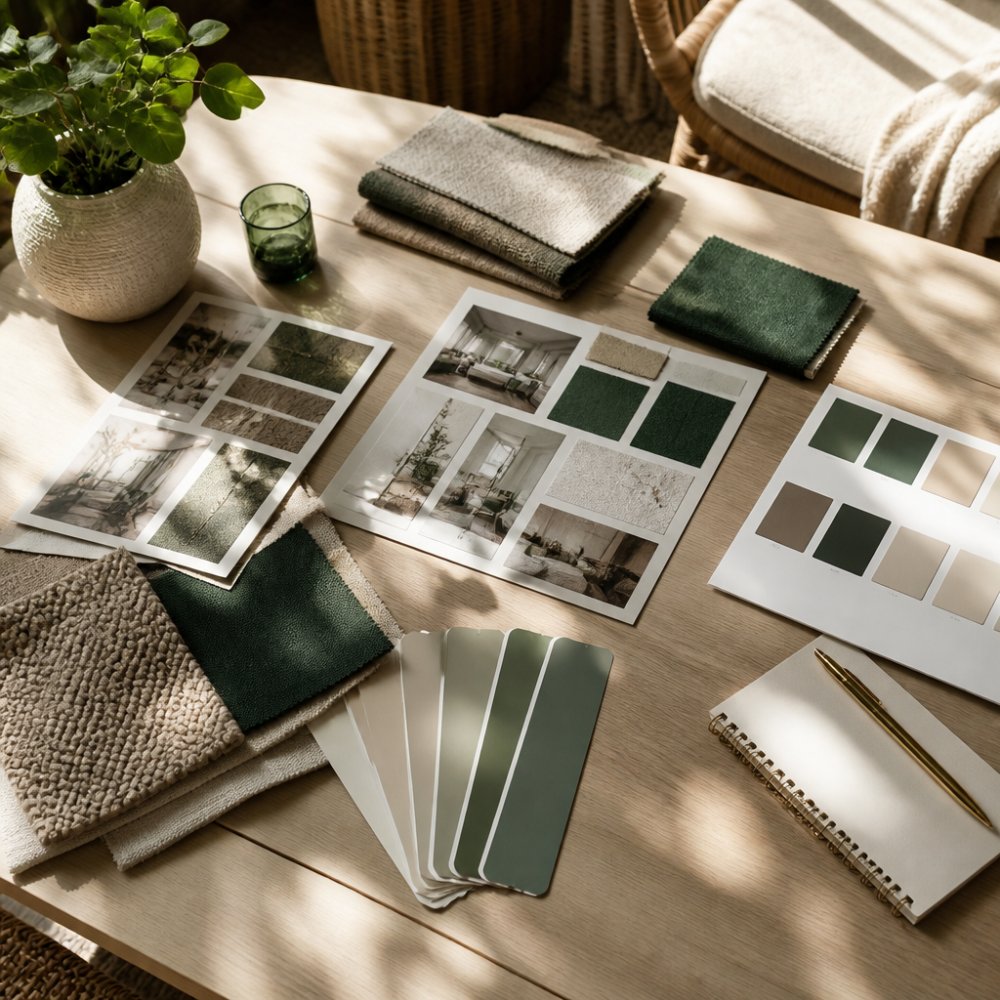
Overhead shot of a designer's workspace with printed mood board samples, fabric swatches in warm neutrals and deep greens, colour palette cards, and inspiration photos arranged on a desk with natural daylight streaming across the surface
Use your mood board to test new pieces before purchasing. Pull an image of a cushion or throw you're considering from Casa Sereno and drop it into your mood board. Does it fit your palette? Does the texture complement what you've gathered? This quick visual check prevents purchases that clash with your overall vision.
Best Home Design Apps for Beginners
Digital tools for visualising home decor have improved dramatically. Many apps now allow you to upload a photo of your room and place furniture into it virtually, or use augmented reality to show how a piece looks through your phone camera. Others let you build a digital floor plan and experiment with layouts.
Look for apps that let you import images of your own furniture and test them against your room. The ability to adjust scale, rotate pieces, and save multiple versions is valuable. Free or low-cost options often include basic room planning features and a library of common furniture pieces. Paid versions typically offer more customisation and access to real product catalogues.
The real value of these apps isn't perfect accuracy, it's forcing you to think spatially. When you're building a digital floor plan or placing furniture virtually, you're already making better decisions than if you were just imagining it.
Using Springboard Objects to Anchor Your Design
A springboard object is a single piece that becomes the foundation for your entire room's aesthetic. It's usually something you love enough to build around, a rug with a pattern you adore, a statement sofa in a bold colour, a piece of art, or a collection of ceramics. Everything else in the room should either echo or complement this piece.
If your springboard object is a vintage rug with warm terracottas and deep blues, your colour palette is already defined. If it's a neutral linen sofa, your springboard might be a collection of cushions in varying textures.
Casa Sereno pieces like the Forest Lace Deco Cushion or the Decorative Voile Cushion often work beautifully as springboard objects because they combine colour, pattern, and texture in ways that naturally suggest a direction. The advantage of identifying a springboard object early is that it simplifies the rest of your choices. Instead of facing infinite options, you're filtering everything through one reference point.


Balancing Scale, Proportion, and Visual Weight
Scale refers to the size of furniture relative to the room. A generous sectional works in a spacious living area but overwhelms a modest bedroom. Proportion refers to how different elements relate to each other. A delicate side table next to a substantial sofa looks unbalanced; something with more visual weight feels right.
Visual weight is trickier because it's not just about size. A dark, dense piece feels heavier than a light, airy one of the same dimensions. A patterned fabric carries more visual weight than a solid colour.
When visualising home decor, test how pieces work together at different scales. The rule of thirds helps: divide your room into thirds and place anchor furniture at the intersections rather than dead centre (peer-reviewed research). This creates more interesting spatial awareness than centering everything.
Testing Colour, Texture, and Lighting in Your Space
Your colour palette might look perfect in your mood board, but how it actually appears depends entirely on lighting. Natural light changes throughout the day. A warm cream that looks golden in morning light might appear cold and grey in afternoon shade (the NIH).
Before committing to a colour scheme, test it at different times of day and under the lighting you actually use. Bring paint samples or fabric swatches home and tape them to your walls for a few days, observing them in morning, afternoon, and evening light.
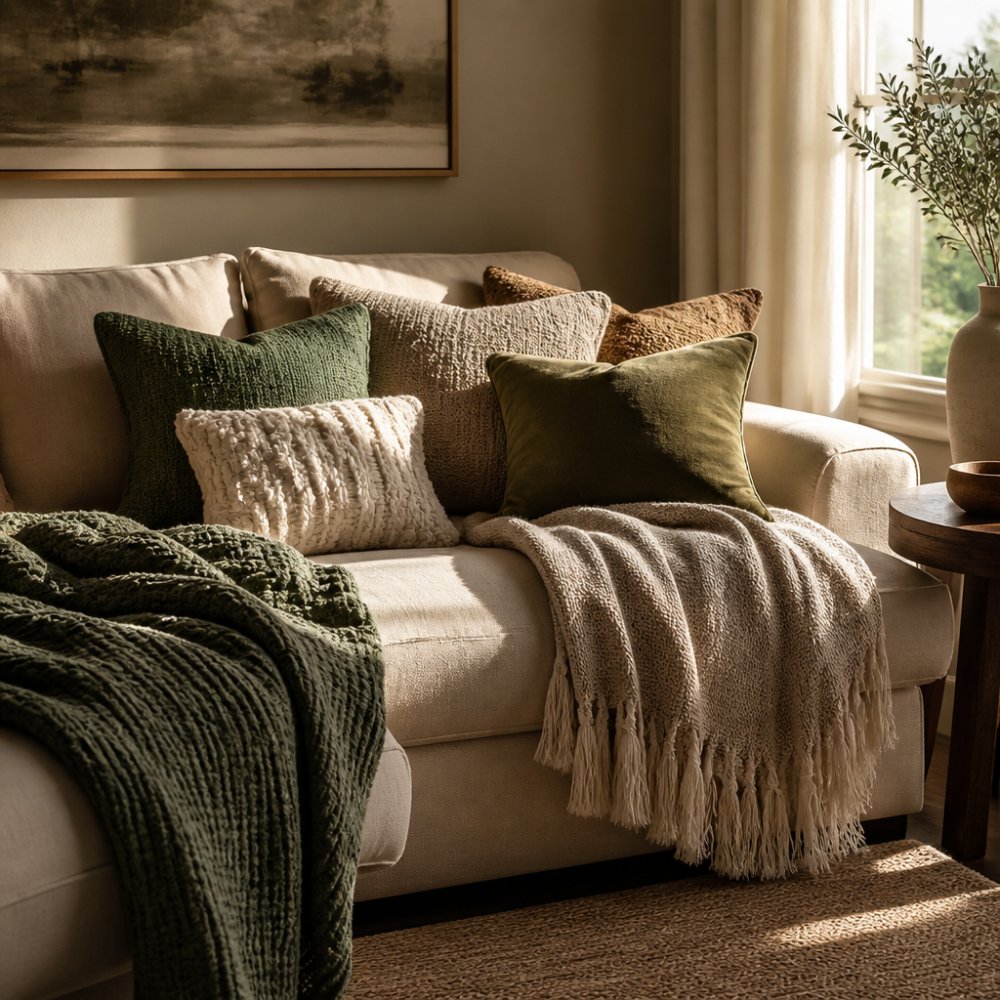
Living room corner with layered textiles including cushions and throws in warm neutrals and deep greens, displaying different textures and weaves, bathed in warm natural daylight streaming through a nearby window
Texture becomes more important when visualising home decor in person. A linen that looks smooth in a photo might have a nubby weave that catches light differently. If you're ordering from Casa Sereno, request swatches if available, or order a single piece first to test how the texture and weight feel in your space.
Lighting design is often overlooked. The same room with poor lighting and excellent lighting feels completely different. Consider where your light sources are, windows, overhead fixtures, lamps, and how they illuminate your springboard object and interact with your colour palette.
Common Mistakes When Visualising Home Decor
The most frequent error is planning in isolation. Digital planning is valuable, but physical testing is essential. Bring pieces home on approval if possible, or visit showrooms to sit on furniture, touch fabrics, and observe them in natural light.
Another mistake is ignoring existing elements you're keeping. If you have dark wood flooring, your colour palette should account for it. When visualising home decor, integrate existing furniture into your planning from the start.
People also underestimate the impact of layering. A room with only large furniture pieces feels empty. A room with thoughtful layering, throws, cushions, artwork, plants, books, feels complete and lived-in. Casa Sereno pieces like the Angus Prefilled Cushion work brilliantly for this because they add texture and visual interest without requiring a complete redesign.

Angus Prefilled Cushion
Lighting is chronically overlooked. You can have a perfect colour palette and beautiful furniture, but poor lighting makes everything look worse. Plan your lighting alongside your furniture and colour choices.
Finally, many people commit to trends instead of timeless style. When visualising home decor, ask yourself: will this still feel right in three years? Neutral foundations with layered accessories allow you to update your space without starting over. Casa Sereno's focus on timeless pieces means your foundational pieces remain relevant as trends shift.
Visualising home decor before you buy transforms the process from guesswork into informed decision-making. When you understand your space, test your choices, and build around a clear aesthetic vision, every piece you bring home reinforces your overall design. Casa Sereno's curated collections of luxury bedding, throws, and cushions are designed for exactly this kind of intentional styling, pieces that layer beautifully, adapt to different spaces, and bring lasting elegance to your home. Start with one springboard object, build your mood board around it, and watch your space come together with confidence. Get started with Casa Sereno and receive 20% off your first order when you sign up, the perfect way to test how our pieces work in your space.
Frequently Asked Questions
Q: What are the best free apps for visualising home decor?
A: Several free and affordable options help beginners visualise home decor without expensive software. Apps like Planner 5D, MagicPlan, and Homestyler offer basic room layouts and furniture placement tools. Many work on smartphones and tablets, making it easy to test ideas in real time. For digital mood boards, Pinterest and Canva have free versions that let you gather inspiration and experiment with colour palettes before committing to purchases.
Q: How do I know if furniture will actually fit in my room before buying?
A: Measure your room's dimensions in centimetres, including doorways, windows, and alcoves. Use a design app or simple graph paper to sketch your layout to scale. Most furniture retailers list dimensions in their product descriptions. Compare these measurements against your floor plan, accounting for how doors swing and whether pieces will block natural light or traffic flow. Take photos of your space from multiple angles to reference when evaluating pieces online.
Q: Should I use digital tools or physical samples when planning home decor?
A: Both have value. Digital tools like mood boards and room planning apps help you visualise scale, layout, and colour coordination quickly and without cost. Physical samples—fabric swatches, paint chips, and actual cushions—show you true colour, texture, and how materials catch light in your specific room. The strongest approach combines both: use digital tools to narrow your options, then order samples or visit a showroom to confirm how textures and colours feel in your actual space before making larger purchases.
Q: What's the first step in planning a home interior design project?
A: Start by defining your design concept and aesthetic. Gather inspiration through mood boards and identify a springboard object—a piece you love that will anchor your design direction. Next, measure your room carefully and create a floor plan. Establish your colour palette based on existing elements you want to keep. This foundation prevents costly mistakes and ensures your purchases work cohesively together, whether you're updating one room or your entire home.

