

Table of Contents
- What Sets Premium Bedding Apart from Department Store Sets
- Quick Comparison: Leading Luxury Bedding Options
- The Best Linen Sheet Brands Australia Offers for True Comfort
- How to Choose High-Quality Bed Sheets That Last for Years
- Why Independent Boutiques Beat Big Retailers on Quality
- Our Bedding Maintenance Guide for Long-Lasting Luxury
- Final Verdict: Where to Find Your Next Luxury Bedding Set
- Frequently Asked Questions
Last Updated: September 6, 2026
What Sets Premium Bedding Apart from Department Store Sets
The search for Adairs alternatives for luxury bedding usually starts after a disappointing night's sleep or a quilt cover that pills after three washes. Premium bedding is not defined by a higher price tag alone: it comes down to material composition, fibre length, weave structure, and honest manufacturing. These factors determine whether a set feels crisp or clammy, lasts five years or five months, and regulates temperature or traps heat.
Luxury bedding is bedding made from long-staple natural fibres, woven tightly for durability, and finished without harsh chemical treatments. Department store sets often use short-staple cotton that breaks down quickly, or synthetic blends that trap moisture and disrupt sleep quality. We curate pieces built on natural fibres and transparent sourcing, so you know exactly what touches your skin each night.
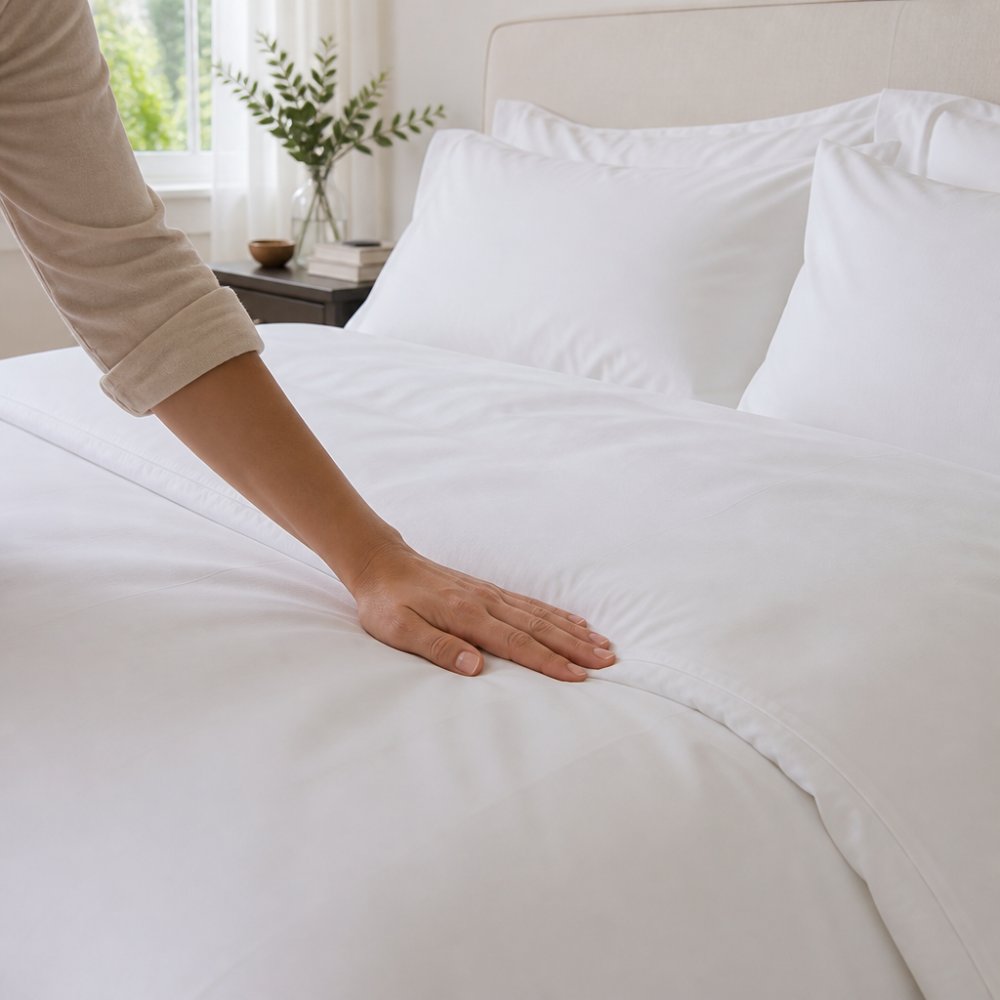
The difference becomes obvious within the first week. A quality cotton quilt cover set feels heavier in the hand, drapes elegantly over the bed, and develops a softer hand-feel with every wash rather than degrading. Department store bedding often feels slick or stiff initially, then loses its structure rapidly.

Quick Comparison: Leading Luxury Bedding Options
A simple table listing fibre names is not enough to make an informed choice. The real difference lies in how each material behaves against your specific sleep profile. Instead of comparing brands, we compare the sensory experience and performance mechanics of the four main luxury fibres, so you can match the textile to your body's needs.
The Hot Sleeper's Guide to Fabric Choice
If you wake up with a damp pillow or throw the covers off at 3 AM, your bedding is likely trapping heat. Here is how each material performs:
- Cotton percale: The tight, plain weave creates tiny air pockets that promote exceptional airflow. It feels cool to the touch and remains breathable throughout the night. This is the most reliable choice for hot sleepers in Australian summers.
- French flax linen: Linen's hollow fibres wick moisture away from the skin and its looser weave allows for maximum ventilation. It is the best temperature regulator of all natural fibres, keeping you cool in summer and providing a comfortable barrier in winter. However, it has a rustic, textured hand-feel that some find too casual for a 'luxury' aesthetic.
- Cotton sateen: The satin-like weave has a denser structure, which gives it a heavier, smoother feel. This density reduces airflow compared to percale, meaning it can sleep noticeably warmer. It is better suited to cooler climates or winter months.
- Bamboo viscose: While soft and moisture-wicking, the manufacturing process (often a closed-loop solvent system) creates a fibre that is less breathable than cotton or linen. It can feel silky but may trap heat if the weave is too tight.
Why the Price-to-Quality Ratio Favours Specific Materials
The price difference between a $150 set and a $400 set is rarely about the brand name. It is about the cost of the raw fibre and the complexity of the weave.
- Fibre length: Cotton (e.g., Giza 45 or Supima) requires more land and careful ginning, costing significantly more per bale than short-staple cotton. This directly translates to a smoother, stronger yarn that resists pilling.
- Flax origin: European flax, particularly from Normandy, is retted in river water (not chemical baths), a slower and more expensive process that yields a stronger, finer fibre. Cheaper linen from other regions often uses chemical retting, which weakens the fibre and leads to premature fraying.
- Weave density: A true percale weave requires 200+ thread count of single-ply yarns. Many budget options use multi-ply yarns to inflate the thread count, but this creates a heavier, less breathable fabric. The cost of weaving a high-quality single-ply fabric is inherently higher.
The Sensory Test: What to Feel For In-Store
Before you buy, perform this simple tactile test:
- Percale: Should feel crisp, like a premium hotel shirt. It should make a slight 'rustle' when you move your hand across it.
- Sateen: Should feel smooth and substantial, with a subtle lustre. It should not feel slippery or waxy (a sign of chemical finishing).
- Linen: Should feel textured but not rough. The weave should be visible, and the fabric should have a natural, irregular slub. It should soften dramatically after a single wash.
The Best Linen Sheet Brands Australia Offers for True Comfort
Australia's climate demands breathable fabrics, which is why linen and high-quality cotton outperform synthetics for most of the year. The best linen sheet brands Australia offers focus on European flax, which produces longer fibres and a softer result than lower-grade alternatives. GSM (grams per square meter) matters here: a linen around 160-200 GSM balances durability with breathability.
Among the best linen sheet brands Australia has available, the key distinction is flax origin and weave tightness. European flax, particularly from France and Belgium, yields stronger, finer yarns. A looser weave feels cooler but risks excessive wrinkling; a tighter weave improves textile durability but reduces airflow slightly.
What most guides miss is the finishing process. Some brands soften linen chemically, which weakens fibres over time. Stone-washing or enzyme washing achieves softness without compromising longevity. When you invest in luxury bedding, ask how the fabric was finished before you compare prices.
How to Choose High-Quality Bed Sheets That Last for Years
Choosing high-quality bed sheets requires examining three things most shoppers ignore: thread count myths, fibre length, and seam construction. Thread count above 800 is usually a marketing gimmick; quality comes from cotton, not inflated numbers. Look for certifications like organic certification and ethical manufacturing transparency instead.
A practical checklist for evaluating any bedding set:
- Check the fibre: look for "long-staple" or "extra-long staple" cotton, or European flax linen
- Assess the weave: percale for cool sleep, sateen for softness, linen for breathability
- Examine seams: double-stitched seams and reinforced corners prevent early failure
- Verify sourcing: organic certification and transparent supply chains indicate quality control
- Feel the weight: quality bedding has a substantial drape, not a flimsy, tissue-like texture
When choosing high-quality bed sheets, also consider the fitted sheet depth. Deep-pocket fitted sheets (40 cm or more) accommodate thicker mattresses and toppers without slipping. A pillowcase set with envelope closures keeps pillows secure and looks tidier than open-ended styles.
Why Independent Boutiques Beat Big Retailers on Quality
Unlike large retailers carrying thousands of seasonal products, Casa Sereno focuses on a carefully selected collection of bedding, home décor and accessories. Our approach is centred on distinctive styling, quality materials and pieces chosen to work beautifully together.
The price-to-quality ratio tells the real story. A $299 bedspread set from a boutique using cotton will outperform a $299 set from a department store using lower-grade fibres, because the raw material costs differ significantly. You are paying for the fibre, not just the label.

Sustainable sourcing is another differentiator. Independent retailers can trace their supply chains and choose mills that meet environmental standards. This transparency matters for eco-friendly textiles: you know whether your bedding was produced responsibly or in a facility with questionable labour and environmental practices.
Ethical manufacturing transparency is not just a buzzword. It means the retailer can tell you where the cotton was grown, where it was woven, and under what conditions. Big retailers rarely offer this level of detail because their supply chains are too fragmented.
Our Bedding Maintenance Guide for Long-Lasting Luxury
Most care guides tell you what to do (wash in cold water). This guide explains why each step matters for the long-term structural integrity of your luxury fibres, based on common failure points.
The 50-Wash Test: What Actually Breaks Down
A common pattern in bedding failure is not the fabric wearing out, but the construction failing. The weakest points are almost always:
- Seams: The stitching on a cheaply made set will begin to pucker and pull, especially along the top edge of the quilt cover. Look for double-stitched or French seams (where the raw edge is enclosed). These take longer to fail.
- Fibre Abrasion: Short-staple cotton fibres break off and ball up (pilling). Long-staple fibres are too long to ball up easily, which is why they resist pilling. The wash cycle's agitation is the primary cause of this abrasion.
- Colour Fade: The chemical dyes used in cheaper fabrics are not always fibre-reactive. Fibre-reactive dyes bond with the cotton molecule itself, making them far more resistant to fading from UV light and washing.
The Mechanical Impact of Your Wash Cycle
- Water Temperature: Hot water (above 40°C) causes cotton fibres to swell and then contract rapidly during the spin cycle (peer-reviewed research). This repeated expansion and contraction weakens the fibre's internal structure, leading to thinning and eventual tearing. Cold water (30°C) does not cause this stress.
- Detergent Chemistry: Standard detergents contain optical brighteners and enzymes (like cellulase) that are designed to break down cotton fibres to remove stains. While effective, they also degrade the fibre's surface over time. A mild, pH-neutral detergent without these harsh enzymes is safer for luxury textiles.
- Mechanical Agitation: The more vigorous the wash cycle, the more the fabric rubs against itself. This friction is the direct cause of pilling and surface fuzz. Always use the 'delicate' or 'gentle' cycle, even if the fabric is sturdy, to minimise this friction.
The Drying and Storage Equation
- Line Drying vs. Tumble Drying: Line drying is the gentlest method, but it can make cotton feel stiff. Tumble drying on a low heat setting re-introduces some softness through the tumbling action. However, high heat shrinks cotton fibres permanently. If you must tumble dry, remove the bedding while it is still slightly damp and allow it to air dry the rest of the way.
- The Ironing Myth: Ironing does not 'restore' a crisp finish; it merely flattens the fibres temporarily. Over-ironing at high heat can actually crush the weave and reduce breathability. If you want a crisp look, a better method is to iron the fabric while it is still damp, which sets the weave without damaging it.
- Storage & Pests: Moths are attracted to the keratin in dust and skin cells, not the cotton itself (the EPA). Washing your bedding before storing it removes this food source. Use a breathable cotton storage bag rather than plastic, which traps moisture and can lead to mildew.
Final Verdict: Where to Find Your Next Luxury Bedding Set
Choosing an alternative to a large homewares retailer ultimately comes down to what you're looking for. Independent stores can offer a more curated shopping experience, distinctive designs and collections selected around a particular aesthetic.
Casa Sereno offers a curated collection of cotton quilt cover sets, bedspreads and bedroom accessories designed to help create elegant, considered interiors
Casa Sereno offers a curated collection of cotton quilt cover sets and bedspreads designed for Australian homes. The Taj Queen Quilt Cover Set in White ($299) brings understated elegance to any bedroom, while the Watson Queen Bedspread Set in Navy ($299) adds a sophisticated colour accent. For larger beds, the Rustic Cottage King Bedspread ($380) delivers textured cotton craftsmanship.

Each piece is made from durable cotton with a hand-feel that improves over time. With free shipping on orders over $200 and 20% off your first order when you subscribe, upgrading your bedroom is more accessible than you might think.
Frequently Asked Questions
What makes bedding 'luxury' compared to standard department store options?
Luxury bedding starts with the raw materials. Cotton, French flax linen, and bamboo viscose offer superior breathability and a softer hand-feel than standard short-staple fibres. The weave also matters: percale feels crisp and cool, while sateen offers a silky drape. These materials resist pilling and hold their colour through years of washing, which is why investing in quality pieces often costs less over time than replacing cheaper sets every season.
How does thread count affect the quality of luxury bed sheets?
Thread count matters, but it is not the only measure of quality. A count between 200 and 400 in cotton is sufficient for a durable, breathable sheet. Counts above 800 often signal that multi-ply yarns are being used, which can feel heavier and trap heat. Rather than chasing the highest number, check the fibre length and the weave. A 300-thread-count percale in cotton will usually outlast a 1000-count sheet made from lower-grade fibres.
Are there Australian-owned alternatives to mainstream bedding retailers?
Yes. Independent Australian retailers offer a curated selection of premium cotton quilt cover sets and bedspreads without the overheads of large chains. These boutiques often focus on ethical sourcing and timeless design rather than seasonal trends. For example, the Taj Queen Quilt Cover Set in White ($299) uses soft, durable cotton with a Hampton-inspired aesthetic. Shopping local also supports smaller businesses that stand behind their products with more personal customer service.
How do I care for high-quality linen and cotton bedding to ensure longevity?
Wash cotton and linen bedding in cold or warm water on a gentle cycle using a mild detergent. Avoid bleach and fabric softeners, as they break down natural fibres over time. Tumble dry on low or line dry in shade to prevent sun damage. Remove sheets from the dryer while slightly damp to reduce wrinkles. Rotate between two sets to lessen wear. Following this routine will preserve the fabric's softness and prevent pilling for years.

