

Table of Contents
- What Does a Cohesive Room Aesthetic Actually Mean?
- Step 1: Define Your Design Vision and Common Threads
- Step 2: Interior Design Colour Palette Tips for a Unified Base
- Step 3: How to Mix Textures in Interior Design for Depth
- Step 4: Creating Flow Between Rooms With Repetition
- Step 5: Balance Furniture Proportions and Visual Weight
- Step 6: Layer Lighting and Accent Colours to Connect Spaces
- Common Mistakes That Break a Cohesive Room Aesthetic
- Frequently Asked Questions
Last Updated: September 7, 2026
A cohesive room aesthetic is the result of a deliberate design strategy where every element, from the colour palette to the furniture proportions, shares a visual language and contributes to a unified whole. It is not about matching everything, but about creating a conversation between pieces that feels intentional rather than accidental. Most homes end up looking like a hodgepodge not from a lack of good pieces, but from a lack of a guiding plan. This guide from Casa Sereno walks you through the seven practical steps to build that plan, so your space feels curated and calm rather than chaotic.
The good news is that you do not need a full renovation or a bottomless budget to achieve this. The process is about making smart, consistent choices with what you already own, then adding a few key pieces to tie it together. Below, we will show you exactly how to audit your space, define your style, and layer textures and lighting to create a cohesive room aesthetic that feels both personal and polished.
What Does a Cohesive Room Aesthetic Actually Mean?
A cohesive room aesthetic is a space where all the visual elements feel connected through a consistent design theme, resulting in a sense of harmony and spatial flow. It is the opposite of a room that looks like a furniture showroom after an earthquake. When you walk into a cohesive room, your eye moves easily because nothing jars or fights for attention.
This connection is achieved through the repetition of what designers call "common threads": a recurring colour story, a shared material palette, or a similar style of furniture. For example, a neutral base of warm whites and timber tones can be carried through the living room and into the hallway, creating a seamless transition. The goal is a curated space where every item feels like it belongs, even if it was bought years apart.
Step 1: Define Your Design Vision and Common Threads
Before you rearrange a single cushion, you need a clear design vision. Start by identifying the recurring elements that will act as the glue for your entire home. Look at your favourite rooms and ask what they share: Is it a specific wood stain? A preference for curved lines over sharp angles? A love of vintage pieces?
Your design vision should be a simple statement, such as "a relaxed coastal retreat" or "a moody, modern farmhouse." This is your reference point for every future purchase. When you are tempted by a trendy piece that does not fit the vision, you will know to walk away. This step prevents the random accumulation of decor that leads to visual chaos.
Gather Inspiration Without Copying a Showroom
Mood boards are your best tool here, but they must be used correctly. Collect images of rooms you love, then look for the elements they share, not the specific items. You might find that most of your inspiration images feature a mix of vintage timber and modern linen, which points you toward a transitional style.
The goal is to extract the design principles, not to copy the exact furniture arrangement. As documented in guidelines on interior design principles, successful spaces rely on a unified design vision expressed through consistent elements. Once you have identified your common threads, write them down and keep them visible while you shop and style.
Step 2: Interior Design Colour Palette Tips for a Unified Base
The fastest way to create a cohesive room aesthetic is to lock down a consistent colour palette. The most reliable approach is the 60-30-10 rule: use a dominant neutral base for 60% of the room, a secondary tone for 30% of the room, and a bold accent colour for the final 10% (sherwin-williams.com).
For interior design colour palette tips, start with the largest surfaces. Your walls, flooring, and large upholstery should all speak the same colour language. If your living room has warm oak floors, a cool grey sofa will clash. Instead, choose a warm-toned neutral like a soft greige or a cream to bridge the gap. This neutral base is what allows you to mix furniture styles without the room feeling disjointed.
Consistency here is critical. If you have an open plan, the same wall colour or a slightly darker shade of the same family should flow from the kitchen into the living area to maintain a cohesive flow. This is the single highest-impact change you can make.
Step 3: How to Mix Textures in Interior Design for Depth
A room that is all one colour risks feeling flat; texture layering is what gives it life and tactile interest. How to mix textures in interior design is about balancing contrasting materials to create visual balance without introducing new colours that break your palette.
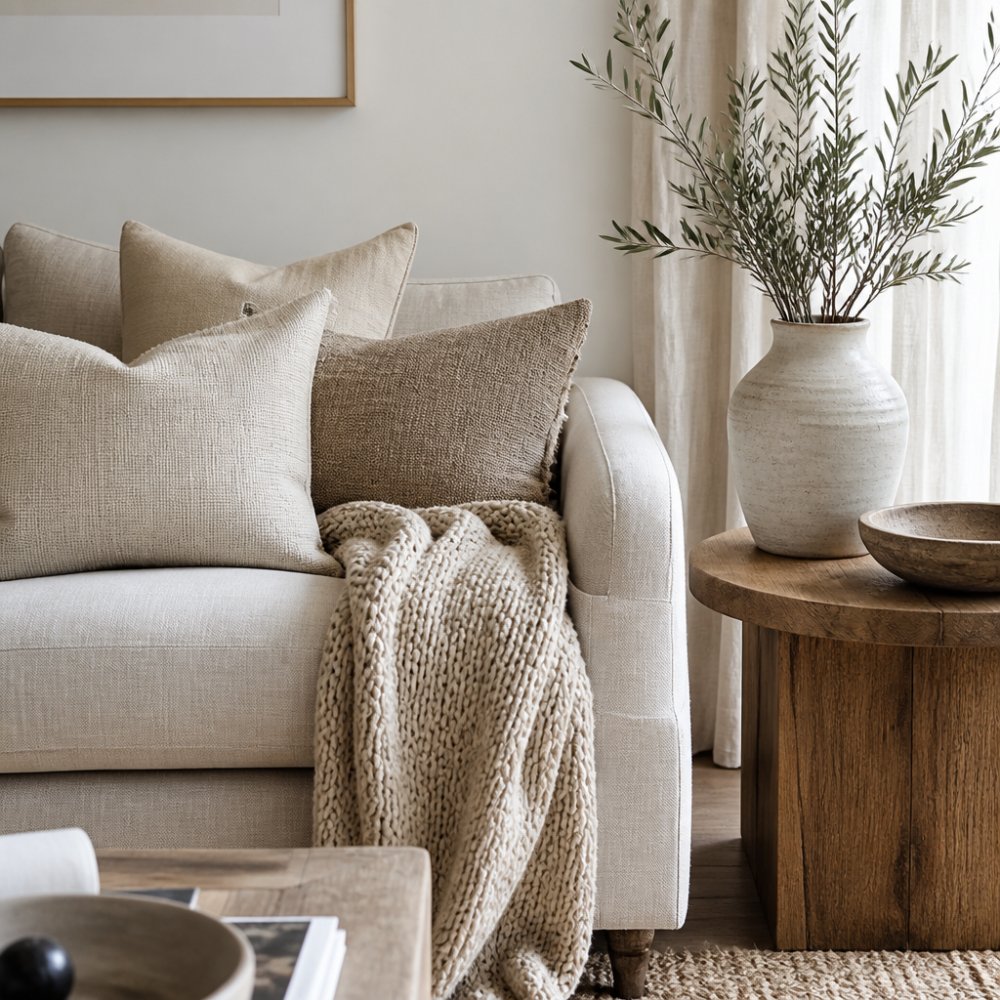
The trick is to pair materials that feel different but share a tone. Pair the smoothness of a ceramic vase with the softness of a linen cushion. Contrast a chunky knit throw with the sleek surface of a leather armchair. Each material should have a distinct texture so the eye has something to explore, but they should all sit comfortably within your colour story.
Step 4: Creating Flow Between Rooms With Repetition
Creating flow between rooms requires you to repeat a visual cue from one space to the next. This repetition is the secret to a home that feels connected rather than like a series of separate boxes. You achieve this by carrying a common thread, such as an accent colour, a specific wood stain, or a material like linen, from room to room.
For example, if you have a soft sage green accent wall in the living room, repeat that exact sage tone in the cushions or a throw blanket in the adjacent bedroom. Similarly, if your kitchen features black matte hardware, use the same black finish in your living room picture frames or lamp bases. This subtle repetition guides the eye and creates a sense of continuity.
This does not mean every room must be identical. It means every room should feel like it belongs to the same family. Maintaining consistency in flooring is a powerful tool; if you cannot change the flooring, use large area rugs with a similar base tone to visually connect the spaces.
Step 5: Balance Furniture Proportions and Visual Weight
Proportion is what separates a professionally styled room from one that feels slightly off. A cohesive room aesthetic depends on furniture arrangement that respects the scale of the room and balances the visual weight of the pieces within it.
The most common mistake is pushing all furniture against the walls, which leaves the centre of the room feeling empty and disconnected. Instead, create conversation zones. In a large living room, float your sofa and chairs on a rug to define the space. Ensure your rug is large enough that the front legs of your main furniture sit on it; a rug that is too small makes the room feel fragmented.
Consider visual weight as well. A massive, dark timber sideboard will dominate a room. Balance it with a lighter, lighter-coloured piece of art above it, or place a slim, light-coloured console opposite to offset the weight. The goal is to achieve a visual equilibrium so no single piece overwhelms the others.
Step 6: Layer Lighting and Accent Colours to Connect Spaces
Lighting is the most underrated tool in creating a cohesive room aesthetic. Lighting temperature affects how your carefully chosen colours are perceived. A warm, soft white light will make a warm palette look richer, while a cool white light will make the same palette look flat and grey.
Aim for three layers of light: ambient ceiling light, task lighting for reading or work, and accent lighting to highlight art or architectural elements (energy.gov). Ensure all your bulbs are the same colour temperature to avoid a disjointed mix of warm and cool glows in one room.
Accent colours are your final tool for connection. Use your 10% accent colour strategically to link spaces. If your accent is a deep navy, use it sparingly: a vase here, a cushion there, a single piece of wall art. This repetition of the accent colour across rooms is one of the most effective ways to create a cohesive flow, tying the design together without overwhelming the senses.
Common Mistakes That Break a Cohesive Room Aesthetic
Even with a solid plan, a few common pitfalls can derail your efforts. The first is buying a "statement" piece in isolation without checking it against your common threads. That vibrant orange velvet chair might be stunning, but if your design vision is calm coastal neutrals, it will break the harmony every time you look at it.
The second mistake is ignoring the psychology of space. Clutter and overcrowding create visual stress, regardless of how beautiful the individual items are. A curated space needs breathing room. Edit ruthlessly and leave some surfaces empty to allow the eye to rest. For renters, this process is still achievable; focus on removable elements like textiles, wall art, and accessories rather than paint.
Achieving a cohesive room aesthetic is less about talent and more about discipline: defining a clear vision, sticking to a consistent colour palette and material palette, and repeating those choices throughout your home. Start with the steps above, and you will find that your space begins to feel like a sanctuary rather than a storage unit for mismatched furniture.
Creating a home that feels intentional is a gradual process, but the reward is a space that supports calm and reflects your personal style. Casa Sereno is dedicated to helping you finish the job with carefully curated collections that make the final 10% of styling effortless. Our timeless linen cushions and throws are designed to work across multiple rooms, allowing you to add that perfect accent colour or texture without a full overhaul. Sign up with Casa Sereno today and get 20% off your first order to start building your cohesive look.

Frequently Asked Questions
What is the 60-30-10 rule for a cohesive room aesthetic?
The 60-30-10 rule is a colour distribution guideline. Allocate 60% of the room to a dominant neutral base, such as walls and large furniture. Use 30% for a secondary colour found in upholstery or curtains. The remaining 10% is for accent colours through accessories like cushions, art, or vases. This structure prevents a hodgepodge look and supports a cohesive room aesthetic by keeping the colour story controlled and balanced.
How do I mix textures in interior design without clashing?
Stick to a maximum of three to four textures per room and vary them by scale. Pair smooth surfaces like linen with coarse wool or nubby boucle. Repeat each texture at least twice in the space, such as a linen cushion on the sofa and a linen lampshade. This repetition creates a common thread that ties the elements together, adding depth without making the room feel chaotic.
How can I create flow between rooms with different purposes?
Use a consistent material palette and repeat accent colours. If your living room has timber floors, carry that timber tone into the hallway furniture or picture frames. Choose one or two accent colours, like sage green or terracotta, and use them in both rooms through art or soft furnishings. Consistent lighting temperature also helps: match warm white globes across adjoining spaces for a seamless transition.
What is the quickest way to make my room look more cohesive?
Edit the accessories. Remove items that do not match your chosen colour story or design theme, then group the remaining pieces into clusters of odd numbers. Add a single textured element, such as the Malta Linen Cushion, to introduce a common thread of natural fibre. This immediate edit creates visual balance and a curated look without requiring new furniture.

