Table of Contents
- Why Your Dinner Party Deserves Considered Tableware
- Quick Comparison: Our Top Picks for an Elegant Table
- Best Materials for Luxury Dinnerware: A Host's Guide
- How to Set a Formal Dinner Table Like a Pro
- Tableware Styling Tips for Hosts: Create a Tablescape
- The Foundation: Selecting Your Dinnerware and Serveware
- Finishing Touches: Glassware, Centrepieces, and Ambience
- Your Next Step to an Unforgettable Dinner Party
- Frequently Asked Questions
Last Updated: September 5, 2026
The memory of a great dinner party lingers long after the last course is cleared. While the menu sets the tone, elegant tableware for dinner parties transforms a meal into a moment your guests will discuss for weeks. At Casa Sereno, we believe the table is the stage, and the plates, glassware, and linens are the cast that brings your culinary performance to life. This guide covers selecting materials, styling a tablescape, and mastering the details that separate a standard gathering from a truly unforgettable evening.
Why Your Dinner Party Deserves Considered Tableware
Most hosts focus on the food and forget that we eat with our eyes first. A beautifully set table signals to your guests that they matter and that the evening has been curated with intention. Considered tableware is the difference between serving a meal and hosting an experience.
The aesthetics of your table influence the perception of your food. Culinary presentation is elevated when the plate acts as a canvas, framing your dish with the same care a gallery uses to hang a painting. Investing in quality pieces that reflect your personal style builds the foundation of your home's hospitality.
Quick Comparison: Our Top Picks for an Elegant Table
Product |
Material |
Price (AUD) |
Best For |
|---|---|---|---|
Ria Tablecloth |
Cotton |
$85.00 |
Everyday elegance and alfresco dining |
Maison Bleu Dinner Plate |
Ceramic |
$29.00 |
A statement layer with a soft blue hue |
Eva Dinner Plate |
Glazed ceramic |
$20.00 |
A soft, textured foundation for layering |
Organza |
$75.00 |
Adding a subtle shimmer to formal settings |
|
Decorative Tall Candelabras |
Glass |
$59.00 |
Creating ambience and vertical interest |
Best Materials for Luxury Dinnerware: A Host's Guide
The material you choose dictates not only the look of your table but also how your dinnerware performs under the pressures of a dinner party, hot food, frequent washing, and the occasional knock. Here is a practical breakdown of the most common luxury materials.

Bone China
Bone china remains the benchmark for formal dining because it contains at least 30% bone ash, giving it distinctive translucency and remarkable chip resistance (britannica.com). It is lighter than porcelain, retains heat well, and is durable against knocks, though it can scratch if stacked without protective layers. Most bone china is dishwasher safe, but hand washing preserves the glaze and metallic banding.
Porcelain
Porcelain is fired at a higher temperature than bone china, making it dense, non-porous, and highly resistant to chipping (ceramics.org). It is the workhorse of professional kitchens and suits hosts who want a clean look that transitions from casual lunch to black-tie dinner. High-quality porcelain is typically dishwasher and microwave safe. The trade-off is weight, porcelain is noticeably heavier, and it can feel clinical. Look for a fully glazed foot to prevent scratching your table.
Stoneware
Stoneware is the most forgiving luxury option. Fired at a lower temperature than porcelain, it retains a slightly porous body that is always sealed with a glaze. It is thick, substantial, and excellent at retaining heat, making it ideal for slow meals. Stoneware is highly resistant to chipping and almost always dishwasher and microwave safe. It often features artisanal reactive glazes, like the one on the Maison Bleu Dinner Plate, creating subtle colour variations, no two pieces are identical. The main drawback is bulk; stoneware feels heavy and takes up cupboard space.

Ceramic (Earthenware)
Ceramic, or earthenware, is the broadest category and often the most affordable entry point into elegant tableware. Fired at the lowest temperature, it is more porous and susceptible to chipping and crazing under thermal shock. Always check whether a piece is dishwasher safe. The benefit is the sheer variety of shapes, colours, and glazes, allowing you to experiment without a massive outlay. For a dinner party, use ceramic as accent layers, salad plate, bread plate, or serving bowl, rather than your primary dinner plate, unless you have selected a high-fired, durable ceramic.
Linen-Finish and Textured Plates
A newer trend in luxury tableware is the linen-finish plate, such as the Eva Dinner Plate or the Casa Vinea Dinner Plate. These are typically ceramic or stoneware finished with a textured glaze that mimics woven linen. The texture reduces glare under bright dining lights, creating a softer visual, and offers a tactile grip that prevents sliding. The trade-off is that textured surfaces can trap food residue and show water spots if air-dried, so a quick hand towel dry after washing is recommended.
A Practical Decision Framework
When choosing your material, consider three questions in order: How often do you host? What is your serving style? Family-style platters need plates with a generous rim; individual plating suits a smaller rim and larger well. What is your cleaning routine? If you rely on a dishwasher, check the manufacturer's specifications carefully, not all luxury ranges are dishwasher safe.
Whichever material you choose, always buy at least two extra place settings beyond your expected guest count, this covers breakages and allows you to extend the table for a plus-one.
How to Set a Formal Dinner Table Like a Pro
The correct placement of cutlery and stemware signals sophistication, but it is simpler than it appears. Start with the dinner plate at the centre, then layer a salad plate on top if required. Forks sit to the left, knives and spoons to the right, and the rule of thumb is to work from the outside in as courses progress.

Glassware sits above the knives, arranged by height with the water glass closest to the hand and wine glasses behind it. This is not just tradition; it is a functional guide that helps guests navigate the meal. Mastering how to set a formal dinner table ensures your evening flows smoothly, allowing you to focus on conversation.
Tableware Styling Tips for Hosts: Create a Tablescape
Most styling guides stop at 'layer your plates and add a centrepiece'. This section goes further by connecting your tablescape to the menu you are serving. The goal is not just a pretty table; it is a table that makes the food taste better and the conversation flow more easily.
The Menu-to-Table Coordination Principle
The most elegant tables have tableware that feels like an extension of the cuisine. This does not mean matching colours literally, it means matching the visual weight, texture, and formality of your tableware to the style of food you serve.
- For a Mediterranean or rustic Italian menu (grilled fish, slow-roasted lamb, abundant vegetables): Choose earthy stoneware or ceramic plates with reactive glazes in terracotta, olive, or sand tones. The slightly imperfect, hand-finished look of these plates mirrors the rustic, generous nature of the food. Use a linen tablecloth or runner in a natural flax colour, and finish with unpolished, hammered cutlery. The table should feel warm, textured, and abundant.
- For a formal French or fine-dining style menu (confit duck, delicate terrines, precise plated desserts): Select fine bone china or high-fired porcelain in white or with a subtle metallic rim. The plate is a pristine canvas that makes the precise plating of French cuisine the hero. Use a crisp, pressed tablecloth, polished silver or stainless steel cutlery, and tall, clear glassware. The table should feel precise, restrained, and elegant.
- For an Asian-inspired menu (sushi, dumplings, stir-fries): Choose smaller plates and bowls with a matte or celadon glaze. Darker plates, charcoal, deep indigo, or forest green, provide a striking contrast against the vibrant colours of Asian dishes. Use chopstick rests and low, wide bowls. Skip the tablecloth and use individual placemats in bamboo or a dark wood tone. The table should feel minimalist and focused.
- For a modern Australian menu (fresh seafood, native ingredients, grilled vegetables): Embrace a mix-and-match aesthetic. Layer a white porcelain dinner plate with a textured linen-finish salad plate in a soft neutral. Use ceramic serving bowls in complementary but not identical tones. The table should feel relaxed, coastal, and effortlessly stylish.
The Layering Sequence: A Step-by-Step Mechanism
Once you have aligned your tableware with your menu, follow this layering sequence to build depth and dimension:
- The Foundation Layer: Start with your tablecloth, runner, or placemats. For a small-space table (under 180cm), a runner down the centre is more effective than a full cloth, as it creates a defined path without visually shrinking the table surface.
- The Anchor Layer: Place your dinner plate at each setting. This is the largest visual element and sets the colour and texture tone for the entire place setting.
- The Contrast Layer: Add a salad or starter plate on top of the dinner plate. This layer should introduce contrast, either a different colour, a different texture, or a different shape. For example, a round white porcelain plate over a square stoneware plate creates immediate visual interest.
- The Functional Layer: Add your cutlery, working from the outside in. Do not overload the table, only set the cutlery you will actually use for the first three courses. Additional cutlery can be brought out with each course.
- The Vertical Layer: Place glassware above the knives. Arrange by height, with the water glass closest to the hand and wine glasses behind and to the left. If you are serving multiple wines, do not set all glasses at once, this clutters the table. Instead, set the glass for the first wine and bring out the second glass when that course is served.
- The Atmosphere Layer: Add your centrepiece and candles last. The centrepiece should sit below eye level to avoid blocking sightlines. A common rule is that the centrepiece should be no taller than 30cm for a standard dining table (extension.iastate.edu). For a long table, use multiple small arrangements down the centre rather than one large one, which allows guests at either end to see each other.
The Small-Space Hosting Angle
If you are hosting in an apartment or a dining area under 10 square metres, the rules change. You do not have room for a sideboard full of serving pieces, so your tablescape must do double duty. Use a single large ceramic platter as both serving vessel and centrepiece, with candles on either side. Use stackable dinner plates that clear quickly between courses. Instead of a full tablecloth, use a runner that matches your wall colour to visually expand the space.
By coordinating your tableware to your menu and following a deliberate layering sequence, you create a tablescape that feels intentional and personal. Your guests will not be able to articulate why the table feels so right, they will simply feel more relaxed, engaged, and impressed.
The Foundation: Selecting Your Dinnerware and Serveware
Your dinnerware is the workhorse of the meal, so choosing pieces that transition from a casual weeknight to a formal dinner party is essential. The Romeo Juliet Dinner Plate at $29.00 offers a warm, inviting presence, while the Casa Vinea Dinner Plate provides a linen texture that pairs beautifully with other pieces. Building a coordinated collection allows flexibility when hosting larger groups.
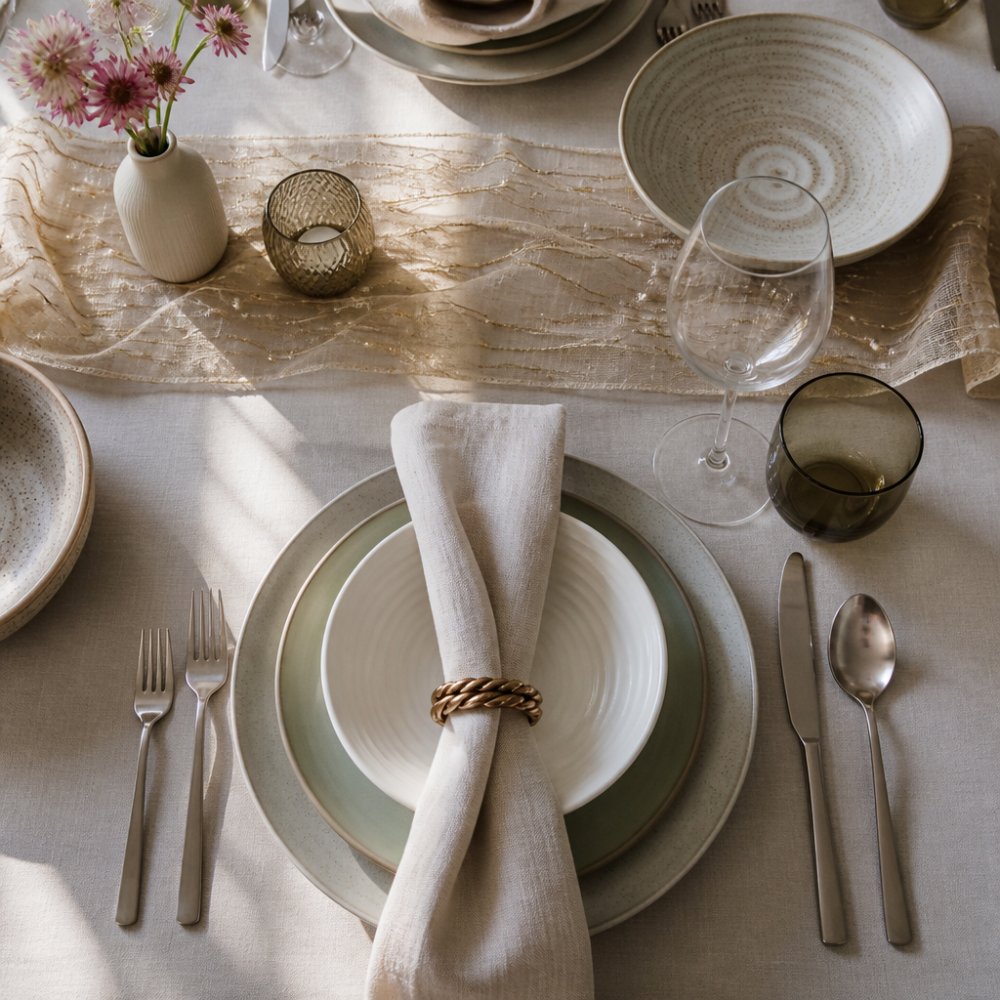
Serveware should complement, not compete with, your plates. Large platters and bowls are the unsung heroes of dinner parties, allowing you to present food family-style, which encourages interaction and a sense of abundance. A clay or ceramic platter can double as a centrepiece when not holding food, adding to your table décor without requiring extra storage.
Finishing Touches: Glassware, Centrepieces, and Ambience
Once the foundation is set, the finishing touches turn a styled table into an immersive dining experience. Tall glass candelabras, like the Decorative Tall Candelabras from Casa Sereno, add a vertical element that draws the eye and creates an intimate glow. The flicker of candlelight against quality glassware adds a layer of sophistication that overhead lighting cannot replicate.
Consider the flow of your table linens. The Tablecloth Talis Linen, sized at 180x270cm, anchors a large table with a soft, durable cotton finish, while the Ria Tablecloth offers a more casual elegance. These layers are not just protective; they soften the hard edges of your dinnerware. For small-space hosting, a simple runner like the Jaquard Organza Runner in Sea Green adds colour without overwhelming a compact table.
Your Next Step to an Unforgettable Dinner Party
Planning a dinner party is a balancing act between the menu, the guest list, and the environment you create. By focusing on the details of your tableware and styling, you remove the stress of last-minute scrambling and replace it with the confidence of a host who has thought of everything.
At Casa Sereno, our curated collections are designed to bring timeless style and comfort to your dining space. From sophisticated dinner plates to textured runners and statement glassware, each piece is chosen to help you create an environment that reflects your personal aesthetic. With free shipping on orders over $200, building your dream table has never been easier.
Frequently Asked Questions
What are the best materials for luxury dinnerware?
For a balance of durability and refined aesthetics, look for high-fired ceramic, porcelain, or bone china. These materials resist chipping and are often dishwasher safe. Stoneware offers a more rustic, hand-finished look, while linen-textured plates from collections like the Casa Vinea or Eva range add a soft, layered feel. Consider how each material complements your existing table linens.
How many place settings do I need for a formal dinner party?
For a formal dinner, you typically need one dinner plate, one entrée or salad plate, and a side plate per guest. While a full set for eight is traditional, you can host elegantly with just four matching dinner plates and mix in complementary pieces for other courses. This approach allows you to curate a unique look and is easier for small-space storage.
How do I choose elegant tableware that complements my home decor?
Start by identifying the dominant material and colour palette in your dining area. If your space features warm woods, ceramic plates in soft whites or blues, like the Maison Bleu range, create a cohesive feel. For a more neutral scheme, the texture of a beaded organza runner in white or blue adds depth. Focus on building a base of versatile pieces you can dress up.
Is elegant tableware for dinner parties dishwasher and microwave safe?
Many high-quality ceramic and porcelain dinnerware pieces are dishwasher and microwave safe, which makes hosting and cleaning up easier. However, it is always best to check the specific care instructions for your chosen pieces. Items with delicate finishes, like hand-painted details or certain metallic trims, are often best washed by hand to preserve their appearance.