Table of Contents
- Why Linen Bedding Is Worth the Investment
- What Defines High-Quality Luxury Linen Bedding
- French Flax Linen vs European Linen: What's the Difference?
- Linen Bedding GSM Guide: Finding the Right Weight
- Weave, Finish, and Construction: Details That Matter
- How to Wash Luxury Linen Sheets for Lasting Softness
- Budget vs Investment: What to Expect from Luxury Linen
- Conclusion: Build Your Bedding Set Piece by Piece
- Frequently Asked Questions
Last Updated: September 9, 2026
Why Linen Bedding Is Worth the Investment
Luxury linen bedding is a long-term investment in sleep and bedroom comfort. Unlike cottons that pill after a season, high-quality linen grows softer with every wash, and its initial cost is offset by a lifespan that often spans a decade or more.
The real value lies in linen's structure. Flax fibres are naturally hollow, wicking moisture and releasing heat, so linen bedding feels cool in summer and warm in winter.
Most guides focus on thread count, which matters little for linen. The choice comes down to sourcing, weight, and construction, and below we show you how to evaluate each factor.
What Defines High-Quality Luxury Linen Bedding
Authentic luxury linen bedding is defined by flax origin, staple length, and finishing, not thread count. The gold standard is long-staple flax from Western Europe, which produces a stronger, smoother yarn that resists fraying and pilling.
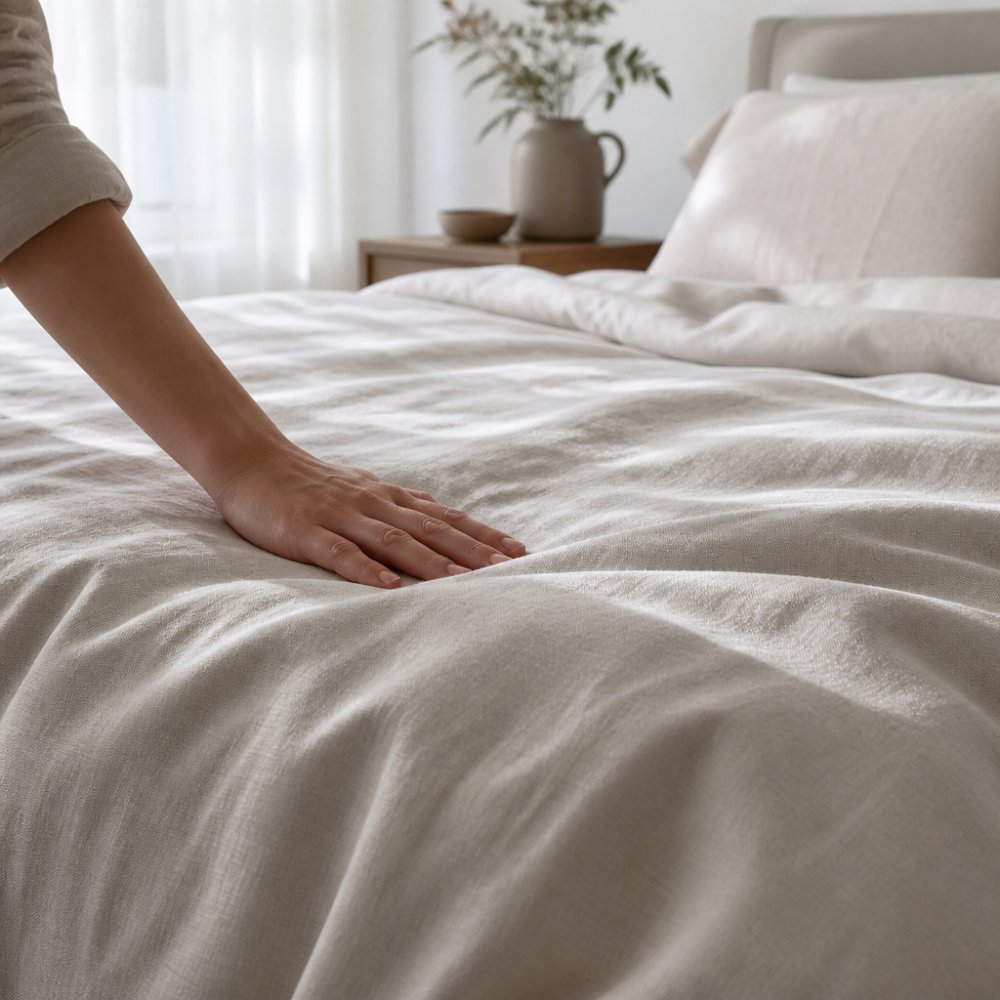
When evaluating quality, look for these markers:
- Long-staple fibres: These create a denser weave and a smoother hand-feel.
- Stone-washed finish: This pre-wash softens the fibres, preventing the stiff, scratchy feel of untreated linen.
- Natural dyes and low-impact processing: These protect the fibres and are better for sensitive skin.
Not all linen is hypoallergenic. While flax resists dust mites and mould, finishing agents in cheaper production can trigger sensitivities. High-quality pieces are washed thoroughly to remove residues; if you have sensitive skin, look for bedding free from harsh chemical finishes.
French Flax Linen vs European Linen: What's the Difference?
The distinction comes down to growing conditions and harvesting methods. French flax, particularly from Normandy, is prized for its long, fine staples, a result of the region's maritime climate and retting process.
European linen is a broader category spanning Belgium, Lithuania, and beyond; fibre length varies more significantly. In practice, French flax tends to feel smoother, weigh less, and resist creasing better over time.

Origin |
Fibre Characteristic |
Best For |
|---|---|---|
French Flax |
Long, fine, consistent staples |
Smoother feel, luxury drape |
Belgian Linen |
Strong, slightly coarser |
High durability, casual texture |
European (Misc.) |
Variable length |
Budget-friendly entry points |
For true luxury, French flax is the safer bet. If you prefer a heavier, textured look with rustic charm, a well-made Belgian or Lithuanian linen offers excellent durability.
Linen Bedding GSM Guide: Finding the Right Weight
GSM, or grams per square metre, is the most reliable indicator of linen's weight and feel. For bedding, aim for a GSM between 140 and 200: around 140 offers a light, airy feel for warm climates, while near 200 provides a heavier drape for year-round use.
If you sleep hot or live in a subtropical region, a lighter 140-160 GSM sheet is breathable. For cooler climates or a "crisp hotel" weight, a 180-200 GSM duvet cover provides comfort without overheating.
Weave, Finish, and Construction: Details That Matter
Beyond weight, the weave and finishing process dictate feel and durability. Most guides stop at 'stone-washed' as a buzzword, but the specific wash type and weave structure separate a luxurious set from a mediocre one.
Weave Structures: Plain vs. Basket
The most common weave is a plain weave, where each weft thread crosses over and under each warp thread, creating a tight, durable, slightly crisp fabric with excellent longevity.
A less common but sought-after structure is the basket weave, where threads are grouped in both directions, producing a softer, more textured fabric with a relaxed drape. The trade-off is slightly less durability, as grouped threads have more room to shift and abrade.
A rarer option is a herringbone or twill weave, which creates a subtle diagonal pattern. Twill is denser and warmer, good for cooler climates, but less common in ready-made sets.
Finishing Processes: Stone-Washed vs. Enzyme-Washed
Untreated linen is stiff and scratchy, so almost all luxury bedding undergoes a finishing treatment. The two dominant methods, stone-washing and enzyme-washing, produce noticeably different results.
- Stone-washing tumbles fabric with pumice stones, physically abrading fibres to create a soft, lived-in feel and a slightly faded appearance. The downside is that abrasion can, over many years, slightly weaken the fibres.
- Enzyme-washing uses natural enzymes to digest protruding fibre ends. This gentler process softens fabric without abrasion, preserving fibre strength and producing a smoother, silkier surface than stone-washing.
Most high-end European mills favour enzyme washing for its precision and lower water and energy use. When a description simply says 'washed', it is often a combination of both.
Construction Details That Signal Longevity
Look for double-stitched hems and French seams, which encase raw edges to prevent fraying. On duvet covers, check for internal corner ties. These details are the difference between a piece that lasts five years and one that lasts twenty.
A final marker is the selvedge. On premium looms, edges are finished during weaving, creating a clean, self-bound edge that never frays. Cheaper fabrics often have a simple overlocked edge prone to unravelling; look for a tight, finished selvedge.
How to Wash Luxury Linen Sheets for Lasting Softness
Washing linen correctly is the most important factor in preserving its texture and extending its life. Machine wash on a gentle cycle with cold or lukewarm water (max 40°C) and a mild, liquid detergent free from bleach and optical brighteners.
- Skip the fabric softener: It coats the fibres and reduces absorbency. Instead, add half a cup of white vinegar to the rinse cycle to naturally soften and remove detergent residue.
- Air dry or low tumble: High heat is the enemy of linen fibres. Hang sheets to dry in the shade, or tumble dry on a low setting and remove them while slightly damp to minimise wrinkles.
- Iron while damp: If you prefer a crisp look, iron on a medium setting while the fabric is still slightly moist.
Avoid overloading the washing machine. Linen needs room to move; cramming a full set into a small drum causes creasing and fibre stress. Wash a duvet cover separately if necessary.
Budget vs Investment: What to Expect from Luxury Linen
The difference between budget and investment pieces lies in fibre quality and longevity. Entry-level blends often contain cotton or polyester, compromising breathability and durability. A pure flax set with a proper GSM costs more upfront but will not pill, tear, or fade as quickly.
The most honest way to evaluate the price difference is through a cost-per-use analysis, a metric most retail guides avoid because it exposes the true economics.
The Cost-Per-Use Breakdown
A typical Australian household replaces bedding every five to seven years (abs.gov.au). A budget linen blend set retails for around $200 to $300, a mid-range pure flax set between $400 and $700, and a premium European flax set with verified long-staple fibres and enzyme-washing from $800 to $1,500.
At first glance, the premium set looks like an indulgence. But a blended set with 20% polyester will pill and lose softness within two to three years of weekly washing, while a well-made pure flax set can outlast three cheaper synthetic sets, making it more economical over a decade.
Here is a realistic comparison:
- Budget blend set ($250): Lasts approximately 3 years with weekly washing. Cost per use (over 3 years, used 2 nights per week) is roughly $0.80 per use.
- Mid-range pure flax set ($550): Lasts approximately 8 years with proper care. Cost per use is roughly $0.33 per use.
- Premium European flax set ($1,200): Lasts 15 years or more with proper care. Cost per use is roughly $0.38 per use.
This shows that mid-range and premium options are more economical per use than the budget option, provided you follow the care instructions.
What You Are Actually Paying For
The price difference between a $300 and a $1,200 set reflects several tangible factors:
- Raw material cost: Flax is significantly more expensive than cotton, and European flax commands a premium due to its longer staple length and more consistent quality.
- Labour intensity: Retting, spinning, and weaving flax is more labour-intensive than cotton processing. European mills that adhere to fair labour standards pass on those costs.
- Certifications: Third-party certifications like OEKO-TEX Standard 100 (which tests for harmful substances) or GOTS (Global Organic Textile Standard) involve auditing costs that budget manufacturers skip (oeko-tex.com).
- Finishing quality: Enzyme-washing and stone-washing are additional production steps that add cost but are essential for softness.
A Smarter Way to Build Your Collection
For those building a collection, consider starting with a single set from the Casa Sereno linen range. The European linen range offers pieces in neutral tones that layer well with existing décor, allowing you to test the feel before committing to a full bedroom overhaul. As your budget allows, add a duvet cover or additional pillowcases to rotate with your existing set.

A practical strategy is to buy one premium fitted sheet and two premium pillowcases first, as these touch your skin most directly. If satisfied after a few weeks, invest in the duvet cover. This piecemeal approach spreads cost and reduces risk.
Conclusion: Build Your Bedding Set Piece by Piece
Choosing luxury linen bedding does not require replacing your entire bedroom at once. Build your set piece by piece, starting with pillowcases and a duvet cover, to spread the cost while immediately upgrading your sleep surface.
Start with a pair of quality linen pillowcases to test the texture against your skin. If you love the feel, invest in a duvet cover and fitted sheet to complete the core set. The Linen European Feather Filled pillowcase is an elegant entry point that introduces the fabric's benefits without a full commitment.
The secret to a timeless bedroom is layering textures, not matching everything perfectly. A stone-washed linen duvet in a soft ivory or teal adds depth against a neutral wall. For guidance on coordinating colours across your space, the principles of textile design suggest balancing warm and cool tones to create a restful atmosphere.

Choosing luxury linen bedding is an investment in daily comfort and long-term style. At Casa Sereno, our curated collections focus on natural fibres and timeless silhouettes, with free shipping on orders over $150. Explore the linen collection and find the texture that invites you to slow down.
Frequently Asked Questions
What GSM is best for luxury linen bedding?
For luxury linen bedding, look for a GSM between 140 and 200. This range indicates a fabric that is substantial enough to drape well and feel durable, yet breathable for year-round comfort. A GSM below 140 may feel too sheer and fragile, while anything above 200 can feel heavy and stiff for a sheet. The best choice also depends on your climate and whether you prefer a crisp or relaxed feel.
Is French flax linen better than other types of linen?
French flax is often considered a benchmark for quality because the region's cool, damp climate produces long, strong fibres. These long-staple fibres create a smoother, more durable yarn that resists pilling and softens beautifully over time. While European linen from other regions can also be excellent, French flax consistently offers a superior balance of softness, strength, and longevity. Checking the fibre source is a reliable shortcut to quality.
How can you tell if linen is high quality before purchasing?
Look for details beyond the label. Check the fibre source, with French flax being a strong indicator of quality. Examine the weave: a tight, even weave suggests better construction. Feel the fabric; high-quality linen should feel substantial but not rough, and it should have a natural, slightly irregular texture. Finally, consider the weight using a GSM guide; a range of 140-200 GSM is ideal for bedding.
How should I wash luxury linen sheets to keep them soft?
Wash luxury linen sheets in cool or lukewarm water on a gentle cycle. Use a mild, liquid detergent, and avoid bleach and fabric softeners, which can break down the natural fibres. For best results, air dry your sheets and remove them while slightly damp to minimise wrinkles. Tumble drying on low is acceptable, but be sure to take them out promptly to prevent over-drying and stiffness.