Table of Contents
- Build a Cohesive Colour Palette
- Master Luxury Textile Layering Techniques
- Invest in High-Quality Materials and Craftsmanship
- Create Balance Through Symmetry and Visual Weight
- Design Luxury Bedroom Styling Ideas That Last
- Use Lighting and Focal Points to Define Spaces
- Curate Statement Pieces and Edit Ruthlessly
- Frequently Asked Questions
Last Updated: September 19, 2026
Build a Cohesive Colour Palette
The foundation of luxury home decor styling starts with a carefully considered colour palette. A cohesive palette creates visual harmony across rooms and prevents your space from feeling chaotic or dated. Rather than chasing trending colours, timeless luxury homes rely on neutral tones as the anchor, think warm whites, soft greys, and natural beiges, then layer in accent colours with restraint and intention.
The mistake most people make is treating colour selection as an afterthought. They buy pieces they love individually, then wonder why the room feels disjointed. A bespoke colour palette works the opposite way: you establish your foundation first, then every piece you add either supports or intentionally contrasts with it.
Start by choosing two to three neutral tones that will dominate 60-70% of your space. These become your walls, larger furniture pieces, and textiles. Then select one or two accent colours that appear in 20-30% of the room through cushions, artwork, or decorative objects. This restraint is what separates sophisticated interiors from cluttered ones.
Master Luxury Textile Layering Techniques
Textile layering is where a room transforms from adequate to genuinely luxurious. The technique involves combining different fabrics, weights, and textures to create depth and visual interest. A well-layered bed or sofa tells a story of intentional design rather than random assembly.
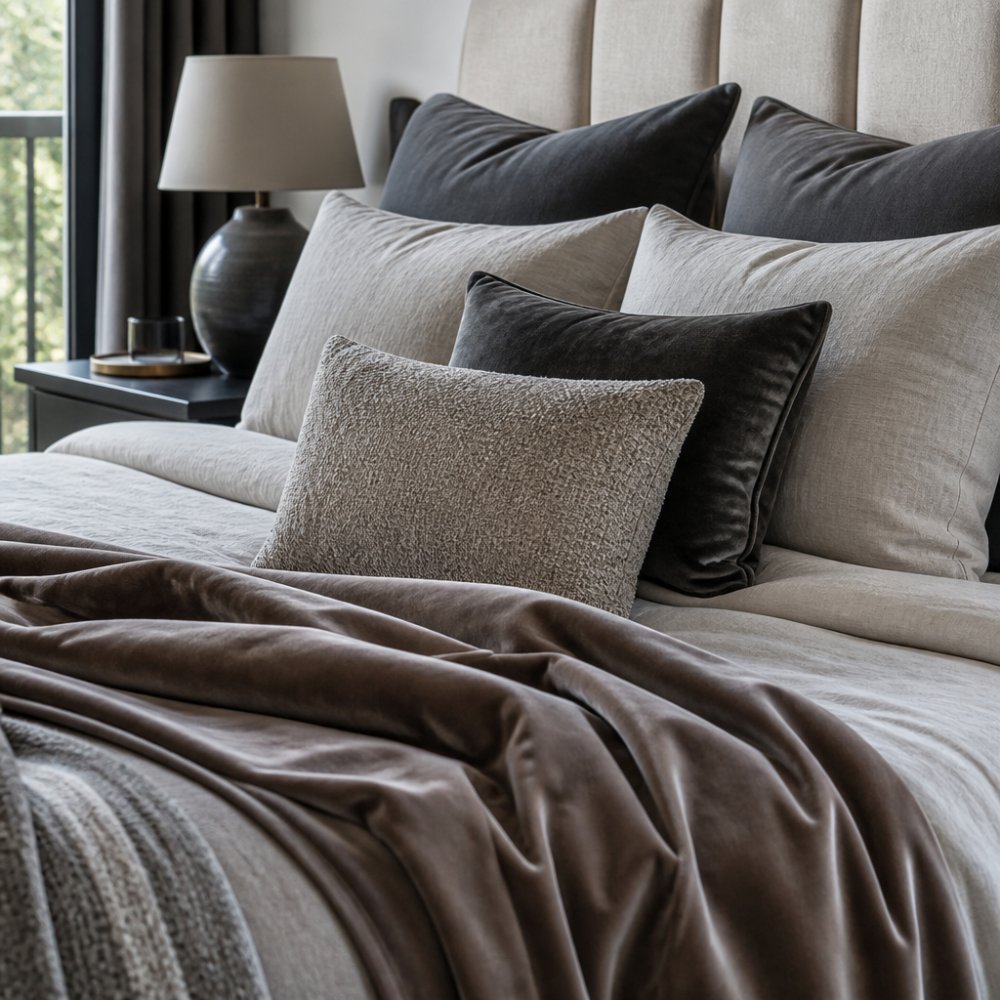
Begin with a base layer, typically your primary bedding or upholstery fabric. Then add a contrasting texture: if your base is smooth linen, layer in a chunky knit throw or velvet cushions. The key is variation without chaos. Each layer should feel intentional, not accidental. Natural fibres like linen, wool, and cotton create a more sophisticated foundation than synthetics, partly because they age gracefully and develop character over time.
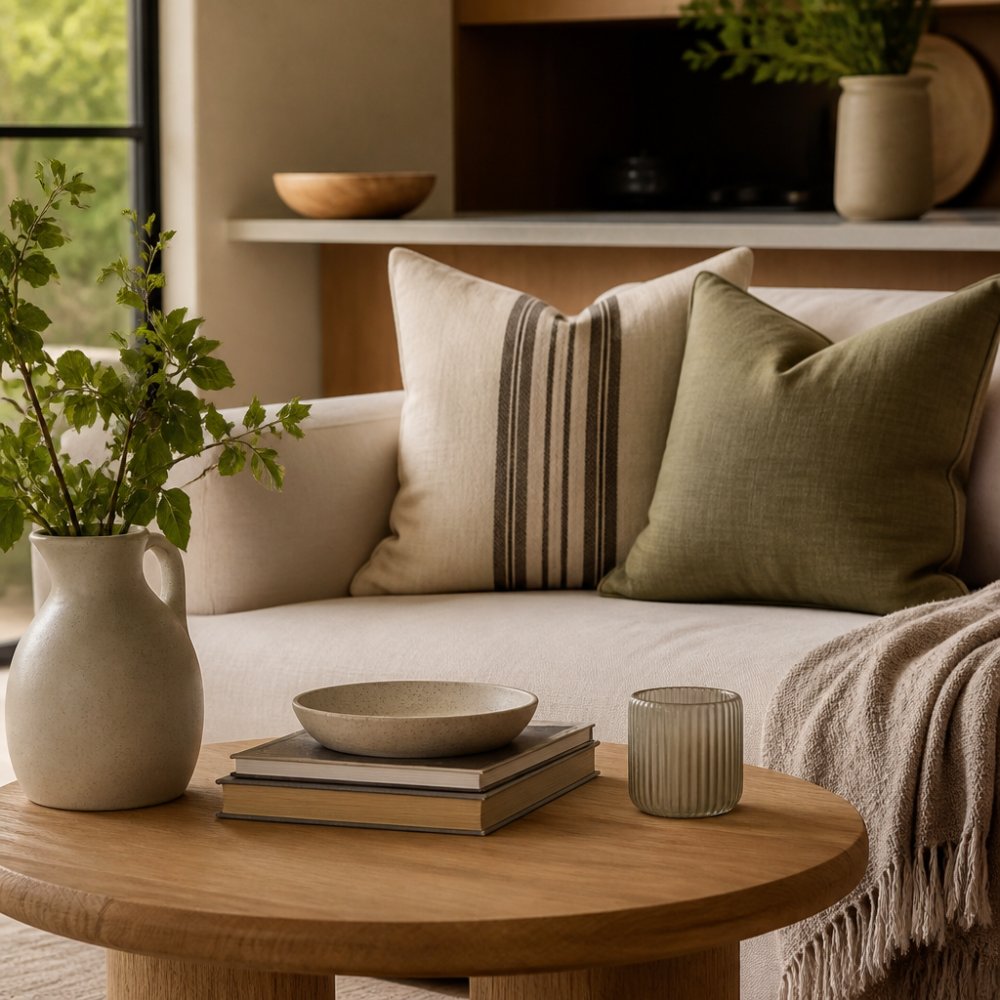
Consider weight distribution as well. Heavier textures should anchor the composition, a thick wool throw across a sofa base, for example, while lighter pieces like silk scarves or delicate linen cushions add refinement on top. The Malta Linen Cushion offers an understated luxury aesthetic that works beautifully in layered arrangements, providing a soft foundation that pairs well with bolder statement pieces.

Layering isn't about maximalism. It's about creating a curated, intentional aesthetic where each element has a reason for existing. Too many textures read as confused; the right combination reads as sophisticated.
Invest in High-Quality Materials and Craftsmanship
Luxury isn't primarily about price; it's about durability, tactile integrity, and the longevity of construction. A piece made from poor materials will feel cheap and deteriorate quickly. A piece made from quality linen or wool can outlast it by years and actually improve with age, a hallmark of genuine luxury.
Understanding Natural Fibres vs Synthetics
Natural fibres are the foundation of luxury textiles because they age gracefully and develop character. Linen, for instance, becomes softer and more lustrous with every wash, developing a subtle sheen that synthetic alternatives cannot replicate. Wool resists wrinkles naturally and regulates temperature, making it ideal for throws and upholstery that must perform across seasons. Cotton, particularly long-staple varieties like Egyptian or Pima cotton, offers breathability and durability that standard cotton cannot match. When evaluating bedding or cushion covers, prioritise fibre type.
Synthetics like polyester and acrylic may mimic the appearance of natural fibres initially, but they can lack breathability and show pilling. They also fail the sensory test, luxury is tactile, and synthetics can feel thin and plasticky under the hand.
Evaluating Construction Quality
Craftsmanship reveals itself in details invisible at first glance. Examine seams. Look for reinforced corners on cushions and upholstery. Check for piping or binding along edges.
Zips should be concealed and smooth-running. Cushion inserts should use high-density foam or feather-down blends. Run your hand along the surface: quality upholstery feels uniform and dense.
The Sensory Test
Touch every material before committing. Feel the weight, the drape, the finish. Genuine leather develops a patina and softens over time; quality linen has a slight texture that improves with washing; wool holds its shape season after season.
When sourcing pieces, prioritise makers and brands that publish care instructions and longevity expectations. Transparency about materials, "100% linen" rather than "linen blend", signals confidence in the product.
Create Balance Through Symmetry and Visual Weight
Balance in interior design operates on two levels: formal symmetry and visual weight distribution. Formal symmetry, matching pairs of lamps, identical nightstands, mirrored artwork, creates calm and order. Visual weight distribution considers how your eye moves through a room and where it naturally rests.
A room that's perfectly symmetrical can feel sterile. A room with no balance feels chaotic. The luxury approach combines both: use symmetry as a structural framework, then break it thoughtfully with asymmetrical accents. A symmetrical sofa arrangement with a single statement artwork off-centre, for example, creates interest while maintaining calm.
Visual weight refers to how "heavy" an object feels visually. Dark colours, large pieces, and textured surfaces carry more weight than light colours and smooth finishes. Balance these across your space so no single area feels anchored while another floats. A dark velvet cushion on a light sofa, balanced by a dark-framed mirror on the opposite wall, creates equilibrium without rigid matching.
This principle extends to spatial planning. High ceilings need visual weight brought upward through tall furniture or artwork. Small spaces need lighter colours and less visual clutter to avoid feeling cramped. Symmetry and balance work together to create spaces that feel both intentional and liveable.
Design Luxury Bedroom Styling Ideas That Last
The bedroom deserves special attention because it's where you spend a third of your life, yet it's often the last room to receive thoughtful design. Luxury bedroom styling starts with the bed as your focal point, everything else should support and enhance it.
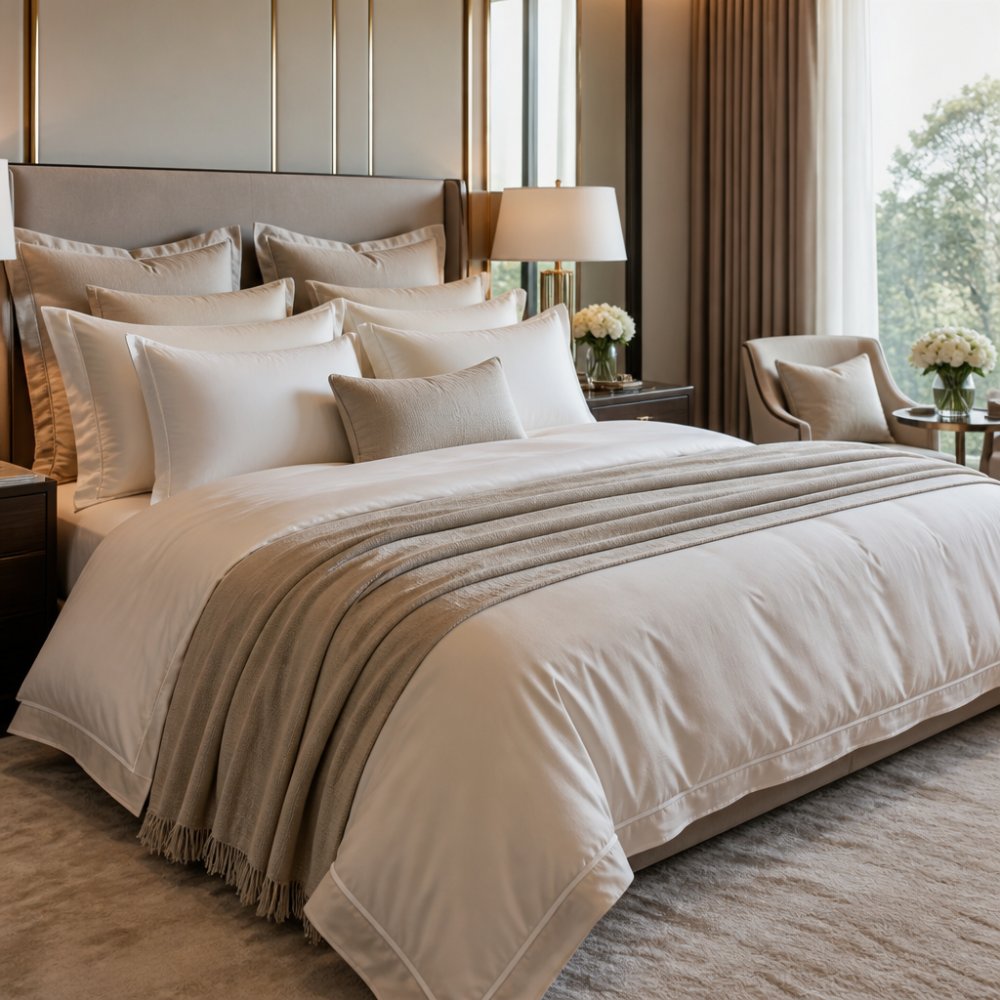
Invest in quality bedding that feels as good as it looks. Natural fibres breathe better, regulate temperature, and develop a soft patina with age. Layer your bed with intention: fitted sheet, flat sheet, a quality duvet or quilt cover, throw pillows in varying textures, and a throw blanket draped casually across the foot. This creates visual depth and invites you to actually use the bed rather than just look at it.
Lighting in the bedroom should be layered as well. Overhead fixtures alone create harsh shadows; add bedside lamps with warm bulbs for reading and ambient mood. Consider wall sconces if space allows, they save nightstand real estate and create a hotel-like sophistication. The goal is lighting that adapts to different times of day and activities.
Finally, edit ruthlessly. A luxury bedroom isn't crowded; it's curated. Keep surfaces clear except for one or two meaningful objects. Let the textiles and lighting do the visual work. This restraint is what makes luxury bedrooms feel like sanctuaries rather than storage units.
Use Lighting and Focal Points to Define Spaces
Lighting is the most underestimated element of luxury interior design. It doesn't just illuminate; it shapes mood, defines space, highlights focal points, and profoundly affects how materials and colours are perceived. Poor lighting can make luxury materials look flat and uninviting; exceptional lighting transforms ordinary spaces into sanctuaries.
The Three Layers of Luxury Lighting
Ambient lighting provides general illumination and should be warm (2700K colour temperature mimics candlelight and creates intimacy). Task lighting serves specific functions, reading lamps beside beds, under-cabinet lighting in kitchens, vanity lighting in bathrooms. Accent lighting draws attention to focal points and creates visual drama through directional sources like picture lights, track lighting, or strategically placed uplighting.
The mistake most people make is relying on a single overhead fixture. This creates flat, institutional lighting that erases depth and dimension. Luxury spaces layer these three types so light comes from multiple heights and angles. A bedroom might combine warm ceiling cove lighting (ambient), bedside table lamps with 40-60-watt equivalent bulbs (task), and a subtle wall sconce above artwork (accent). This layering creates visual interest and allows occupants to adjust mood throughout the day.
Colour Temperature and Material Perception
Colour temperature, measured in Kelvin (K), fundamentally changes how materials appear. Warm light (2700K) enhances natural fibres like linen and wool, making them glow softly and feel inviting. Cool light (4000K or above) can make the same materials look washed out or institutional.
Creating Focal Points Through Light
Smart Lighting as Modern Luxury
Curate Statement Pieces and Edit Ruthlessly
A statement piece is an object bold enough to anchor a room or corner, a striking artwork, a sculptural chair, a dramatic pendant light, or a textured cushion in an unexpected colour. One strong statement piece creates visual interest and prevents a space from feeling bland. Multiple statement pieces create visual chaos.
Frequently Asked Questions
What is the 15% rule in luxury home styling?
The 15% rule suggests dedicating 15% of your décor budget to bold, statement pieces or accent colours that define your space's personality. This approach prevents a room from feeling either too neutral or overwhelming. For example, pairing neutral walls with a richly textured velvet cushion or metallic accent creates visual interest without clashing. The remaining 85% focuses on timeless, cohesive pieces that anchor the room and allow statement elements to shine.
How do I choose the right textures for a high-end luxury home decor look?
Select textures that contrast yet complement each other: pair smooth velvet with rough linen, soft wool with crisp cotton. Luxury textile layering techniques involve mixing natural fibres—silk, linen, wool, and cotton—in varying weights and finishes. Avoid too many competing textures; aim for three to four primary textures per room. Focus on quality: genuine linen and velvet feel noticeably different from synthetic alternatives and age beautifully, making them a worthwhile investment in pieces like the Malta Linen Cushion or Carla Black Cushion Feather.
Can I create a luxurious look on a budget?
Yes. Prioritise one or two investment pieces—a quality throw or cushion—and build around them with affordable basics. Focus on editing ruthlessly: a curated collection of fewer, better items looks more sophisticated than many mediocre ones. Start with neutral foundations and add affordable accent pieces strategically. Free shipping on orders over $150 and first-order discounts make quality pieces more accessible. Choose timeless styles over trends; they remain relevant longer and justify their cost through durability.
How do I know if luxury home decor pieces will work with my existing furniture?
Begin by identifying your room's dominant colour and material palette. Photograph your space in natural light and compare against pieces you're considering. Luxury styling works best when new pieces either match your existing palette or introduce a complementary accent colour. Textiles are forgiving: a velvet cushion or linen throw can bridge different styles. Consider scale and proportion—statement pieces should occupy roughly 15% of visual space. If unsure, start with smaller accessories before committing to larger investments.