Table of Contents
- The Materials That Define Luxury Bedding
- Thread Count, Weave, and What Actually Matters
- Best Luxury Bedding Brands and What They Cost
- Best Quilt Cover Patterns for Minimalist Bedrooms
- How to Care for Luxury Linen Sheets
- The Science of Sleep Quality and Fabric Choice
- Sustainability and Ethical Sourcing in Luxury Bedding
- Conclusion
- Frequently Asked Questions
Last Updated: September 19, 2026
The Materials That Define Luxury Bedding
Walk into any five-star hotel suite and the first thing you notice isn't the thread count on a label. It's the weight of the duvet, the quiet rustle of the sheets, and the way the fabric feels cool against your skin. So what kind of bedding do rich people use? The honest answer is less about brand names and more about fibre quality, weave structure, and temperature regulation.
Long-Staple Cotton and Egyptian Cotton
Long-staple cotton is cotton grown from fibres with an extra-long staple length, producing stronger, smoother yarn with less pilling. Egyptian cotton is a specific long-staple cotton grown in Egypt's Nile Delta, prized for fineness and durability.
Silk, Linen, and Bamboo Viscose
Silk is a protein-based fibre with a natural sheen and silky hand feel. It's naturally hypoallergenic and gentle on skin and hair, which is why silk pillowcases have become a staple in luxury bedrooms. The Australian Bedding Standards guidance notes that natural protein fibres require gentler care than plant-based alternatives.
Thread Count, Weave, and What Actually Matters
Thread count is the number of threads woven into one square inch of fabric, and the single most abused number in bedding marketing. Past roughly 400 threads per square inch, many manufacturers count multi-ply yarns, two or three fine threads twisted together and counted as one, to inflate the figure, producing a denser, heavier fabric that isn't necessarily softer. A well-made 300-thread-count single-ply sheet will usually outlast and out-feel a 1,000-thread-count multi-ply one.
- Percale: A one-over, one-under weave that produces a crisp, matte finish. Best for warm sleepers and anyone who likes that hotel-fresh feel.
- Sateen: A three-over, one-under weave that creates a silky, lustrous surface. Warmer and heavier, better for cool climates.
Feature |
Percale |
Sateen |
|---|---|---|
Feel |
Crisp, matte |
Silky, sheen |
Best for |
Warm sleepers |
Cool sleepers |
Durability |
Higher |
Moderate |
Care |
Easy, resists wrinkles |
Wrinkles more easily |
A Sensory Taxonomy: Crisp, Silky, or Heavy
Marketing terms like "luxury" and "hotel quality" tell you nothing about how a fabric will feel. A more useful approach is to sort bedding into three tactile families:
- Crisp: Percale cotton, linen in its early life, and high-twist cotton poplin. Cool, dry, almost papery, they feel freshest on warm nights and hold a sharp fold.
- Silky: Sateen cotton, silk, bamboo viscose, and Tencel lyocell. They drape closely, feel cool on contact, and reflect light, ideal for sleepers who dislike the rustle and stiffness of crisp weaves.
- Heavy: Brushed cotton, flannelette, well-washed linen, and heavier sateen. They trap more air and feel warmer and more enveloping, suiting cool bedrooms and winter months.
The Mechanics Behind the Feel
Three physical properties drive how a fabric feels and performs:
- Staple length. Longer cotton fibres spin into finer, stronger yarns with fewer exposed ends, less pilling and a smoother hand feel that survives washing.
- Yarn ply. Single-ply yarns are softer and more breathable than multi-ply at the same nominal thread count; multi-ply adds durability at the cost of drape.
- Weave density. A tighter weave blocks airflow and feels warmer; a looser weave breathes more but can pill faster. GSM is the quickest proxy.
Matching Weave to Climate and Sleep Style
A common mistake is buying for the showroom rather than the bedroom. A sateen sheet feels wonderful under air conditioning but becomes clingy and warm in an un-airconditioned room on a 30°C night. A practical approach:
- Hot sleepers or warm bedrooms: percale cotton, linen, or a lightweight bamboo viscose.
- Cold sleepers or air-conditioned bedrooms: sateen cotton, silk, or brushed cotton in winter.
- Mixed households: percale base sheet with a sateen or quilted cover on top, so each sleeper can adjust.
Best Luxury Bedding Brands and What They Cost
The best luxury bedding brands share three traits: they disclose fibre origin, publish GSM or thread diameter specifications, and back their products with a realistic returns policy. Price alone tells you very little.
- Entry luxury (quilt covers $150-$300): Quality cotton percale or sateen, often with a 300-400 thread count. Good starting point if you're upgrading from mass-market bedding.
- Mid luxury ($300-$600): Long-staple cotton, linen blends, or silk accents. Better finishing, more consistent weave.
- High luxury ($600+): Certified organic fibres, traceable sourcing, hand-finished details.
Best Quilt Cover Patterns for Minimalist Bedrooms
The best quilt cover patterns for minimalist bedrooms are solid colours, subtle textures, and tonal layering. Pattern competes with the calm a minimalist bedroom is trying to achieve; texture adds depth without visual noise.
Three approaches that work:
- Monochrome layering. White quilt cover, white sheets, one textured throw in a slightly warmer tone. The contrast comes from fabric, not colour.
- Tonal pairing. Two shades from the same family (warm grey with stone, or cream with sand) create a considered look without effort.
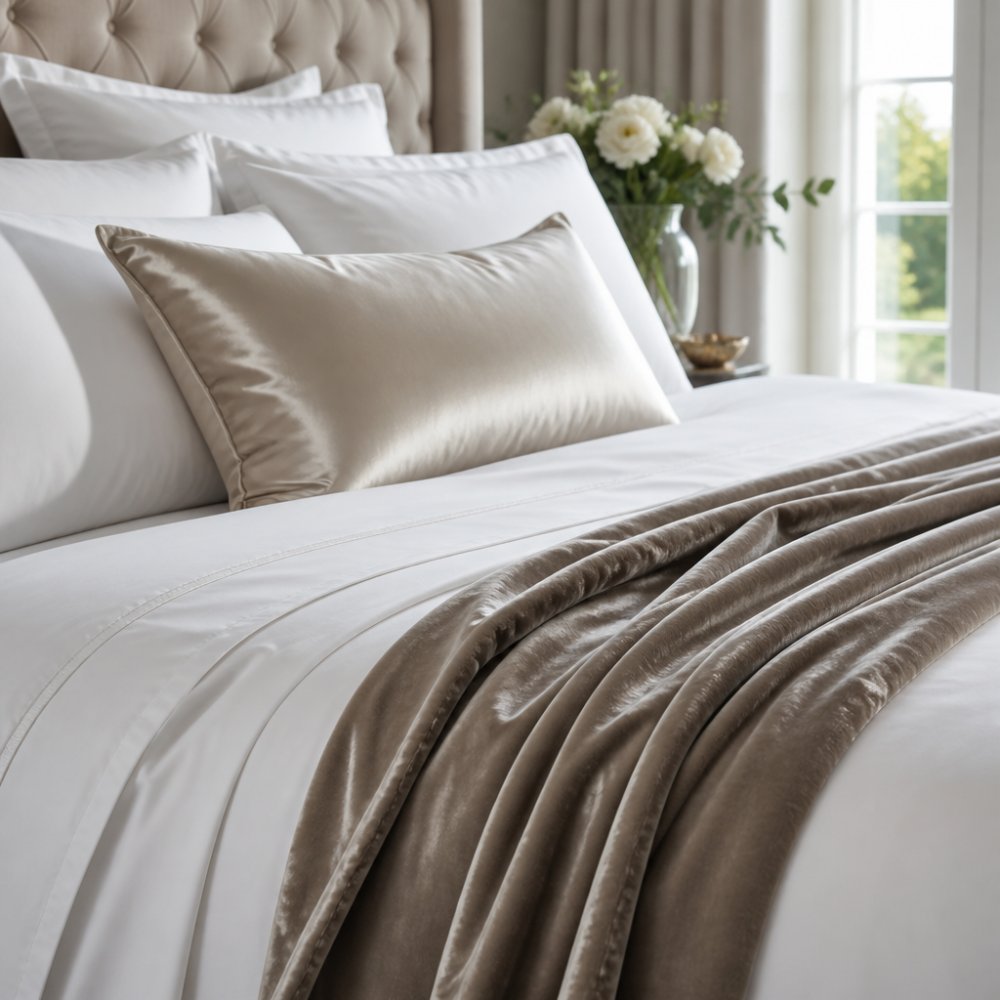
- Single accent. One piece in a contrasting texture, like the Carla Coco Luxury Velvet Throw in cocoa velvet at $289, adds warmth and a tactile focal point.
How to Care for Luxury Linen Sheets
Luxury linen sheets last years longer when you wash them correctly: cool water, gentle detergent, no fabric softener, and line dry where possible.

- Wash cycle: Cold or lukewarm (max 40°C), gentle cycle. Hot water weakens natural fibres and accelerates pilling.
- Detergent: Liquid, pH-neutral, no optical brighteners. Powder detergents often leave residue that dulls the fabric.
- Fabric softener: Skip it entirely. It coats fibres and reduces breathability, which defeats the purpose of buying linen.
- Drying: Line dry in shade. Tumble drying on low is acceptable for cotton but will shorten the life of linen and silk.
- Ironing: Linen looks best with a relaxed, slightly rumpled finish. If you must iron, do it while the fabric is still damp.
Cost Per Use: The Rational Case for Spending More
Most guides stop at care instructions. The more useful question is whether a high-end sheet set is actually more expensive over its life than a cheap one. Usually it isn't, once you calculate cost per use.
The variables that shift this calculation:
- Fibre type. Long-staple cotton and linen outlast short-staple cotton and synthetic blends by a wide margin because the fibres are stronger and pill less.
- Weave density. Very loose weaves pill faster; very tight weaves can crack along fold lines. Mid-weight weaves tend to age most gracefully.
- Care routine. Hot water, harsh detergent, and tumble drying can halve a sheet's life. The care rules above are the difference between a five-year sheet and a two-year sheet.
- Rotation. Two or three sets in rotation wear more evenly and last longer than one set washed every week.
Fibre-Specific Care Trade-Offs
Each luxury fibre fails in a different way, and knowing the failure mode tells you what to protect against:
- Cotton: Fails through pilling and thinning at fold lines. Protect by avoiding hot water and overloading the machine.
- Linen: Fails through fibre breakage if dried too aggressively. Protect by line drying and accepting the natural rumple.
- Silk: Fails through loss of sheen and fibre weakening from alkaline detergent. Protect by using a pH-neutral silk wash and never wringing.
- Bamboo viscose: Fails through pilling and loss of drape if tumble dried. Protect by line drying and washing inside out.
Storage and Seasonal Rotation
How you store bedding between seasons affects how long it lasts. Store clean, fully dry sheets folded loosely in a breathable cotton bag or pillowcase, not plastic, which traps moisture and encourages mildew. Cedar blocks or lavender sachets deter insects without chemicals. Rotate sets every few months so wear is distributed evenly, and retire a set to guest use once the weave thins rather than waiting for it to tear.
The Science of Sleep Quality and Fabric Choice
Fabric choice affects sleep through thermoregulation, the body's ability to manage core temperature overnight. Natural fibres like cotton, linen, and silk breathe and wick moisture, helping maintain the narrow temperature band needed for deep sleep. Synthetic fibres trap heat and moisture, which is why polyester sheets often feel clammy by 3am.
Sustainability and Ethical Sourcing in Luxury Bedding
Textile certification is the clearest signal that a bedding product's sustainability claims are real. The certifications worth looking for include:
- GOTS (Global Organic Textile Standard): Covers organic fibre content and processing.
- OEKO-TEX Standard 100: Tests for harmful substances in the finished textile.
- Fair Trade Certified: Verifies labour conditions in the supply chain.
Conclusion
The real answer to what kind of bedding rich people use isn't a brand. It's a set of choices: long-staple fibres, the right weave for your climate, and a care routine that protects the investment. Get those three right and your bed will feel luxurious regardless of what you paid.
Frequently Asked Questions
What bedding do rich people buy?
Wealthy buyers typically choose bedding made from long-staple cotton, Egyptian cotton, or pure silk. They prioritise fibre quality over thread count, often selecting percale or sateen weaves with a smooth finish. Many invest in complete bedding sets that include a quilt cover, pillowcases, and a throw. Brands like Casa Sereno offer luxury bedding pieces, such as a silk pillow for $79, that deliver hotel-quality comfort without the markup of big-name labels.
What is the most luxurious bedding material?
Egyptian cotton and mulberry silk are widely considered the most luxurious. Egyptian cotton has extra-long fibres that create a soft, durable fabric, while silk offers a smooth, hypoallergenic surface that regulates temperature. Linen is also prized for its breathability and natural texture. The best choice depends on whether you prefer a crisp, cool feel (percale cotton or linen) or a silky, warm feel (sateen or silk).
Does thread count actually matter for luxury sheets?
Thread count matters less than fibre quality and weave. A 300-thread-count sheet made from long-staple cotton can feel softer and last longer than a 1000-thread-count sheet made from short fibres. Luxury bedding focuses on thread diameter and finishing process. Look for single-ply long-staple cotton and a smooth weave rather than chasing high numbers.
How do I care for luxury linen sheets?
Wash luxury linen sheets in cold or lukewarm water on a gentle cycle with a mild detergent. Avoid bleach and fabric softener, which can damage fibres. Tumble dry on low or line dry in shade. Linen becomes softer with each wash. Rotate between two sets to reduce wear, and store in a cool, dry place. With proper care, quality linen can last for years.
Upgrading your bedding shouldn't feel like guesswork. Casa Sereno offers carefully curated collections built around timeless style, natural fibres, and pieces that work across every room. Browse our bedding and accessories, take 20% off your first order as a new subscriber, and enjoy free shipping over $150.